
Last updated November 14, 2026
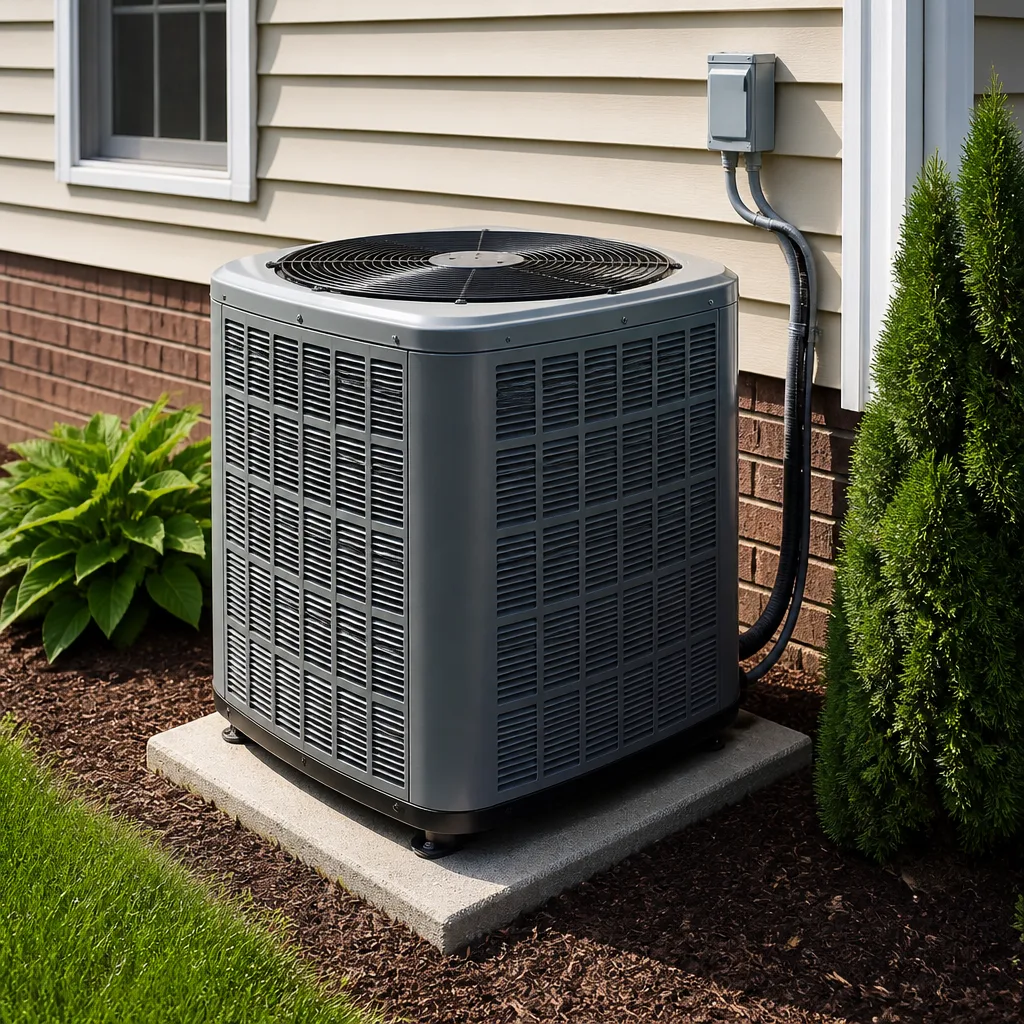 AC repair
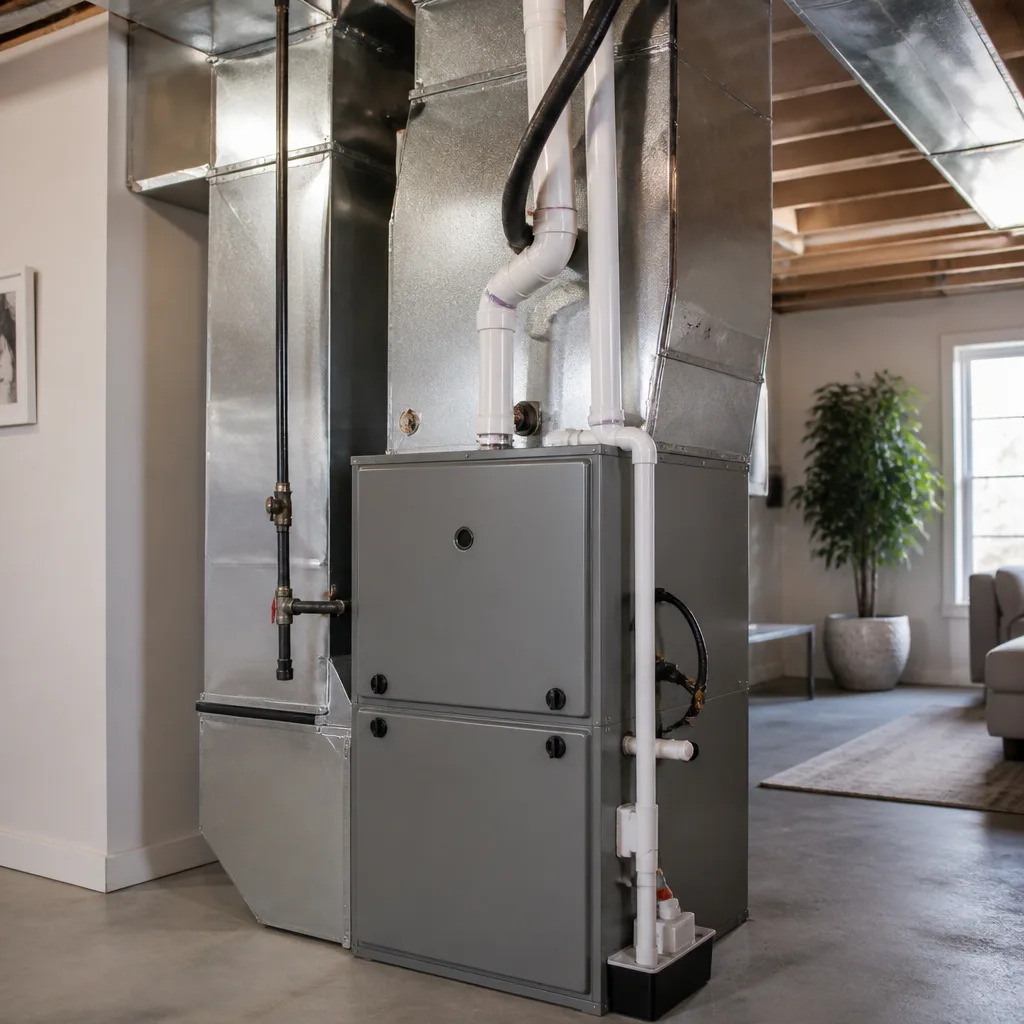 Furnace & heating
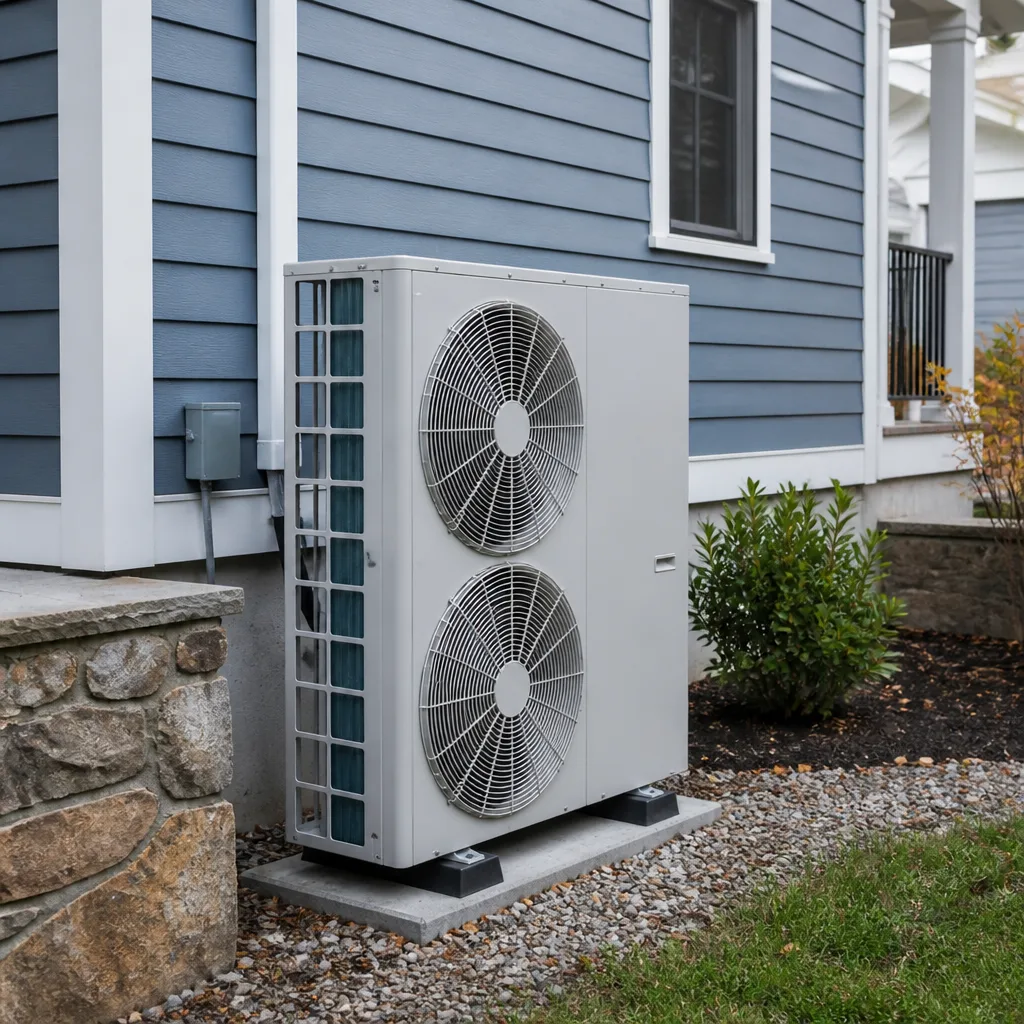 Heat pumps
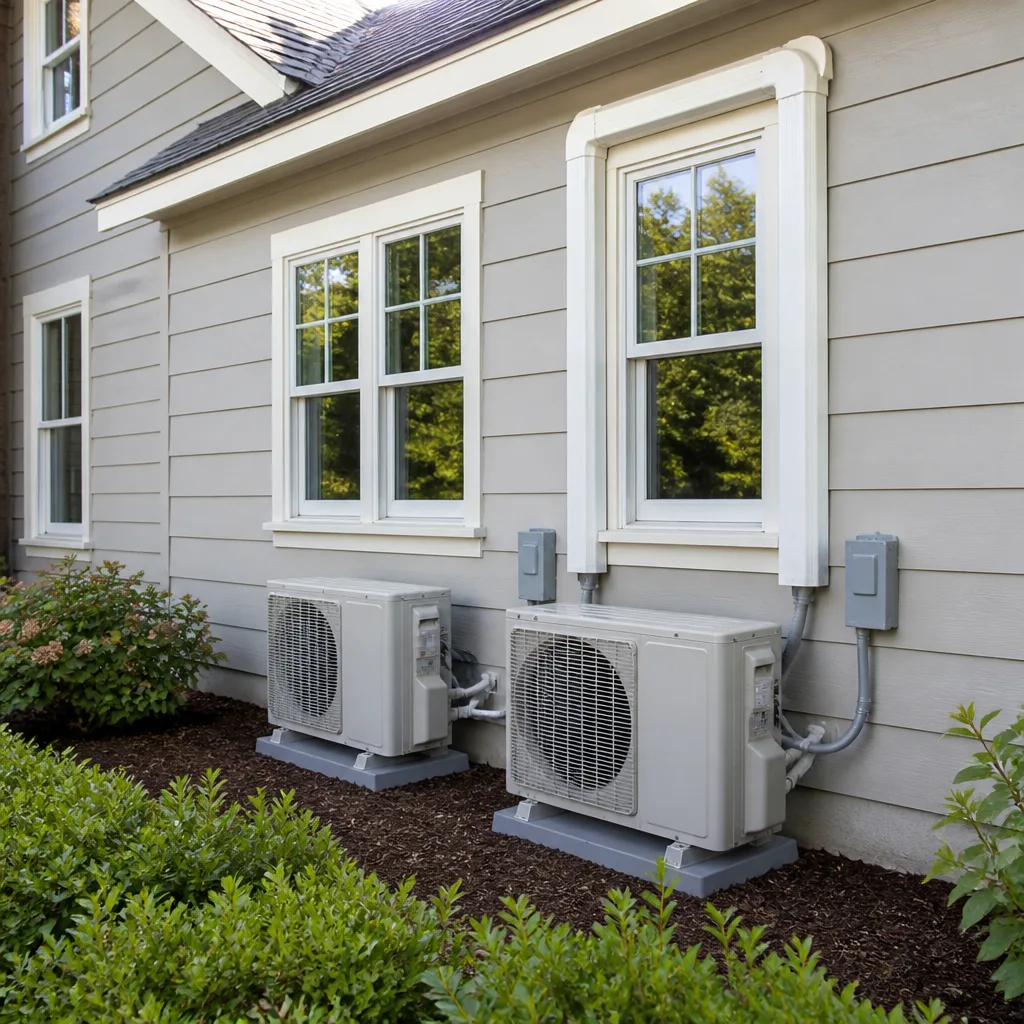 Ductless mini splits
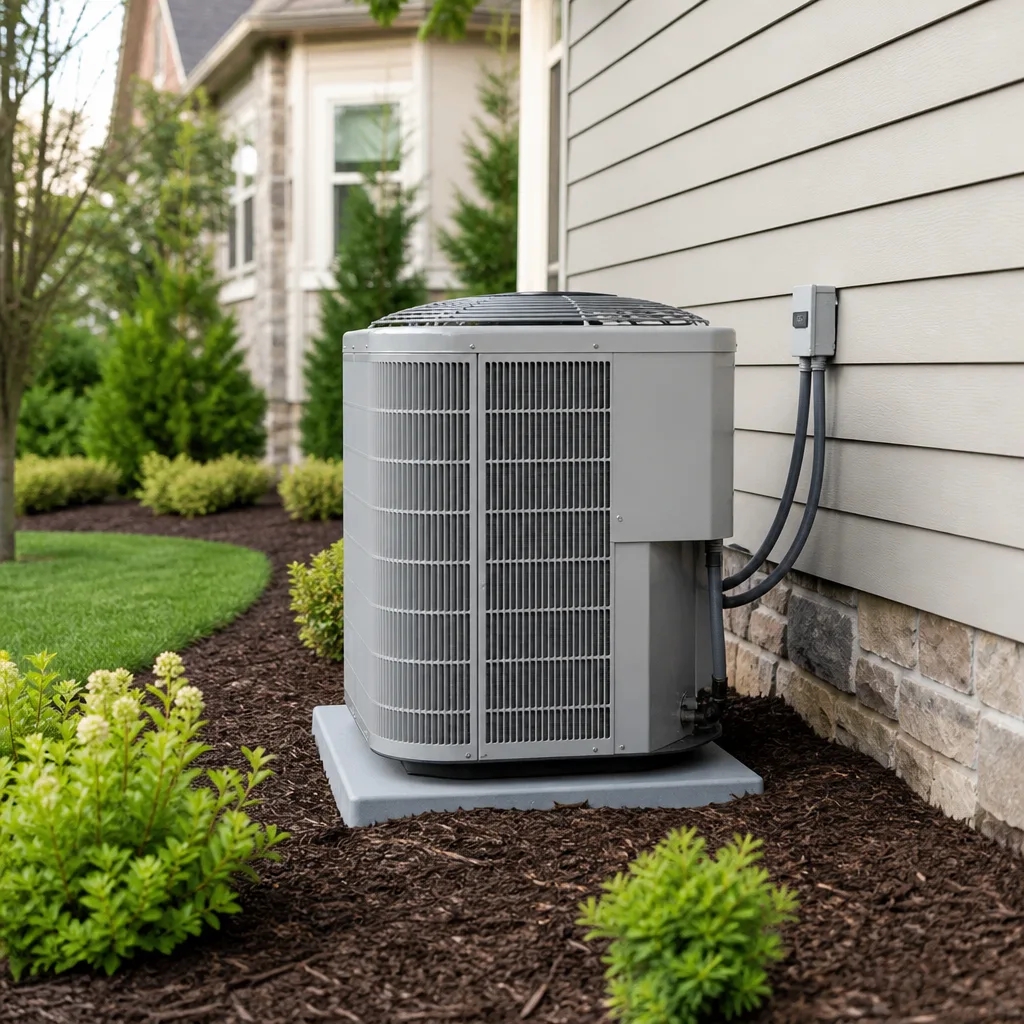 Carrier
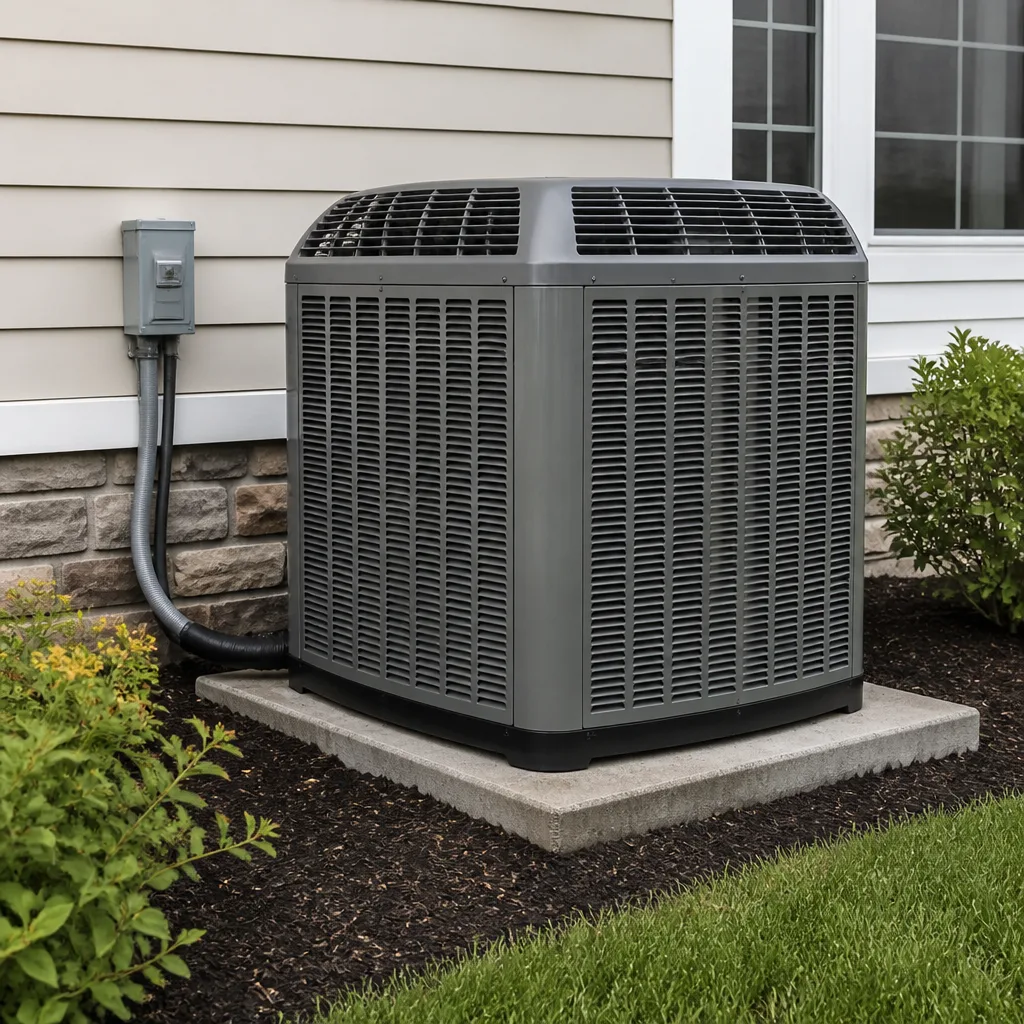 Trane
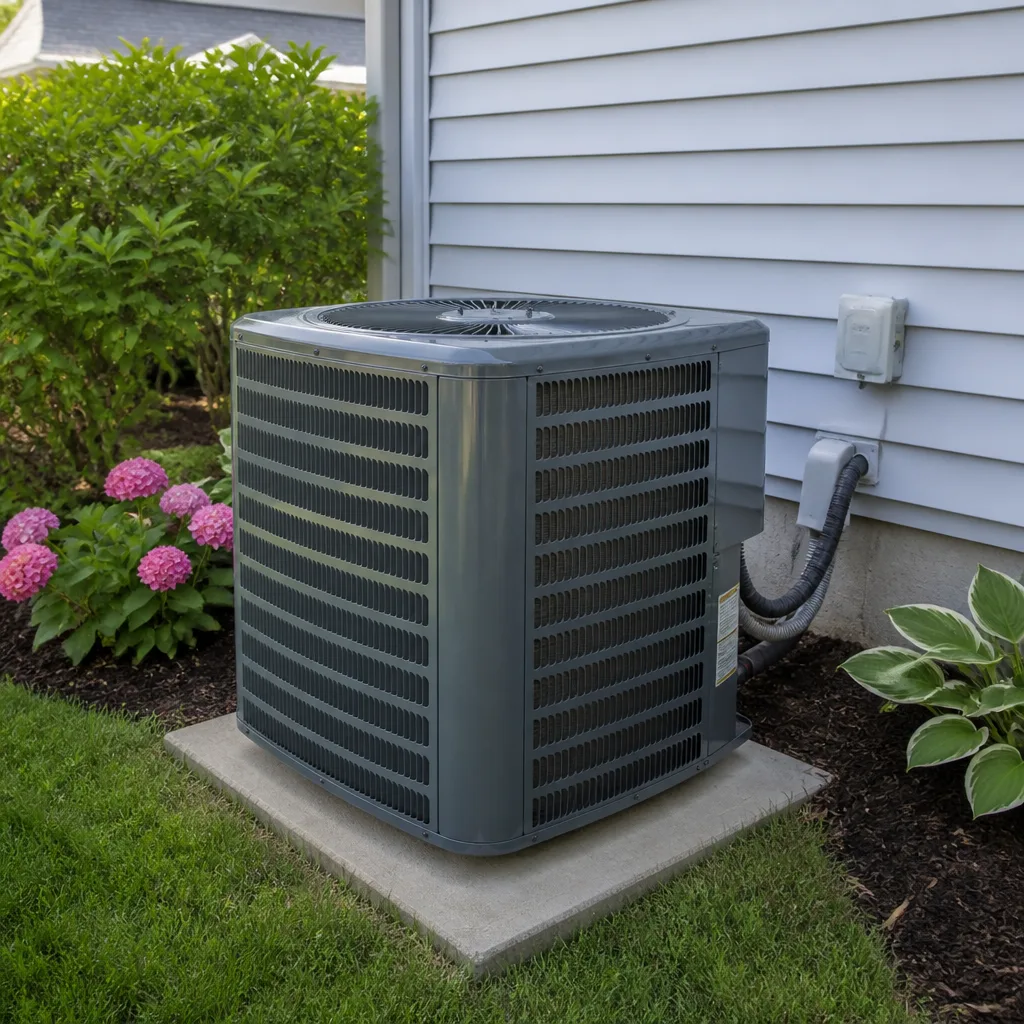 Goodman
Seasonal tune-up and full diagnostic on your Carrier, Trane, or Goodman system - readings shown to you before any repair is proposed
Diagnosis first, numbers second - you approve the repair price before a single part goes in.
Get your free estimateDIY vs Professional HVAC: The Lakeland Homeowner’s Decision Guide
Most homeowners assume the DIY-versus-professional line is drawn at skill. It isn’t. In Florida, that line is drawn in state law, and it sits in a different place than most people expect. You can swap a thermostat in an afternoon without a license. You cannot legally touch the refrigerant circuit, no matter how many videos you’ve watched, because handling refrigerant requires federal certification under EPA Section 608 – and violating that rule carries real, enforceable penalties. The gap between “I can physically do this” and “I am allowed to do this” is where homeowners get hurt, and it’s where this guide lives. We’ll walk through exactly which Lakeland HVAC tasks are legally yours, which ones quietly void your warranty or put your insurance at risk, and where a professional is genuinely the cheaper choice over time.
Quick Answer
In Lakeland and across Florida, homeowners can legally replace air filters, swap a thermostat, flush a condensate line, and clear debris from an outdoor unit. Anything involving refrigerant, electrical components inside the air handler, gas connections, or the sealed refrigerant circuit legally requires a licensed HVAC contractor and an EPA-certified technician. The gray zone – parts swapping, diagnosis, control-board replacement – is technically possible for a careful homeowner but often costs more in voided warranties, misdiagnosis, and insurance exposure than calling a pro.
Styles & brands we work with
- AC repair
- Furnace & heating
- Heat pumps
- Ductless mini splits
- Carrier
- Trane
- Goodman
Table of Contents
- Where Florida Law Draws the DIY Line
- High-Value DIY Tasks That Genuinely Save Money
- The Gray Zone: When DIY Looks Cheap and Costs More
- Why Multi-Brand Systems Complicate DIY Repairs
- The Second-Opinion Play: When to Call Before You Buy Parts
- Lakeland’s Climate and Why It Changes the Math
- Repair vs Replace: The Decision That Isn’t DIY
- Common Mistakes to Avoid
Where Florida Law Draws the DIY Line
Florida draws a harder line than most homeowners realize. The state licenses HVAC contractors under a specific class – a CAC license (Certified Air Conditioning Contractor) – and work on the refrigerant circuit, the electrical components that serve the system, and gas-fired heating components falls under that license. It’s not a suggestion. Unlicensed contracting can void a homeowner’s insurance claim, create code-violation exposure at resale, and in the worst cases shift liability for an injury or a house fire onto the homeowner who did the work.
Here’s the practical split, laid out plainly:
- Legal for a homeowner in Florida: replacing disposable air filters, swapping a low-voltage thermostat (with the breaker off), flushing a condensate drain line with vinegar or water, clearing leaves and debris from around the outdoor condenser, straightening bent condenser fins with a fin comb.
- Requires an EPA Section 608-certified technician: anything that opens the sealed refrigerant circuit – recovering, charging, evacuating, or adding refrigerant, and diagnosing a leak. Handling refrigerant without certification is a federal violation, and the penalty structure is steep enough that it functions as a hard stop, not a warning.
- Requires a licensed Florida contractor: electrical work inside the air handler, compressor replacement, control-board swaps involving line voltage, gas furnace connections and gas-line work, refrigerant-line brazing, and full system replacement.
- Physically possible but legally and financially risky: bypassing a safety switch, jumping out a contactor, “topping off” refrigerant with a borrowed gauge set, or opening the refrigerant lines to clean an evaporator coil yourself.
The line between “careful homeowner” and “unlicensed contractor” is narrower than the internet makes it look. When the job crosses from maintenance into the sealed system or the electrical panel, the law stops treating it as a hobby. If you’re ever uncertain which side of the line a task falls on, our AC repair team can tell you in plain terms before you pick up a tool.
High-Value DIY Tasks That Genuinely Save Money
There’s real money in the tasks that are both legal and safe, and they’re the ones that most homeowners skip. In Lakeland’s long cooling season, the difference between a well-maintained system and a neglected one shows up in the electric bill before it shows up as a repair – and every one of these is a job you can do without a license, without a special tool, and without touching the refrigerant circuit.
Here’s the annual routine we’d suggest to any homeowner:
- Replace the air filter every 60-90 days. In Lakeland, spring and summer pollen plus year-round dust load a filter fast. A clogged filter forces the blower to work harder and can ice the evaporator coil. This single task is the highest-value DIY habit in HVAC.
- Flush the condensate drain line. Pour a cup of white vinegar or warm water down the cleanout port once a month during cooling season. A clogged drain backs water into the air handler or the ceiling, which is a water-damage repair, not an HVAC repair.
- Swap a basic thermostat. If you’re upgrading from a non-programmable to a programmable or smart thermostat on a conventional system, this is within reach. Kill the breaker, photograph the wiring before you disconnect it, and match wire-for-wire. If your system is a communicating or variable-speed model with proprietary wiring, stop – that’s a professional swap.
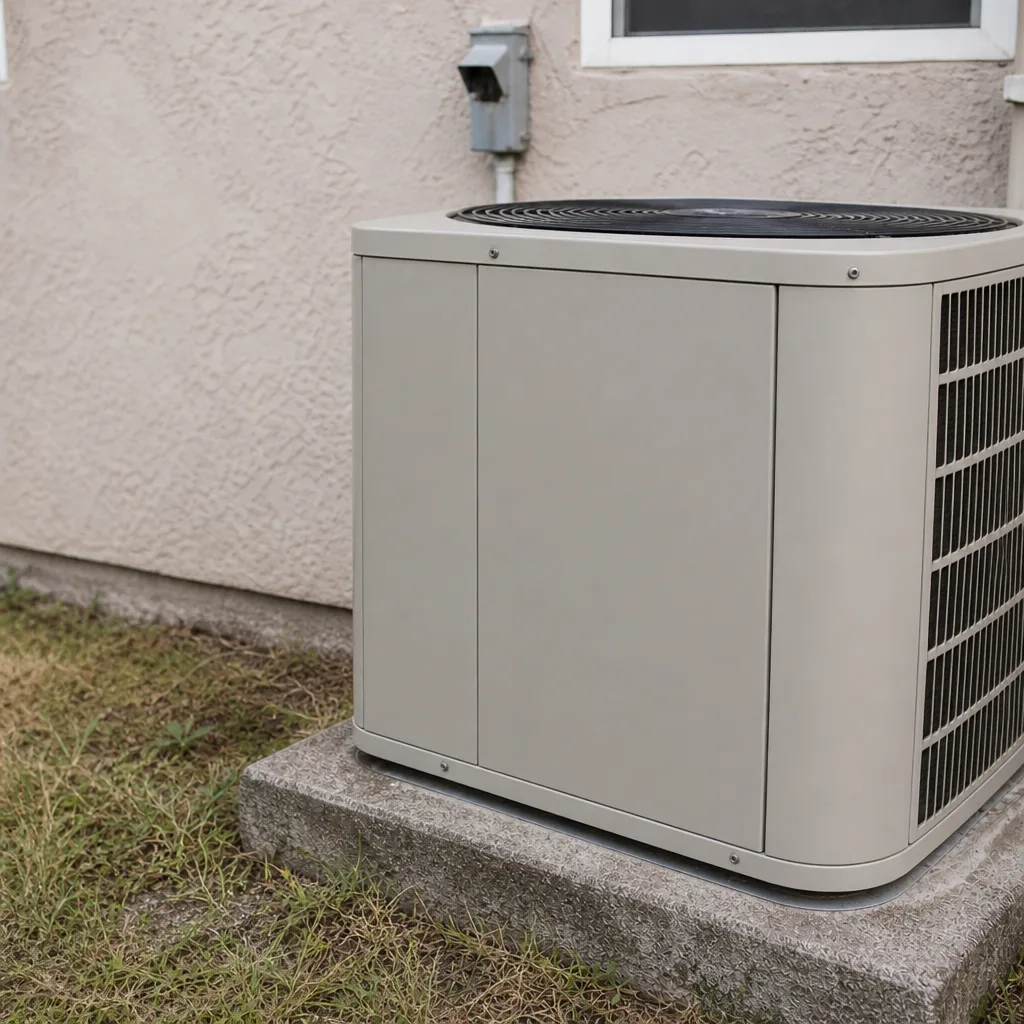
- Clear the outdoor unit. Trim vegetation back at least two feet from every side, hose off the coil fins from the inside out once a season, and pull any leaves or grass clippings out of the base pan.
- Straighten bent fins. A fin comb costs less than a sandwich and restores airflow through a coil that’s been dinged by a weed trimmer or a hail stone.
None of these require certification, none void a warranty, and each one extends the life of a system you’ve already paid for. They’re also the foundation any honest technician will check first – so doing them yourself frees up professional dollars for the repairs that actually matter.
The Gray Zone: When DIY Looks Cheap and Costs More
Then there’s the middle tier – the jobs a mechanically confident homeowner can technically complete but probably shouldn’t. This is where the risk calculus stops being about safety and starts being about money.
Take a failed capacitor. It’s a $20 part, a five-minute swap, and a hundred videos explain it. But a bad capacitor is usually a symptom, not a root cause. Swap in a new one without checking the compressor windings, the start relay, and the amp draw, and you can mask a failing compressor that fails hard three weeks later – out of warranty, in July, in Lakeland. The part was cheap. The miss was expensive.
The bigger risk is warranty. Most manufacturer warranties on a Carrier, Trane, Lennox, or Goodman system are conditioned on professional installation and service. Open the refrigerant circuit or replace a component without a licensed technician’s documentation, and a manufacturer has grounds to deny a parts claim on the exact equipment you were trying to protect. That’s often the difference between a covered compressor and a four-figure out-of-pocket.
Then insurance. If a homeowner-caused electrical fault starts a fire, or a refrigerant leak from a DIY repair damages the system beyond repair, a homeowners policy can push back on the claim on the grounds of unpermitted or unlicensed work. You don’t need to lose the argument to lose money – you just need the claim to be contested while your AC is down in August.
The honest rule: if the job involves the sealed refrigerant circuit, line voltage, or gas, the “DIY savings” is a number with an asterisk. The asterisk is usually bigger than the savings.
Why Multi-Brand Systems Complicate DIY Repairs
Here’s the piece most DIY guides ignore entirely: your system’s brand changes the repair. A blower-motor replacement on a Goodman is a different job than the same replacement on a Trane, which is different again from a Lennox. Different cabinet access, different control boards, different error-code logic, different proprietary connectors. A tutorial is only useful if it was filmed on your exact model – and the odds of that are slim.
Control boards are where this bites hardest. Modern systems from Carrier, Trane, Lennox, Goodman, and the rest use proprietary boards with brand-specific diagnostic flash codes. Misread a code, and you’ll replace a working board while the actual fault sits six inches away. We’ve seen homeowners spend a few hundred dollars on the wrong part before calling us, because the code they read on their system meant something different than the code in the video.
This is exactly why brand coverage matters on the professional side. The technicians at Ambassador AC Repair are certified to work on nine leading brands – Carrier, Trane, Lennox, Goodman, Rheem, York, Daikin, Bryant, and American Standard – which means that when we look at your system, we’re diagnosing what’s actually installed on your wall, not the brand we prefer. Our technicians have up to 9 years of experience across that range. That’s why we describe the job as working on your system, not the one we wish you had. If you’re deciding whether to attempt a repair, the specific brand and model of your equipment should be the first thing you check.
The Second-Opinion Play: When to Call Before You Buy Parts
One of the most underused moves in the DIY-versus-professional debate is calling a pro not to do the repair, but to confirm your diagnosis before you spend a dollar on parts. It’s a middle path, and for the mechanically inclined homeowner it’s often the smartest one.
Here’s when it pays off:
- You’ve got a diagnostic code but no confirmed cause. A technician with the right meter and the brand manual can tell you what the code actually means on your model in fifteen minutes.
- You’ve ordered a part and the system still doesn’t work. That’s the moment to stop guessing. The second part you buy is usually the expensive one.
- You’re deciding between repair and replacement. This is a genuinely hard call, and it isn’t a DIY decision at all – it depends on system age, refrigerant type, and total lifetime cost, which means a professional assessment.
- The symptom is intermittent. Intermittent faults are the hardest DIY diagnoses because you can’t reproduce the condition on demand. A tech with gauges and a clamp meter can usually catch it on the first visit.
A second opinion on the diagnosis is not the same as paying someone to do the work. You keep the wrench. You just stop buying parts on a guess. In our experience, that one habit prevents more wasted dollars than any other single choice a DIY-minded homeowner makes.
Lakeland’s Climate and Why It Changes the Math
Florida’s cooling season runs longer than most of the country’s, and that changes the DIY-versus-professional calculus in three concrete ways.
First, filters load faster and condensate drains work harder. The heat and humidity mean the system runs almost continuously from spring through fall, pushing more air and more moisture through the same equipment. That makes the safe DIY tasks – filter swaps, drain flushes, outdoor unit clearing – more important here than in a cooler climate, not less.
Second, a system failure in Lakeland is rarely just an inconvenience. When the outdoor temperature is pushing into the nineties and the indoor humidity is climbing with it, a failed AC turns a home into a heat box fast. That’s why the “I’ll get to it next week” instinct that works fine in mild weather doesn’t serve you here. If a system is limping, diagnosing it early is worth more than saving a call.
Third, the humidity makes condensate problems worse. A slow drain clog that would be a minor nuisance elsewhere can be a ceiling-stain repair here, because the air handler runs so much more. This is one of the highest-value reasons to flush that drain line on a regular schedule.
None of that changes the legal line – the sealed circuit and the electrical work still belong to a licensed contractor. It does mean the DIY tasks that are safely within reach matter more in Lakeland than they would in a place with a shorter cooling season.
Repair vs Replace: The Decision That Isn’t DIY
When a system is getting older and the repair estimate is climbing, the repair-versus-replace question comes up. And while a homeowner can absolutely weigh the numbers on their own, the inputs that actually determine the answer aren’t all DIY-visible.
Three factors drive the decision:
- Refrigerant type. Older systems running R-22 face a shrinking supply and rising cost per pound. A repair that involves charging the system with R-22 can cost more than it’s worth relative to a replacement running a current refrigerant.
- Remaining service life. A system in its final years that needs a compressor repair is a different calculation than a younger system with the same fault. A technician who knows the equipment can assess the whole system, not just the failed part.
- System-wide condition. A compressor replacement on a system with a compromised coil, a failing blower, and a rusting cabinet is money thrown at a system that will keep costing you. A whole-system assessment tells you where you actually stand.
When replacement is on the table, the work needs to be load-calculated and scheduled rather than rushed. Our AC installation process starts with a written fixed price and a set install date, so you know what you’re committing to before work begins. That’s the opposite of a guess-and-hope approach, and it’s exactly why we don’t treat the repair-or-replace call as a quick one.
Common Mistakes to Avoid
- Handling refrigerant without EPA certification. This is a federal violation, not a technicality, and the penalty structure is severe. If a repair requires opening the sealed circuit, that’s the professional line.
- Replacing a part without confirming the diagnosis. The first failed capacitor costs twenty dollars. The second failed part – the one you didn’t need – costs more, plus the original repair that never fixed the problem.
- Using a generic tutorial instead of the model-specific service manual. A control board on a Trane doesn’t throw the same codes as a Goodman. Misread the code, replace the wrong part.
- Ignoring the warranty language. Most manufacturer warranties are conditioned on professional installation and documented service. A DIY repair can void coverage on the most expensive components.
- Skipping the filter because “it looks fine.” In Lakeland, that filter is loading fast. Every 60-90 days, not once a year.
- Letting a condensate clog sit. The repair is not the drain. The repair is the water-damaged ceiling or air handler the drain caused.
- Attempting electrical work inside the air handler without a licensed contractor. Line voltage inside the unit is not a hobby project, and homeowners insurance can contest a claim from unpermitted work.
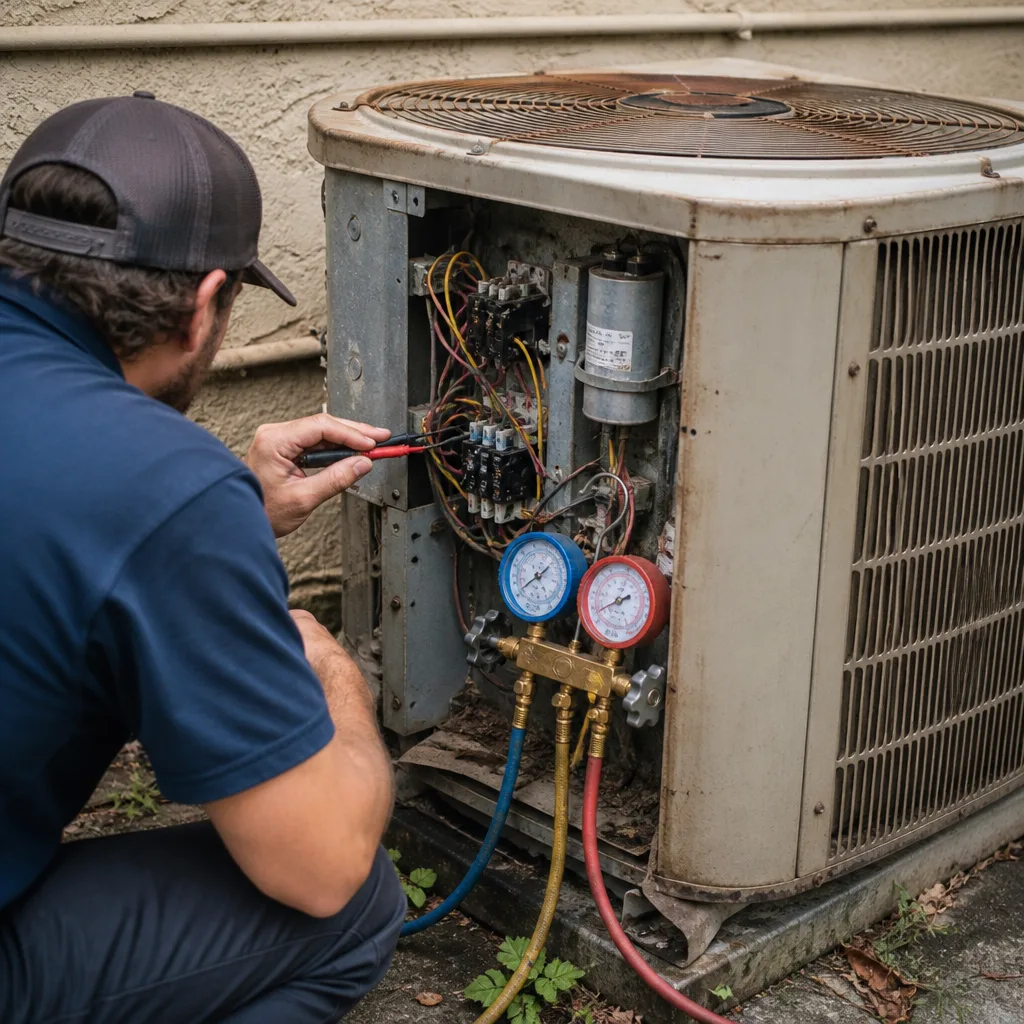
See the difference
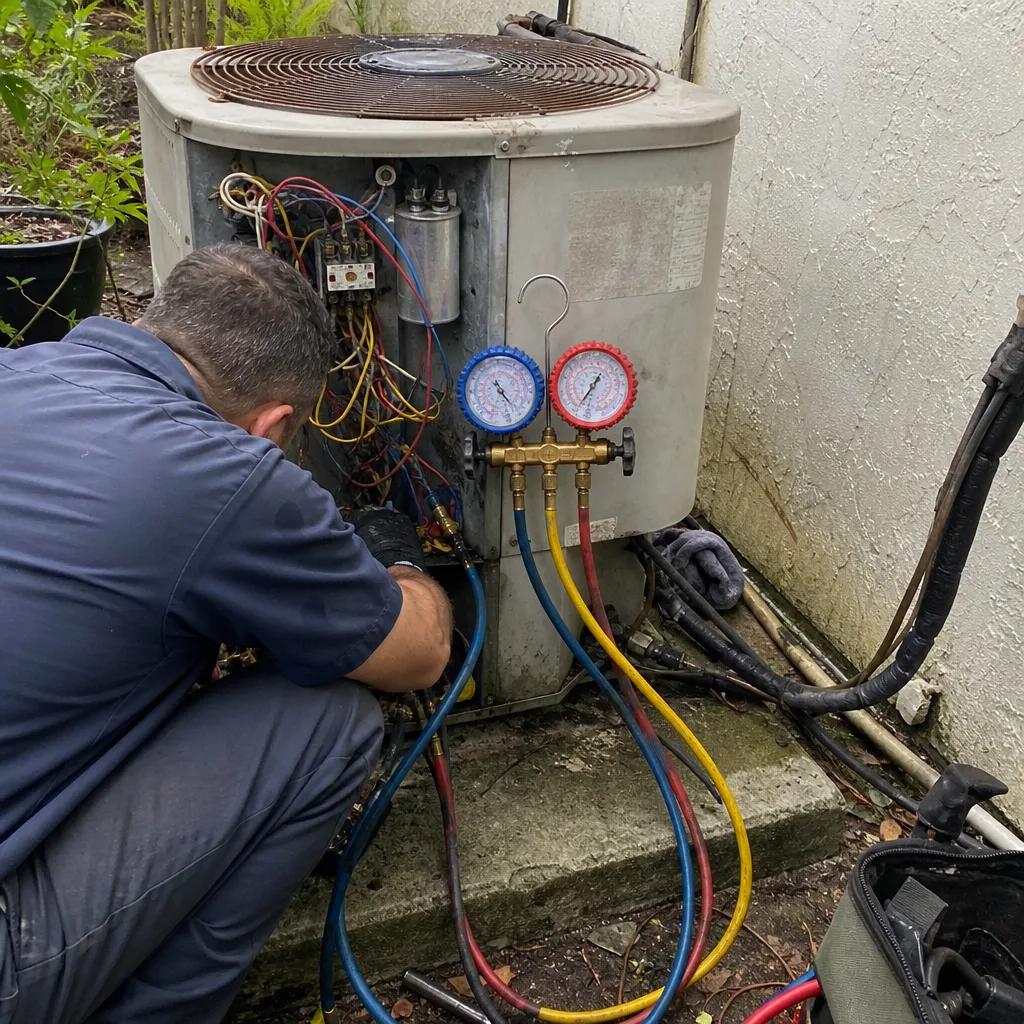 Before
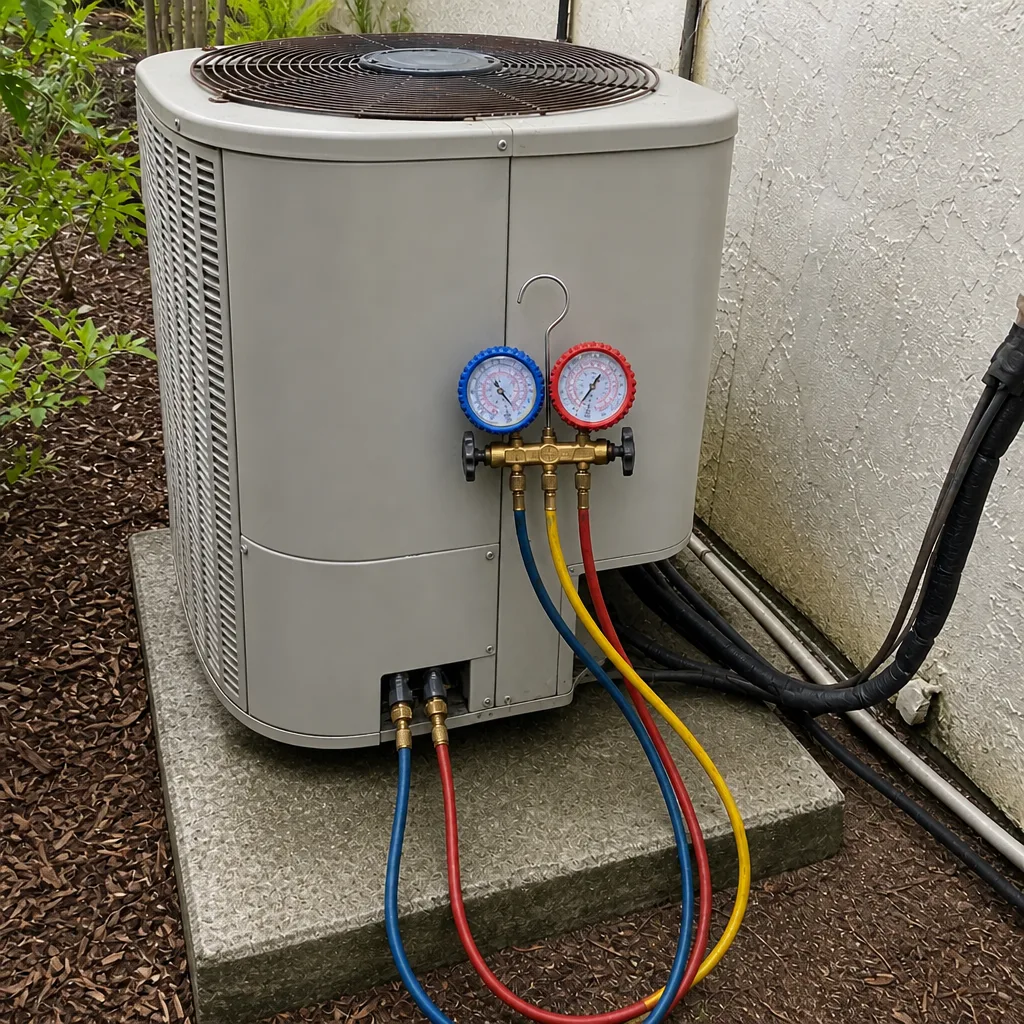 After
 Before
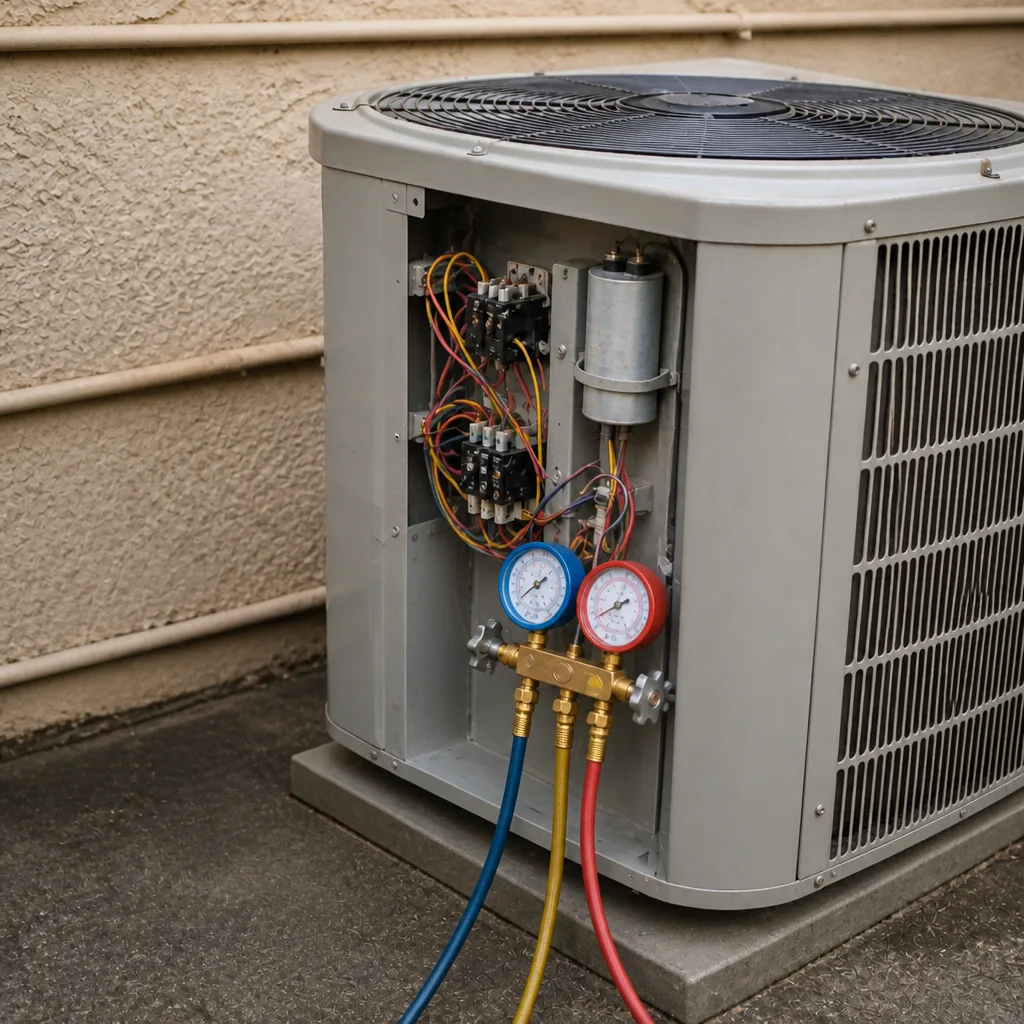 After
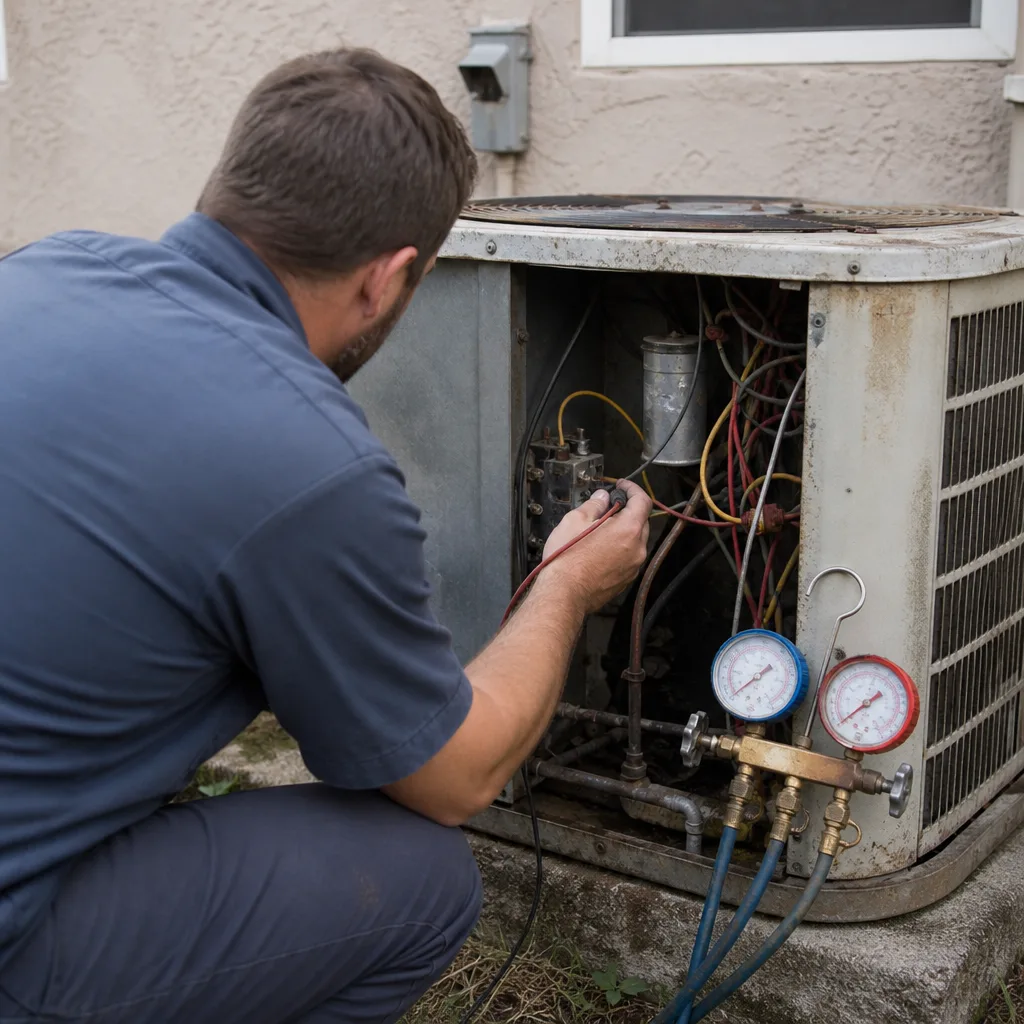 Before
 After
When to Call a Professional
Some jobs are simply not DIY jobs, and it’s worth being direct about which. If the system involves refrigerant, the sealed circuit, line-voltage electrical components, gas connections, or a control board with proprietary diagnostics – call a professional. If the system has failed completely in the middle of a Lakeland summer, call. If you’ve replaced a part and the system still doesn’t work, call. If you’re deciding between repair and replacement, call. If the symptom is intermittent and you can’t reproduce it on demand, call. And if you’re simply not sure which side of the legal line a task falls on, call before you pick up a tool.
Ambassador AC Repair offers free estimates in Lakeland – call (855) 528-6110. We answer 24/7, with fast dispatch from 7am to 7pm, Sunday through Friday. We work on systems from nine leading brands, including Carrier, Trane, Lennox, Goodman, Rheem, York, Daikin, Bryant, and American Standard, so the diagnosis fits your actual equipment. If you’re comparing contractors as well, see our guide to the Lakeland HVAC landscape.
Frequently Asked Questions
You can legally perform maintenance tasks in Florida – filter replacement, thermostat swaps on conventional systems, condensate line flushing, outdoor unit clearing, and fin straightening. Repair work that touches the sealed refrigerant circuit, line-voltage electrical components, or gas connections requires a licensed HVAC contractor, and refrigerant handling specifically requires an EPA Section 608 certification. When a repair crosses that line, it becomes an unlicensed-contracting exposure for the homeowner.
Yes. Handling refrigerant without EPA Section 608 certification is a federal violation, regardless of whether the refrigerant was purchased legally. The certification requirement applies to anyone who services, maintains, or disposes of equipment containing regulated refrigerants. A system that’s low on refrigerant has a leak that needs to be located and repaired by a certified technician before the charge is restored, not a DIY top-off. Call (855) 528-6110 for a proper leak diagnosis – estimates are free.
It can. Most manufacturer warranties on systems from Carrier, Trane, Lennox, Goodman, and the other major brands are conditioned on professional installation and documented service. Opening the refrigerant circuit or replacing components without a licensed technician’s record gives a manufacturer grounds to deny a parts claim. The safest rule is to keep the DIY work to tasks that don’t touch the sealed system or the electrical panel, and leave documented service to a licensed contractor.
Every 60-90 days is the right rhythm for most Lakeland homes, because the long cooling season and the local pollen load work the filter harder than in a cooler climate. Homes with pets, or with a system that runs nearly nonstop in summer, may need a change closer to every 60 days. A clogged filter forces the blower to work harder and can freeze the evaporator coil – which turns a routine filter change into a repair. Call us if you’re not sure your filter interval fits your system.
Yes, if the system uses a conventional thermostat and standard wiring. Killing the breaker, photographing the wire connections before you disconnect them, and matching wire-for-wire is within reach for a careful homeowner. If the system is communicating or variable-speed and uses proprietary wiring, or if the replacement is a system-specific communicating thermostat, stop – that’s a professional swap. Call (855) 528-6110 if you’re not sure which category your system falls into.
For legal maintenance tasks, DIY is cheaper and we encourage it – filters, drains, outdoor coil cleaning. For repairs, the professional is usually cheaper over time because the DIY cost isn’t just the part; it’s the misdiagnosis, the second part, the voided warranty, and the potentially contested insurance claim. When a repair involves the sealed system or line voltage, the professional route is not just safer, it’s typically the lower-cost outcome once the risks are weighed honestly. Call (855) 528-6110 for a free estimate before you spend on parts.
The Bottom Line
The DIY-versus-professional HVAC question isn’t really a skill question. It’s a legal and financial boundary that Florida draws clearly, and once you know where it sits, the decision gets simple. Filters, thermostats, condensate drains, and outdoor unit clearing are yours to handle, and they’re worth doing on a real schedule. Refrigerant work, line-voltage electrical work, gas connections, and system replacement belong to a licensed contractor – not because you couldn’t learn them, but because crossing the line voids warranties, jeopardizes insurance claims, and can turn a cheap fix into an expensive one. Do the safe, legal work yourself. Call a pro for everything else.
Ambassador AC Repair offers free estimates in Lakeland – call (855) 528-6110. We answer 24/7, with fast dispatch from 7am to 7pm, Sunday through Friday. Cooling and heating, handled – on nine leading brands, under one roof. Straight answers on what your system actually needs, and a written estimate before any work begins.
Written by the team at Ambassador AC Repair.