
Last updated November 14, 2026
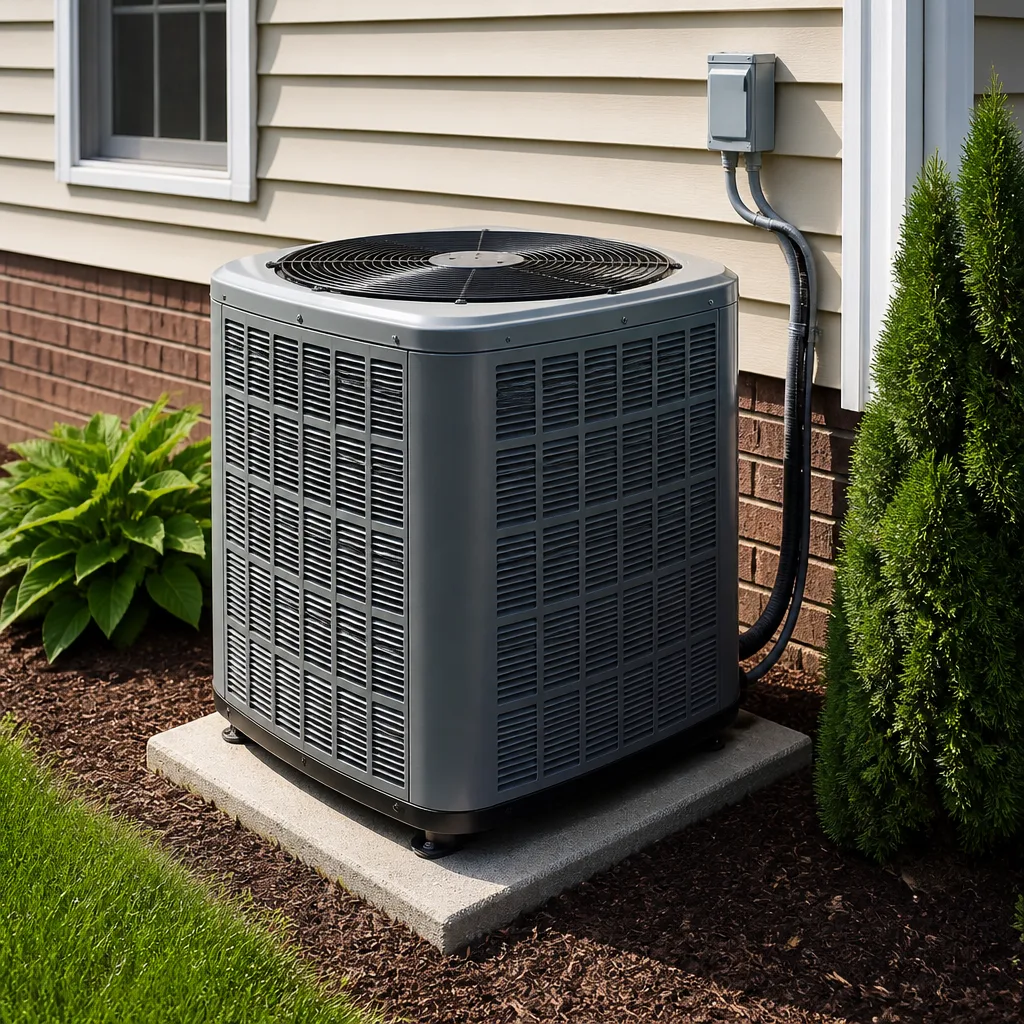 AC repair
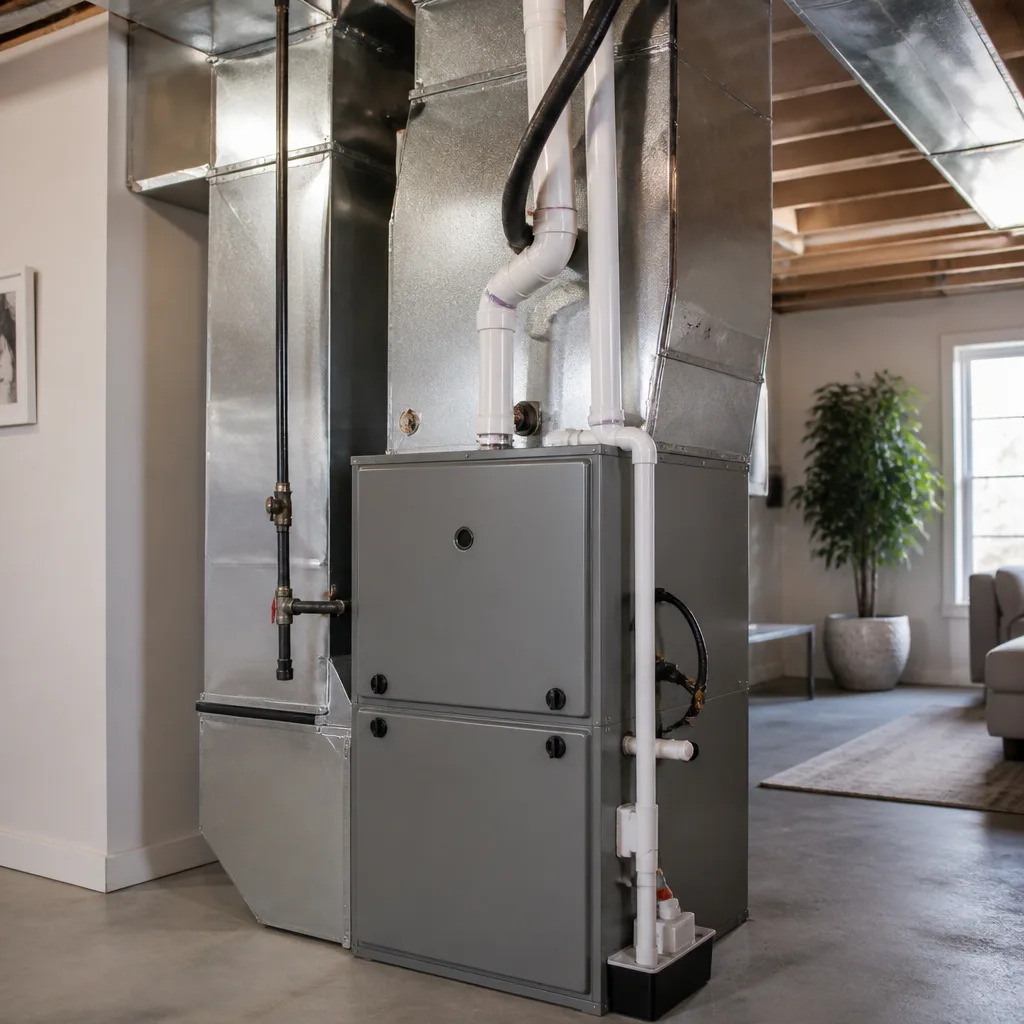 Furnace & heating
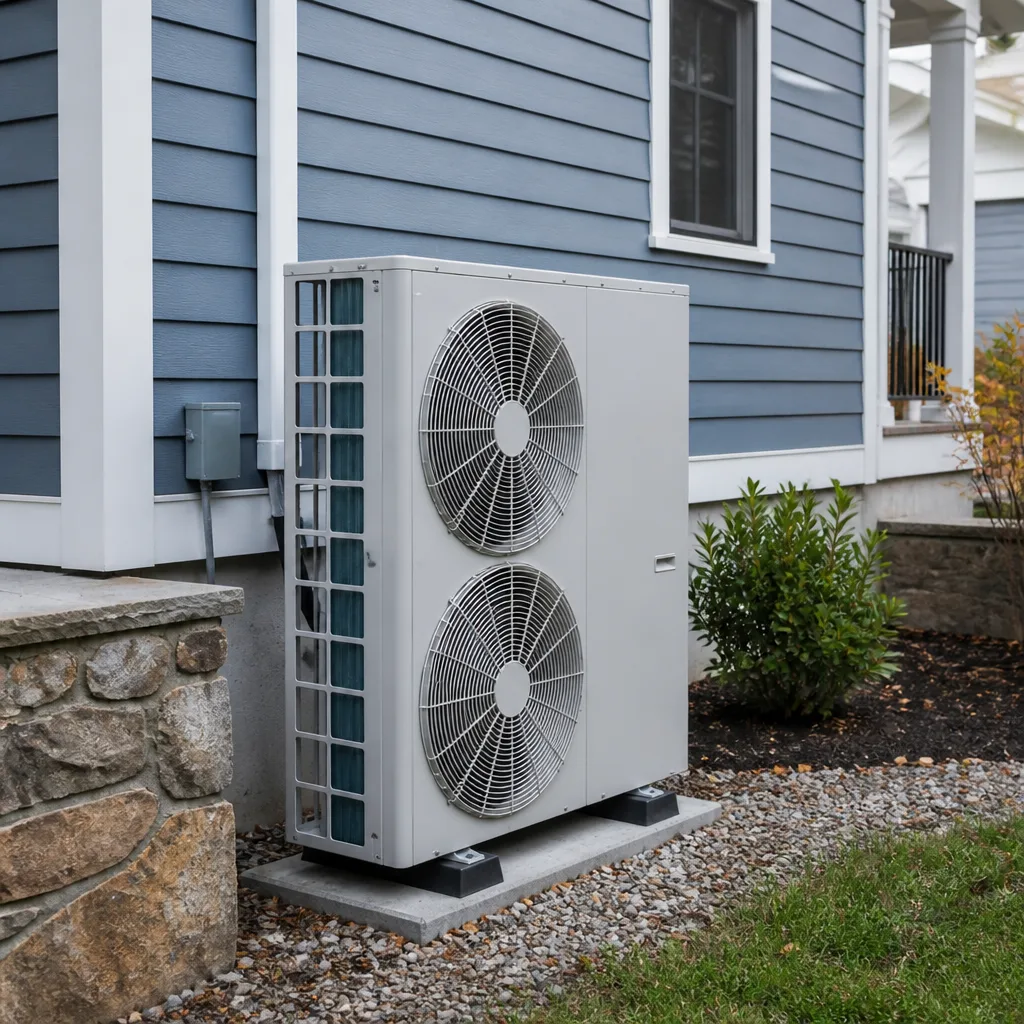 Heat pumps
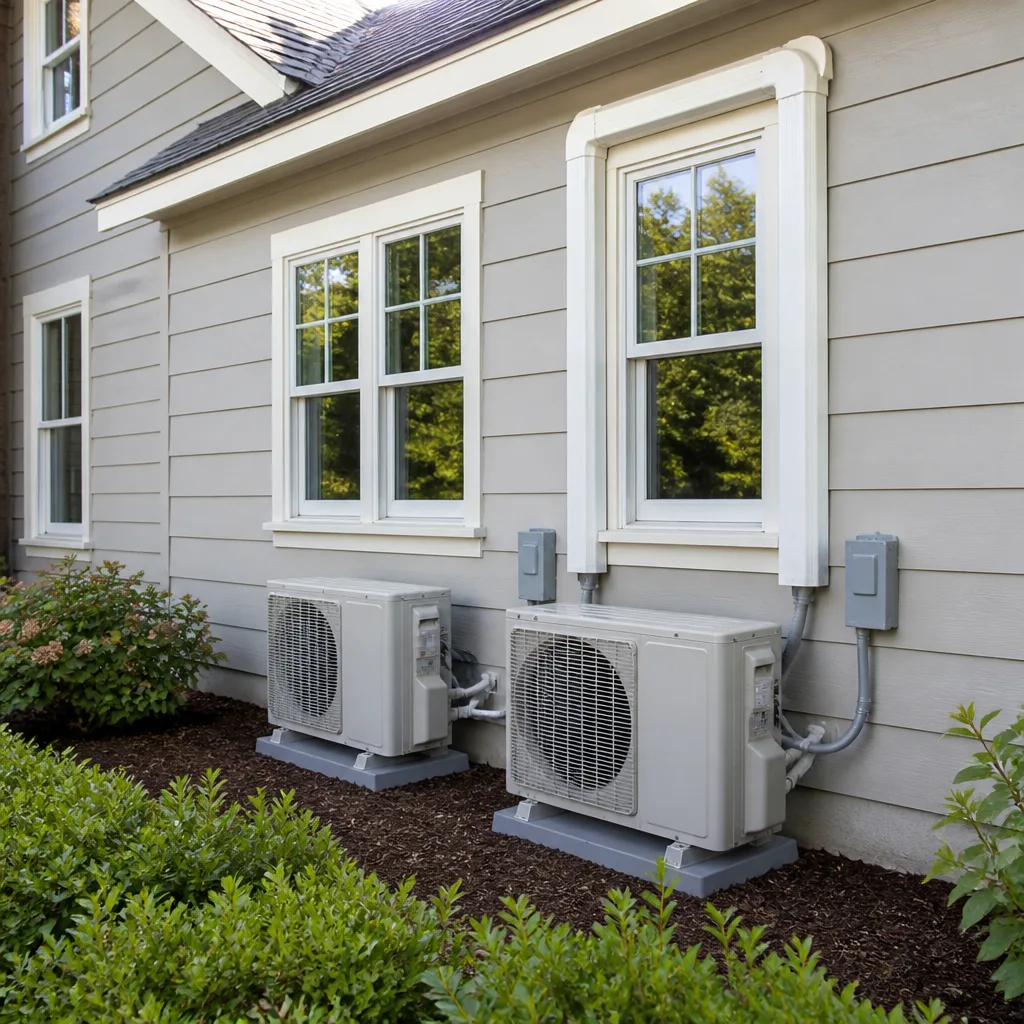 Ductless mini splits
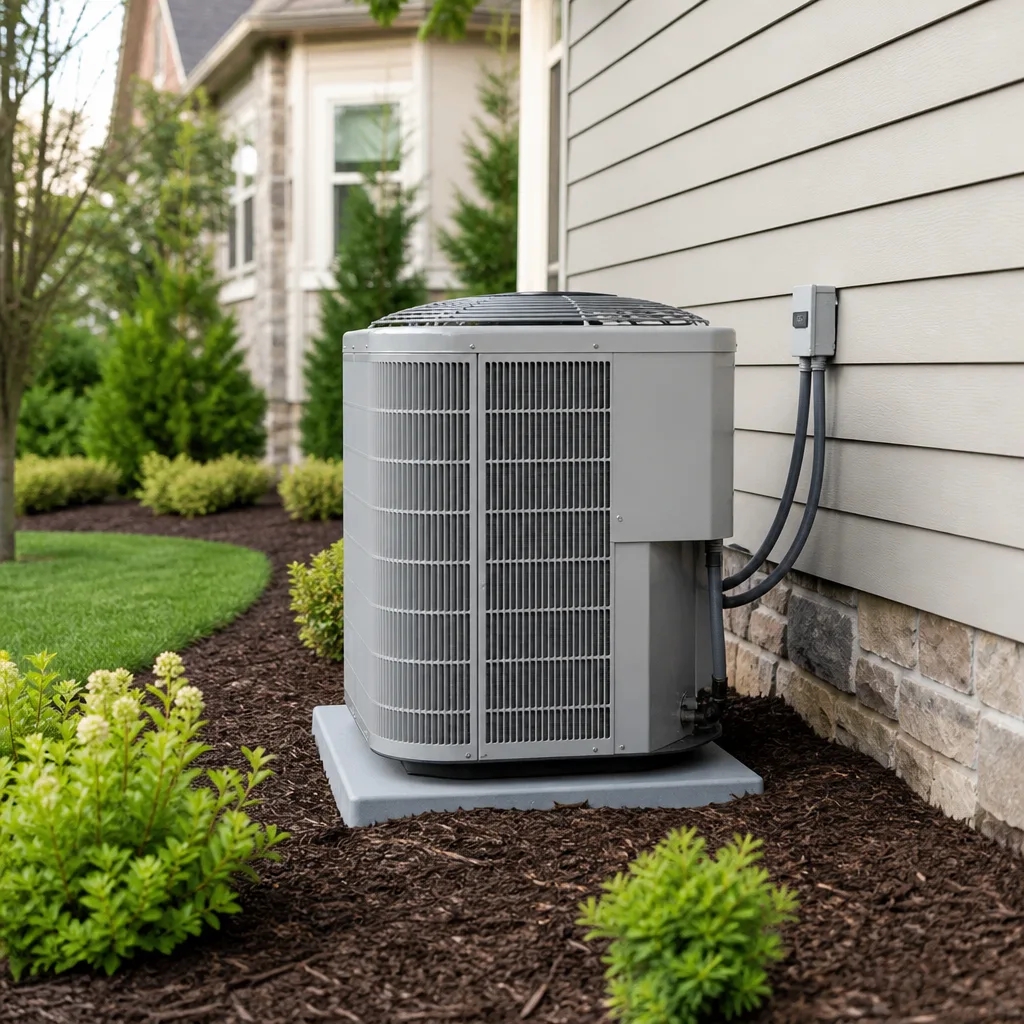 Carrier
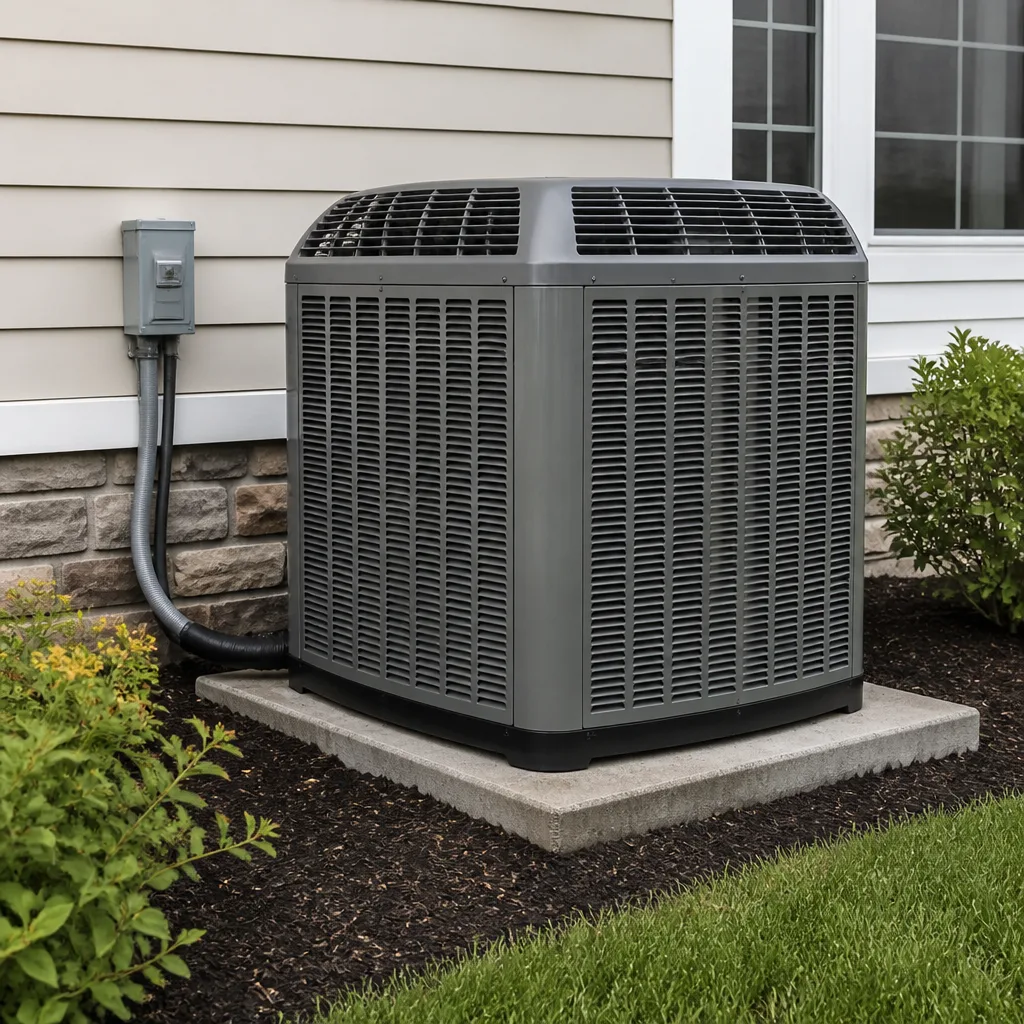 Trane
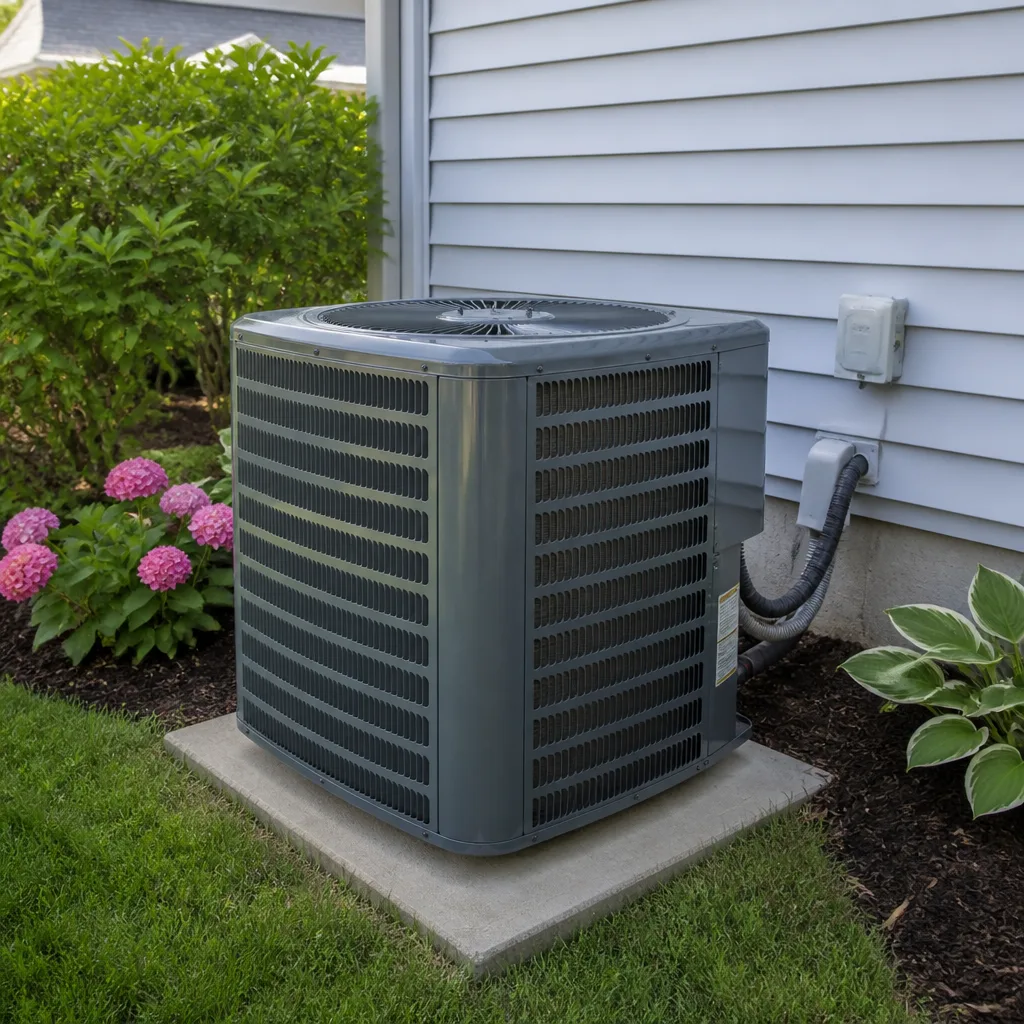 Goodman
Seasonal tune-up and full diagnostic on your Carrier, Trane, or Goodman system - readings shown to you before any repair is proposed
Diagnosis first, numbers second - you approve the repair price before a single part goes in.
Get your free estimateThe Complete AC Repair Guide for Lakeland Homeowners
Most AC advice floating around the internet was written for a house in Ohio. That’s the problem. In Lakeland, your system doesn’t get a winter off. It runs hard from April through October and then keeps cycling through a humid off-season, and that changes almost everything about how it fails, when it fails, and whether a repair is worth the money. This guide is built around those local realities: the humidity that quietly eats evaporator coils, the sandy soil that works its way into condenser fins, and the runtime math that decides repair versus replace. Read it and you’ll know what to check yourself, what to leave alone, and what a fair diagnosis actually looks like.
Quick Answer
AC repair in Lakeland means fixing a system that runs far more hours per year than the national average because of heat and humidity that never fully let up, so the diagnosis has to account for corrosion, airflow restriction from sandy soil, and long runtime wear, not just a blown capacitor. A proper repair starts with a real diagnostic: refrigerant pressures, coil condition, electrical draw, and airflow measured on site. The written estimate then sets the price, and the estimate is free. Call (855) 528-6110 to book one.
Styles & brands we work with
- AC repair
- Furnace & heating
- Heat pumps
- Ductless mini splits
- Carrier
- Trane
- Goodman
Table of Contents
- Why Lakeland AC Systems Wear Out Faster Than the Manual Predicts
- How Lakeland Humidity Attacks Your Evaporator Coil
- Sandy Central Florida Soil and Your Condenser Coil
- The Failure Timeline: April Through October in Lakeland
- Repair or Replace? How to Do the Runtime Math
- What a Lakeland Service Call Should Actually Look Like
- What You Can Safely Check Yourself
- Why Brand Knowledge Matters for Your System
Why Lakeland AC Systems Wear Out Faster Than the Manual Predicts
Manufacturer maintenance schedules assume a certain number of running hours per year. Most of the country lives somewhere that number lands around 1,200 to 1,500 hours. In Lakeland, a central system can log well over 2,000 hours of runtime in a heavy year, and a house that stays cool all summer on a single-stage unit can push toward 3,000. That’s the core fact behind nearly every premature failure we diagnose in the area. The equipment isn’t defective. It’s just accumulated a decade of use in what felt like five or six years.
What does extra runtime actually wear out?
- Compressors cycle on and off more often and run longer each cycle, which builds heat in the windings and stresses the start components.
- Contactors and capacitors are the cheap parts that fail first; they take the switching load for every one of those cycles.
- Blower motors run nearly continuously through the cooling season, and bearing wear shows up as a faint rumble before it shows up as a failure.
- Evaporator and condenser coils collect a season’s worth of dust and biological growth in months, not years, because the system is always moving air.
- Drain lines carry far more condensate than they would in a drier climate, which makes clogs and algae growth a routine problem rather than an occasional one.
Here’s the practical takeaway: if you moved to Lakeland from a cooler state and you’re still following the maintenance interval from your old house, you’re already behind. A system here benefits from a filter change schedule that’s tighter than the box recommends, and coil cleaning that happens on a summer rhythm rather than an annual one. If your system is already showing symptoms, our AC repair page lays out the most common failure patterns we see. For a broader look at who we are and how we work, the main Ambassador AC Repair page is the place to start.
How Lakeland Humidity Attacks Your Evaporator Coil
Your evaporator coil sits cold and wet for most of the year. That’s by design: it’s supposed to condense moisture out of the air. The trouble is that a wet coil in warm, humid air is also the ideal environment for the biology that causes coil corrosion and airflow loss. In dry climates, coils spend much of their life dry. In Lakeland, they spend nearly all of it damp. That single difference shortens coil life and creates the musty smell a lot of homeowners notice when the system first kicks on.
What to look at before you call anyone:
- Smell the supply vents when the system starts. A faint musty odor that fades after a minute is common and often means surface growth on the coil or in the drain pan. A smell that lingers or gets stronger is worth a look.
- Check the condensate drain. Find the PVC drain line coming off the indoor unit and look for standing water in the pan beneath it. Standing water means a partial clog, and a clog that backs up can shut the system down or cause water damage.
- Look at the filter. A filter that’s gray and matted after three weeks tells you the system is pulling a lot of particulate. In Lakeland’s humid air that filter can also grow the same surface biology the coil does.
- Listen for a gurgle. A drain line that gurgles is moving water, sometimes sluggishly. That’s your cue to have it cleared.
What you shouldn’t do is try to clean the coil yourself. The evaporator coil is behind the sealed indoor unit, and getting to it means opening a refrigerant system or a plenum. Coil cleaning also involves chemicals and a wet-vac setup that, done wrong, bends fins and restricts airflow further. This is one to hand to a technician. What you can do is notice the smell and the standing water early, because a small issue caught before the coil corrodes through is a much cheaper repair than a coil replacement. Our technicians have up to 9 years of experience reading these signs, and a technician who’s seen a thousand Lakeland coils knows what advanced corrosion looks like versus what’s just surface growth.
Sandy Central Florida Soil and Your Condenser Coil
The outdoor unit sits on a pad, and around that pad is sandy soil that doesn’t hold together the way clay or loam does. When the wind blows, when a mower runs past, when a dog digs nearby, fine sand lifts into the air. Your condenser fan pulls that air straight through the coil fins. Over a season, the fins load up with a fine grit that’s much harder to see than the lint and leaf debris homeowners in other regions deal with. The result is reduced airflow across the coil, higher head pressure, longer runtimes, and a system that struggles to keep up on the hottest afternoons even though nothing has technically broken.
How to spot reduced airflow from a dirty condenser before it becomes a repair:
- The system runs longer than it used to. If the unit used to reach setpoint in fifteen minutes and now takes thirty, the outdoor coil is a prime suspect.
- The top of the unit feels hot to the touch and the air coming off it feels weak. A healthy condenser blows a strong, warm stream upward. A weak stream means restricted airflow.
- Visible grit or matted debris on the fins. Shine a light through the coil from the inside out. If you can’t see light through the fins, air can’t get through either.
- Higher electric bills with no other explanation. A condenser working against restricted airflow runs longer and draws more current.
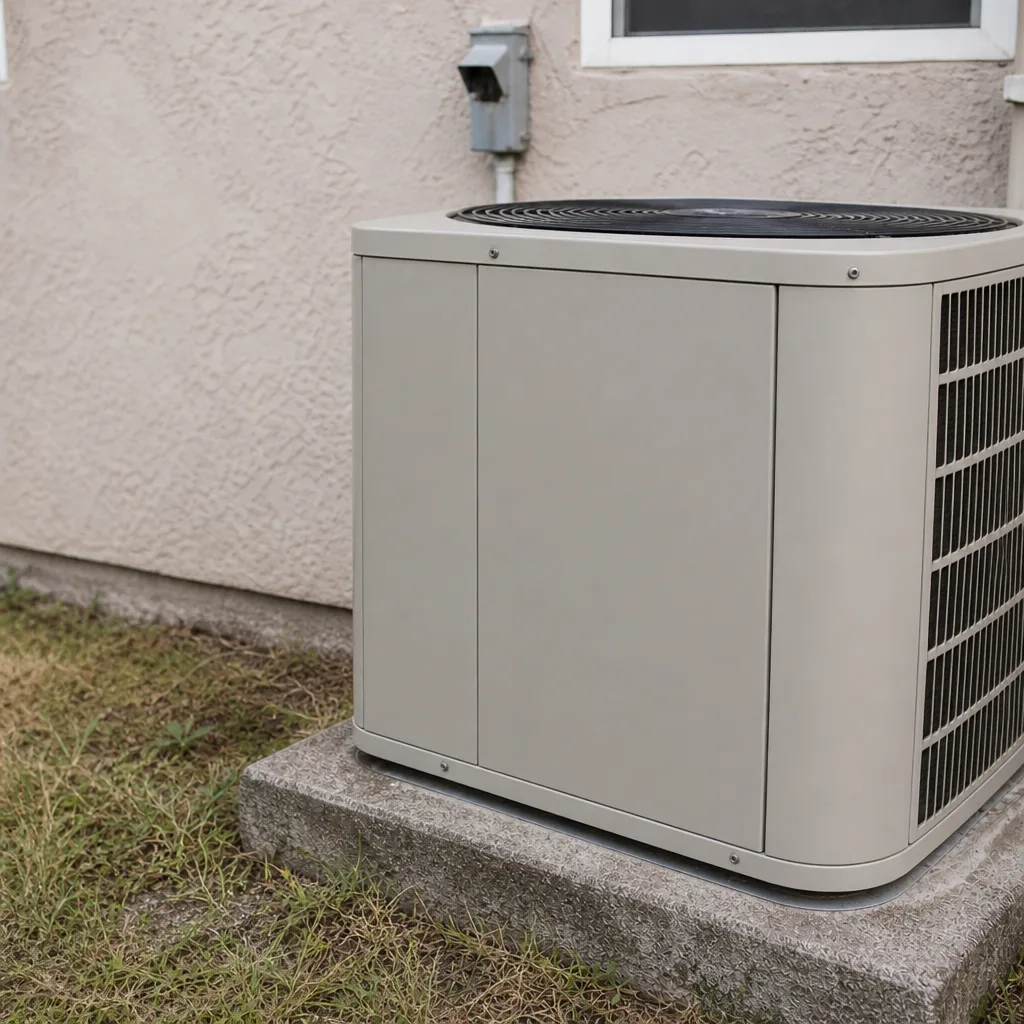
The fix is a coil cleaning, done from the inside out with the right nozzle and the power off. Homeowners who hose the coil from the outside with a garden sprayer usually drive the grit deeper into the fins instead of out, and they risk bending fins that are already thin. Keep the area around the pad clear of loose sand and vegetation, and have the coil cleaned on a regular rhythm. If your system is already struggling, that’s a good moment to have a technician look before the compressor takes the strain. Ambassador AC Repair handles this as part of a diagnostic visit, and the estimate is free.
The Failure Timeline: April Through October in Lakeland
A system in a cooler climate gets a repair-and-recover window every winter. In Lakeland, the cooling season is a continuous load, and that produces a fairly predictable sequence of failures across the year. Knowing the timeline helps you plan rather than panic.
- Early spring (April-May). The first sustained heat and humidity after a mild winter shakes out anything marginal. Capacitors that weakened over the off-season, contactors that pitted, and drain lines that grew algae during the quieter months tend to fail now.
- Peak summer (June-August). This is the runtime wall. Compressors and blower motors that were hanging on give out under continuous load. Refrigerant leaks that were slow in spring become obvious when the system can’t hold setpoint. Condensate clogs become urgent because the coil is producing maximum water.
- Late summer into fall (September-October). Extended high-load months expose the accumulated wear. Second and third capacitor failures within one season, motors that have been rumbling since July, and coils that have thinned from a summer of moisture are the common calls.
- Off-season (November-March). The load drops but doesn’t disappear. This is when the smart homeowner schedules a tune-up and gets ahead of the next April. A system that gets looked at in a mild month is far less likely to fail in the worst heat.
What this timeline means in practice: a repair in April is usually cheap and quick, a repair in August is often the same part on a system that’s been running twelve hours a day for two months, and a repair in October is often the moment a homeowner has to confront the repair-or-replace question. If you’re in that last category, our guide to AC installation covers what replacement actually involves in a Lakeland home. But before you go there, read the next section.
Repair or Replace? How to Do the Runtime Math
Repair-versus-replace is usually framed as an age question. A ten-year-old system needs replacing, a five-year-old system gets repaired. That framing is a northern habit. In Lakeland, the more honest number is runtime hours. A system that’s logged 3,000 hours a year for eight years has done the work of a fifteen-year-old system in Ohio. The parts are the same; the wear isn’t.
Here’s how we think through it with homeowners:
- What’s the part and where is it? A capacitor, contactor, or blower motor is a repair, even on an older system, because the compressor and coil are unaffected.
- Is it the compressor or the coil? These are the two components that represent most of the system’s value. A failed compressor on a system with heavy runtime is usually a replacement conversation. A failed compressor on a system with a strong, well-maintained coil may still be worth repairing.
- How many repairs in the last two years? One or two is normal. A pattern of failures a few weeks apart is the system telling you it’s near the end.
- What does the second half of the loop look like? In Lakeland the cooling season is followed immediately by a mild winter where the system mostly rests, which is a small mercy. But it also means the annual repair budget concentrates in the summer, and a system that would stretch another three years in a cooler climate may only have one or two summers left.
- Is the refrigerant type still serviceable? Older refrigerant types get more expensive to recharge as supply tightens, so a leak on an older system can tip the math toward replacement even when the components are otherwise fine.
The honest answer we give homeowners is that a repair makes sense when the fix addresses a wear item and the core components are healthy. It stops making sense when the fix is chasing a system that’s already spent its wear budget. We don’t have a stake in which way you go, because we handle both AC repair and AC installation. Our job is to tell you what your system actually needs.
What a Lakeland Service Call Should Actually Look Like
A proper AC service call follows a sequence, and a technician who skips steps is a red flag. Here’s what you should expect when you call for repair in Lakeland.
- Booking and arrival window. You’ll get a window, not an all-day promise. When you call, we tell you what the day looks like and give you a realistic arrival window. We answer 24/7. Fast dispatch from 7am to 7pm, Sunday through Friday.
- Before the technician starts. A proper tech asks what you’ve noticed, how long it’s been happening, and whether anything changed recently. This is diagnostic information, and it matters.
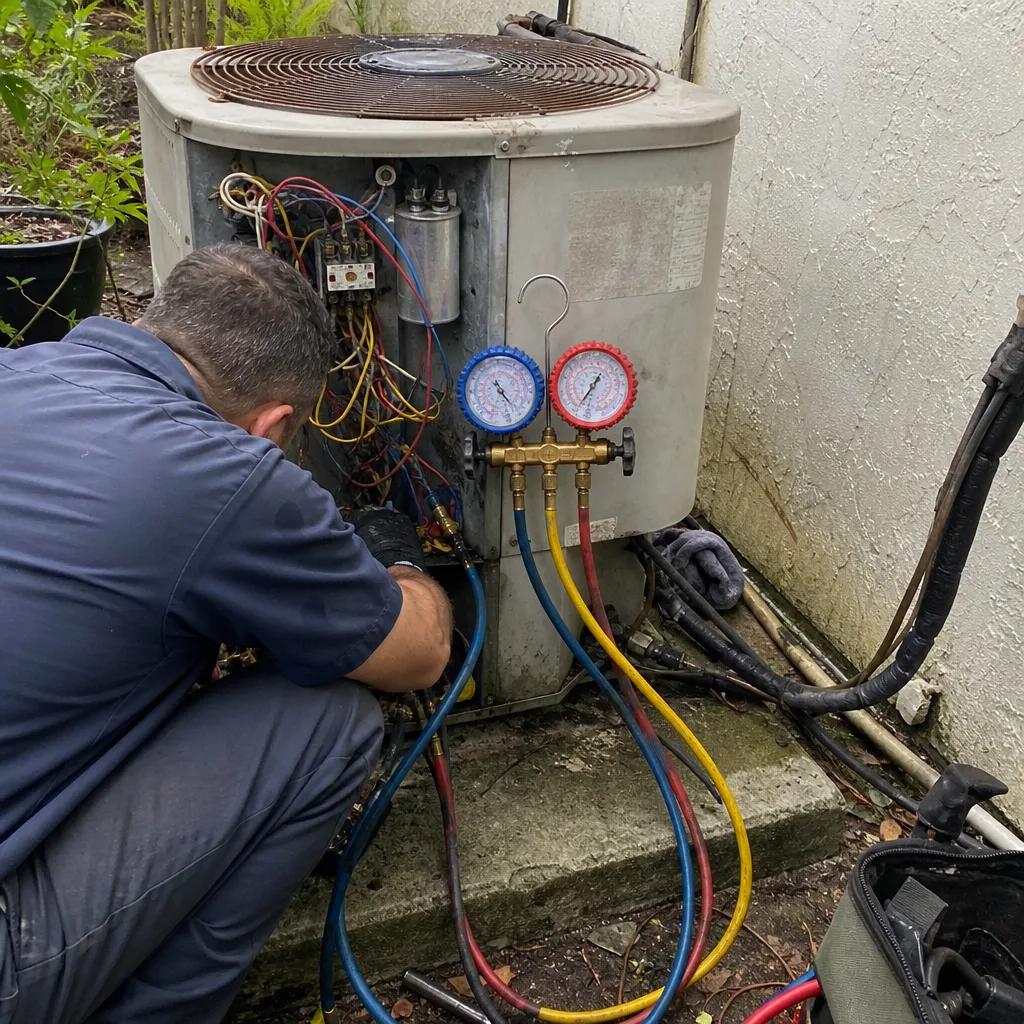
- The on-site diagnosis. The tech should measure refrigerant pressures, check electrical draw at the compressor and blower, verify airflow, inspect the coils, and check the condensate drain. If you don’t see gauges and a meter, ask what was checked.
- The explanation. You should hear what’s wrong, what the fix is, and what it costs, in plain language, before any work starts.
- The written estimate. The price is set per job by the written estimate. That document is your protection. If a technician quotes a number without putting it in writing, that’s a red flag.
Red flags that signal an underqualified or high-pressure tech:
- They can’t explain in plain terms what failed and why.
- They recommend a replacement on the first visit without measuring or explaining the system’s actual condition.
- They quote a price over the phone before seeing the system, or push a number that doesn’t match the written estimate.
- They don’t check the evaporator or condenser coils, which is where half of the real diagnosis in this climate lives.
- They don’t have a clear answer about what brand of system you own and how they’ve worked on it before.
What You Can Safely Check Yourself
There’s a lot you can do without opening a panel or touching a wire, and it’s worth doing because it makes the service call faster and cheaper. Here’s the safe checklist.
- Filter. Check it every month during the cooling season. In Lakeland’s humid air, a filter that looks fine on day one can be matted and biologically loaded by day twenty. Change it early and often.
- Thermostat. Make sure it’s set to cool, the fan is on auto, and the batteries are fresh. A surprising number of no-cool calls are thermostat settings.
- Breakers. Check the indoor and outdoor disconnects. If a breaker is tripped, reset it once and see if it holds. If it trips again, stop and call.
- Condensate drain. Look for standing water in the pan. If you see it, turn the system off and call. A backup can cause water damage.
- Outdoor unit. Look at the pad. Clear any loose sand, leaves, or vegetation within a couple of feet. Don’t hose it down; that drives grit into the coil.
- Airflow. Open the supply vents, make sure furniture isn’t blocking returns, and listen for unusual noise.
What you shouldn’t touch: refrigerant lines, the compressor, the capacitor, the contactor, or anything behind the indoor panel. The capacitor holds a lethal charge even when the power is off, and refrigerant handling requires equipment and training. This is genuine danger, not a liability disclaimer. A technician is the right call.
Why Brand Knowledge Matters for Your System
Every major manufacturer builds its equipment differently. Control boards, wiring conventions, refrigerant charge procedures, and even the diagnostic trouble codes vary by brand. A technician who’s familiar with Goodman and Rheem equipment will read your system faster than one who’s working from a generic manual, and that speed shows up in the accuracy of the diagnosis and the time you spend without cool air. If your system happens to be a York or a Daikin, the same applies; each brand has its own patterns and its own quirks.
Ambassador AC Repair is equipped to work on Carrier, Trane, Lennox, Goodman, Rheem, York, Daikin, Bryant, and American Standard. That’s nine major manufacturers, which covers the vast majority of what’s installed in Lakeland homes. What matters more than the list is what it means for you: we work on your system, not the one we wish you had. Our recommendations are based on what’s actually in your house, not on which brand is easiest to sell. Straight answers on what your system actually needs, and the written estimate that sets the price.
Common Mistakes to Avoid
- Following a cooler-climate maintenance schedule. If your tune-up interval came from a northern state, it’s too long for Lakeland runtime. Have the coil and drain looked at on a summer rhythm, not an annual one.
- Hosing down the condenser. It feels like cleaning, but it drives sandy grit deeper into the fins. The coil needs to be cleaned from the inside out by someone who knows the fins will bend.
- Ignoring a musty smell. That smell is your first warning of surface growth on the evaporator coil. Waiting until it’s a stronger odor usually means a bigger repair.
- Replacing a capacitor or motor without looking at the coil. A system that’s failing repeatedly is often fighting restricted airflow, and swapping the failed part without cleaning the coil just delays the next failure.
- Letting a small drain clog run. A backed-up drain can shut the system down or cause water damage to the ceiling below the air handler. Standing water in the pan is a call-us-now sign.
- Accepting a repair quote without a written estimate. The written estimate is your protection. If it’s not on paper, it’s not the price.
- Waiting for August to schedule a tune-up. A system that gets looked at in a milder month is less likely to fail when it’s actually hot, and the diagnostic is calmer.
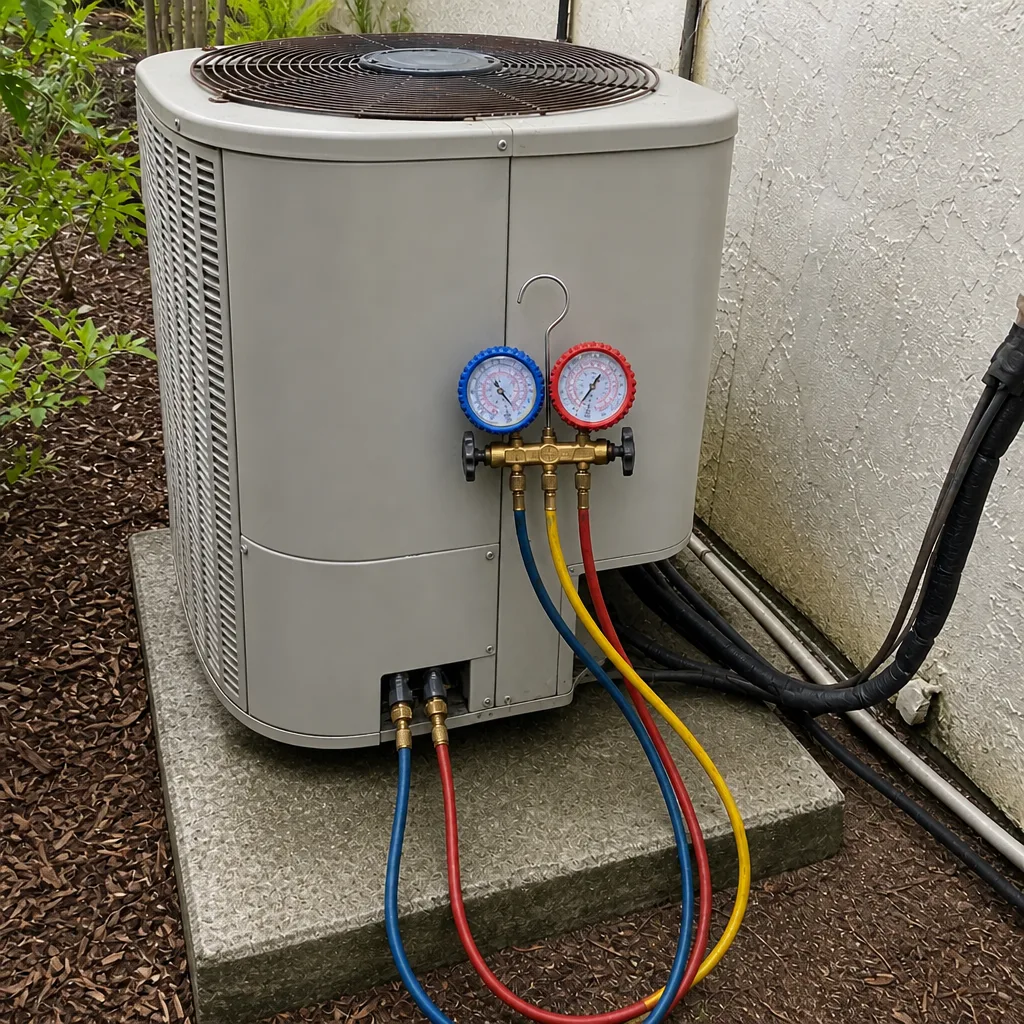
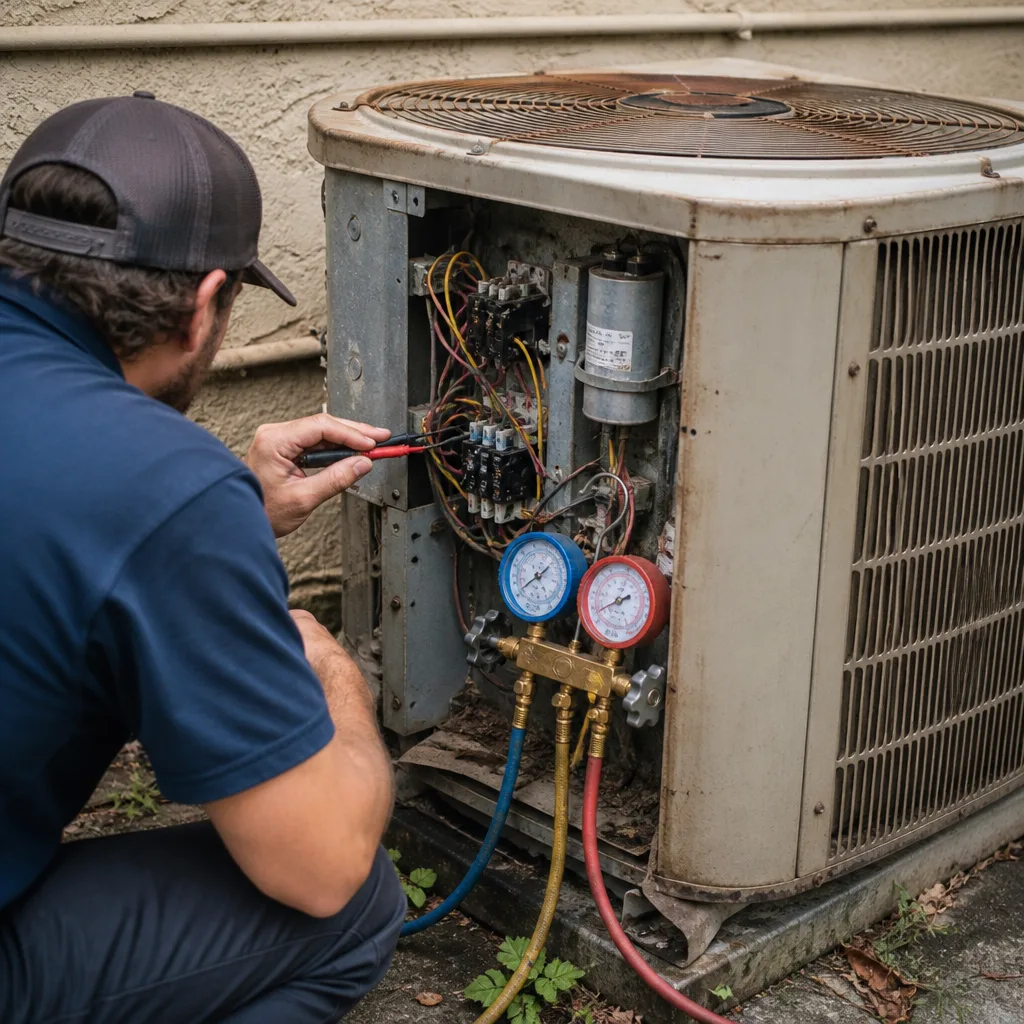
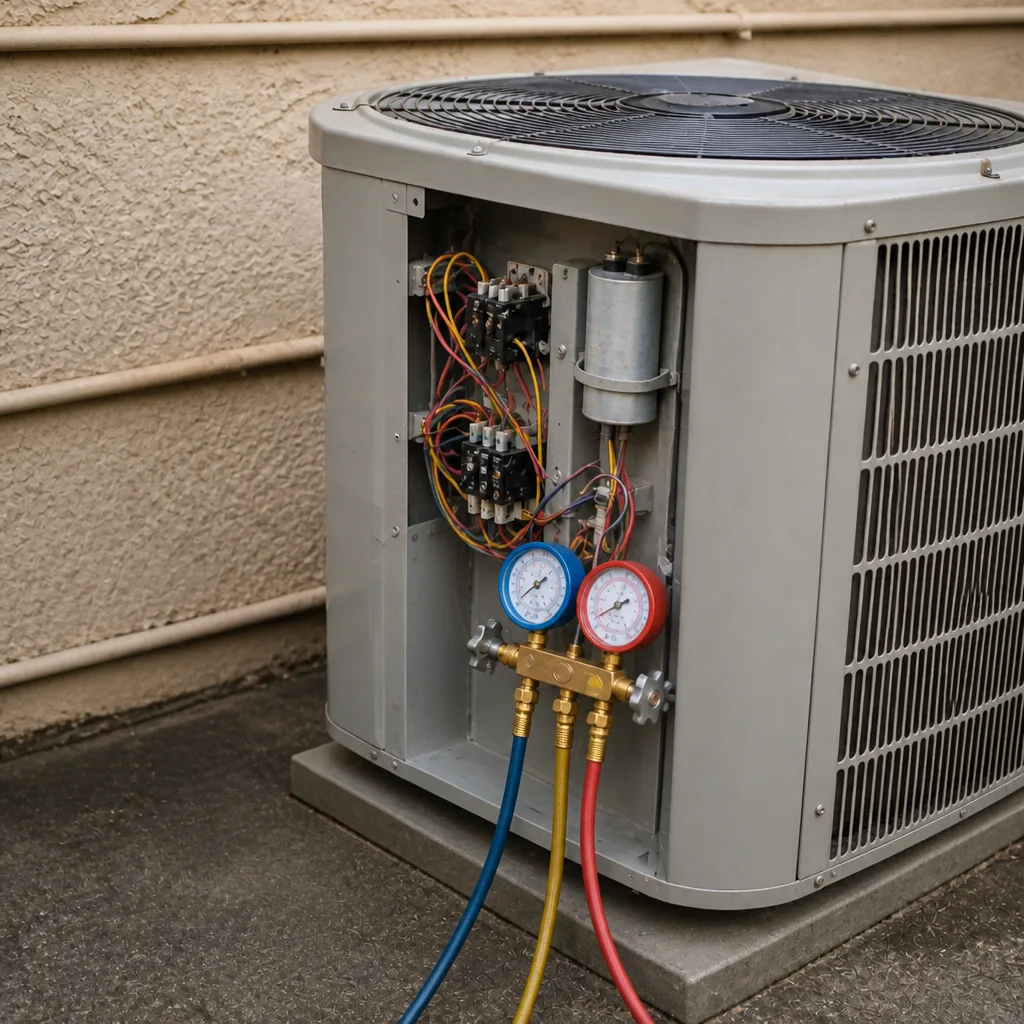
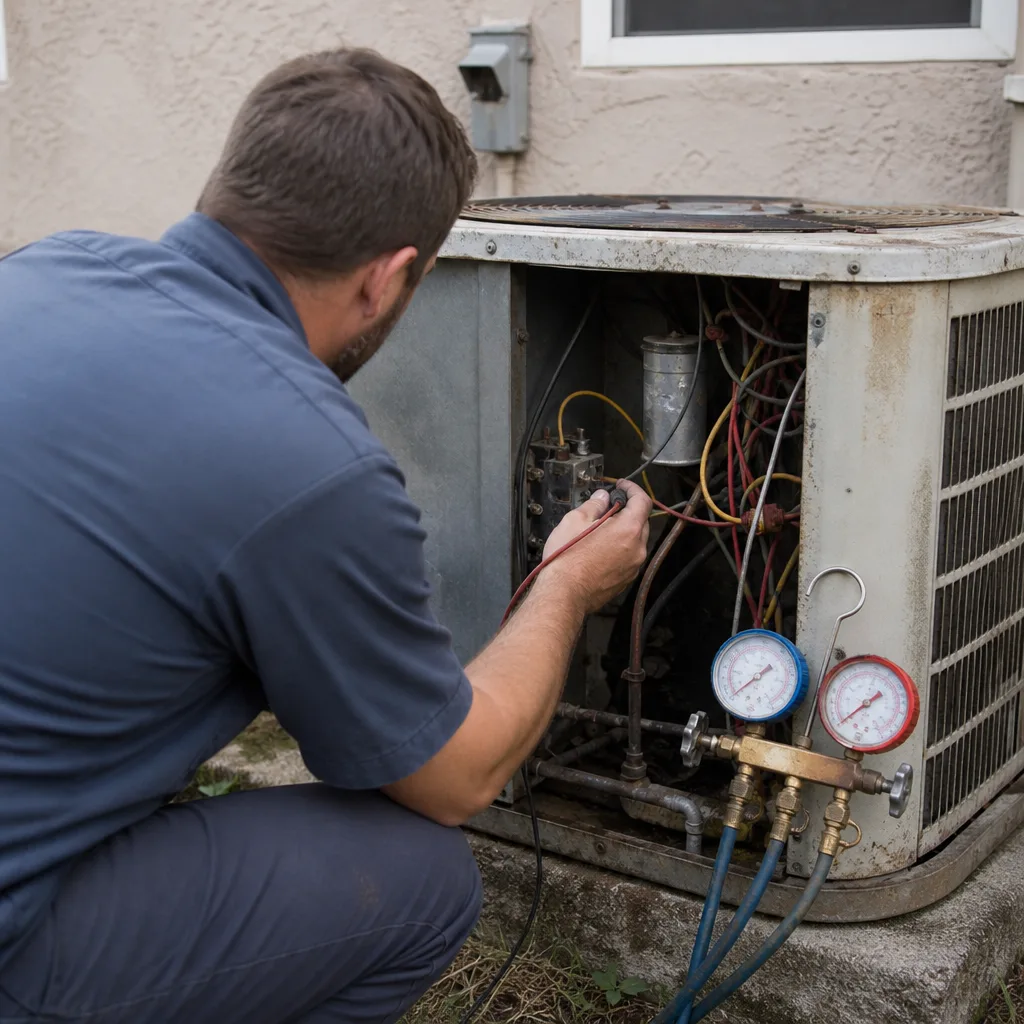
See the difference
 Before
 After
 Before
 After
 Before
 After
When to Call a Professional
Call a professional when the system isn’t keeping up, when you smell something musty from the vents, when the condensate pan has standing water, when a breaker trips twice, or when the outdoor unit is running but the air isn’t cool. Call when you see visible corrosion or grit on the coil, when the system runs much longer than it used to, and when a repair quote over the phone doesn’t come with a written estimate. Call before you touch a wire, a capacitor, or a refrigerant line, because those are genuinely dangerous. Ambassador AC Repair offers free estimates in Lakeland. Call (855) 528-6110. We answer 24/7. Fast dispatch from 7am to 7pm, Sunday through Friday.
Frequently Asked Questions
AC repair in Lakeland is priced per job by the written estimate, and the estimate is free, so you’ll know the number before any work starts. The cost depends on what failed and what part is needed, which is why a phone quote isn’t reliable. The honest way to know your price is to have the system diagnosed on site. Call (855) 528-6110 to book a free estimate.
Long runtimes are normal in Lakeland because the system is fighting heat and humidity that don’t let up, but a system that runs all day without reaching setpoint usually has restricted airflow or a refrigerant issue. A dirty condenser coil loaded with sandy grit, a matted filter, or a slow leak are the most common causes. Have a technician measure pressures and airflow before you assume the system is dying. Call (855) 528-6110 for a free estimate.
Repair when the fix addresses a wear part like a capacitor, contactor, or blower motor and the compressor and coil are healthy; replace when the failed part is the compressor or coil on a system that’s logged a lot of runtime. The runtime number matters more than the age in a climate where systems run nearly year-round. A free diagnostic will tell you which side of that line your system is on. Call (855) 528-6110 for a free estimate.
A musty smell from the vents usually means surface growth on the evaporator coil or in the drain pan, which is common in Lakeland’s humidity because the coil stays wet most of the year. It’s rarely dangerous, but it’s an early warning that the coil needs attention. Have it looked at before corrosion goes deeper. Call (855) 528-6110 for a free estimate.
No, cleaning the condenser coil properly means cleaning from the inside out with the power off and the right nozzle, and hosing it from outside drives sandy grit deeper into the fins. Bent fins restrict airflow and make the problem worse. Put it in a technician’s hands. Call (855) 528-6110 for a free estimate.
Ambassador AC Repair is equipped to work on Carrier, Trane, Lennox, Goodman, Rheem, York, Daikin, Bryant, and American Standard, which covers most systems installed in Lakeland homes. That means the technician diagnoses what’s actually in your house rather than steering you toward a brand. Call (855) 528-6110 with your system’s brand and we’ll confirm before we come out.
The Bottom Line
Lakeland’s climate changes the math on AC repair. Runtime is the number that matters, not age. Humidity is what shortens coil life, and sandy soil is what restricts airflow, so the two routine things a homeowner can do are change the filter early and keep the area around the condenser clear. Everything else belongs to a technician who can measure pressures, inspect the coils, and put a price in writing. If your system is running long, smelling musty, or just not keeping up, that’s the moment to have it looked at. Call (855) 528-6110. The estimate is free. We answer 24/7. Fast dispatch from 7am to 7pm, Sunday through Friday.
Written by the team at Ambassador AC Repair.