
Last updated November 14, 2026
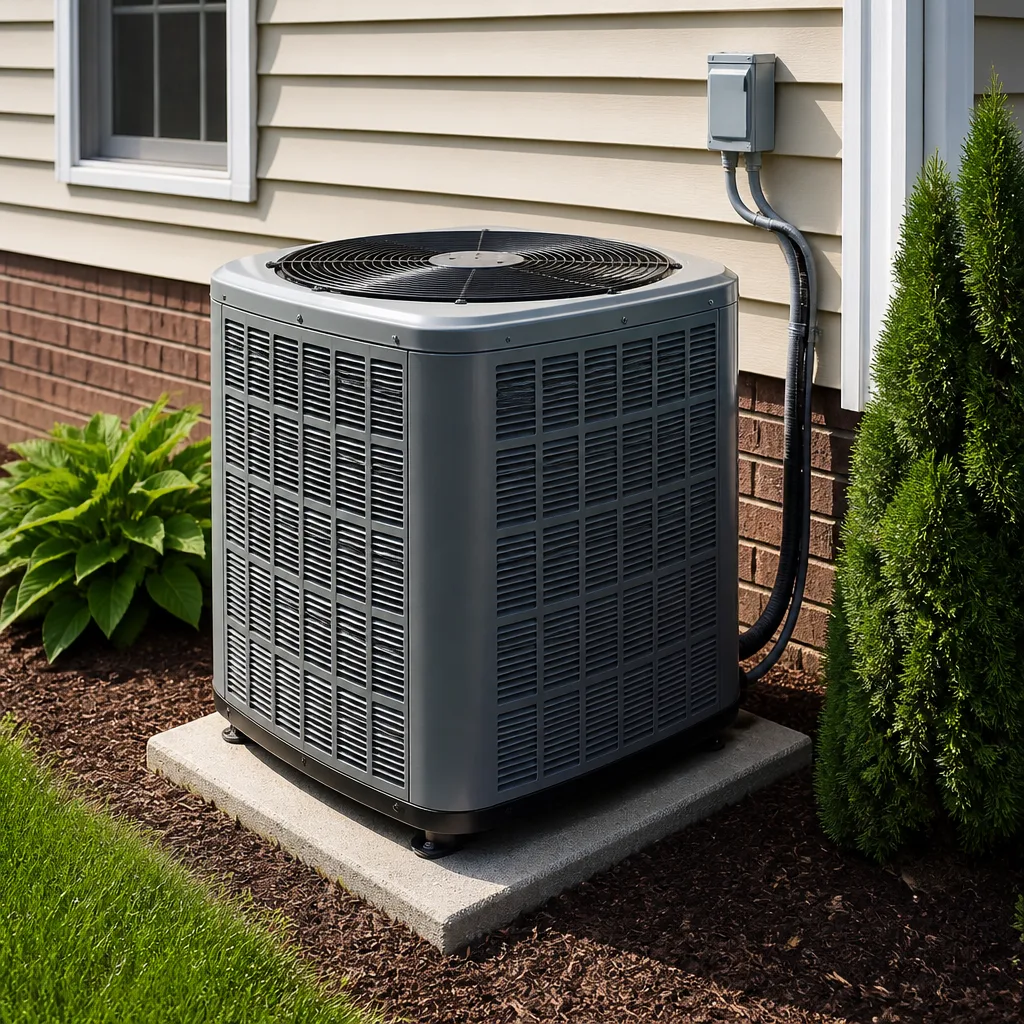 AC repair
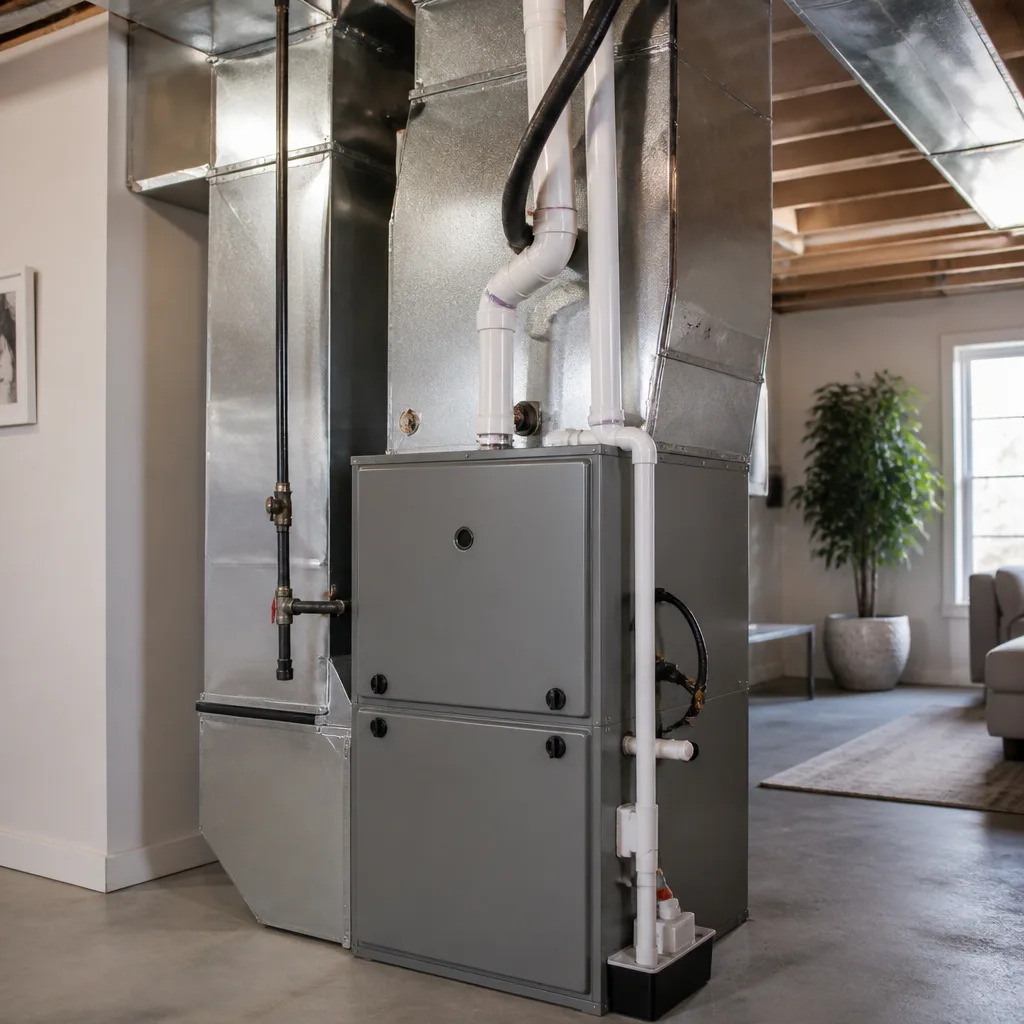 Furnace & heating
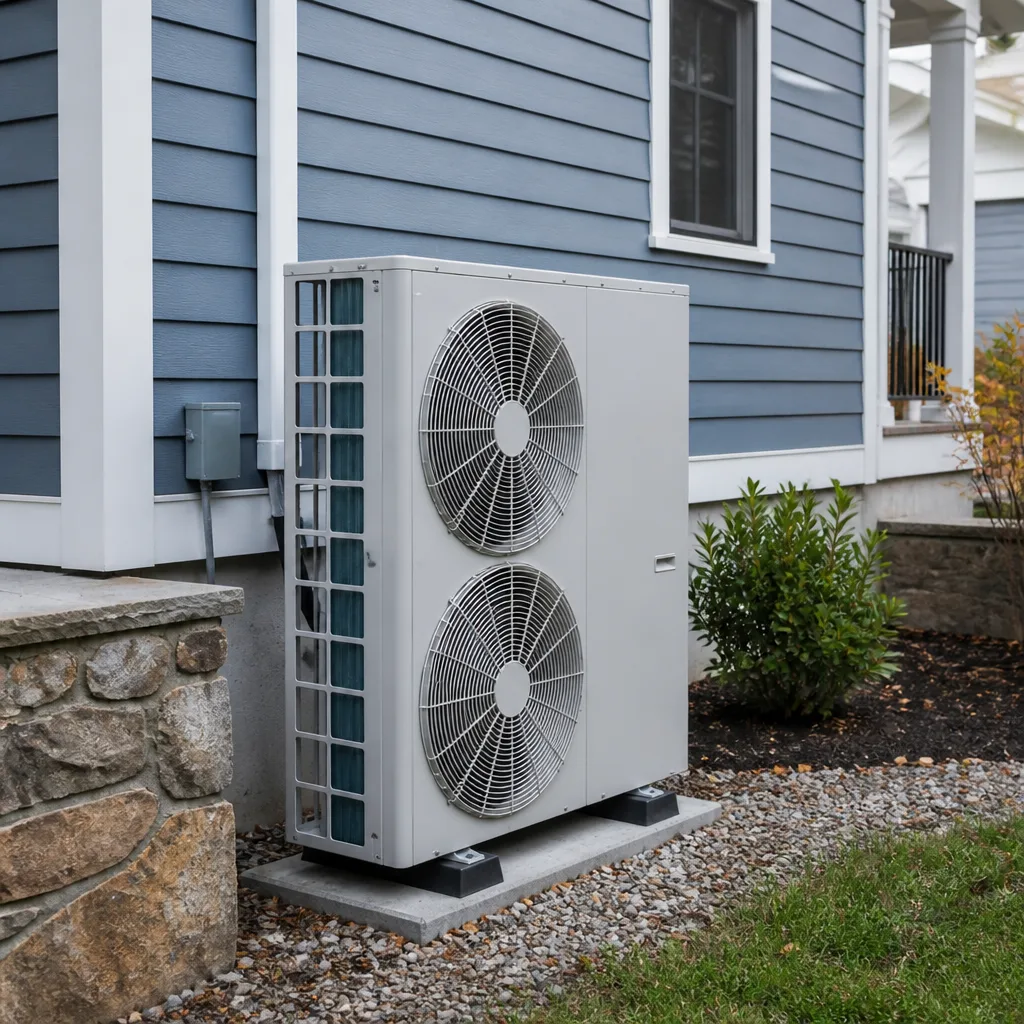 Heat pumps
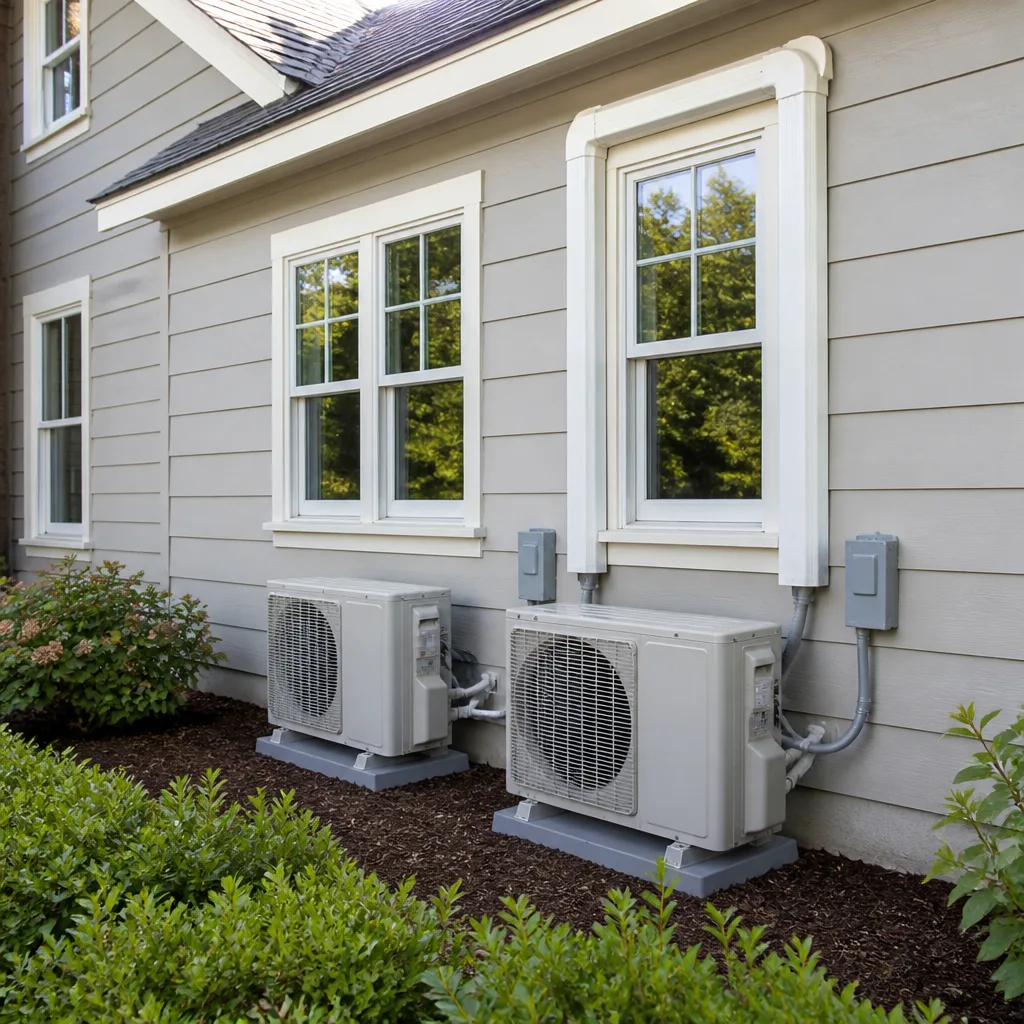 Ductless mini splits
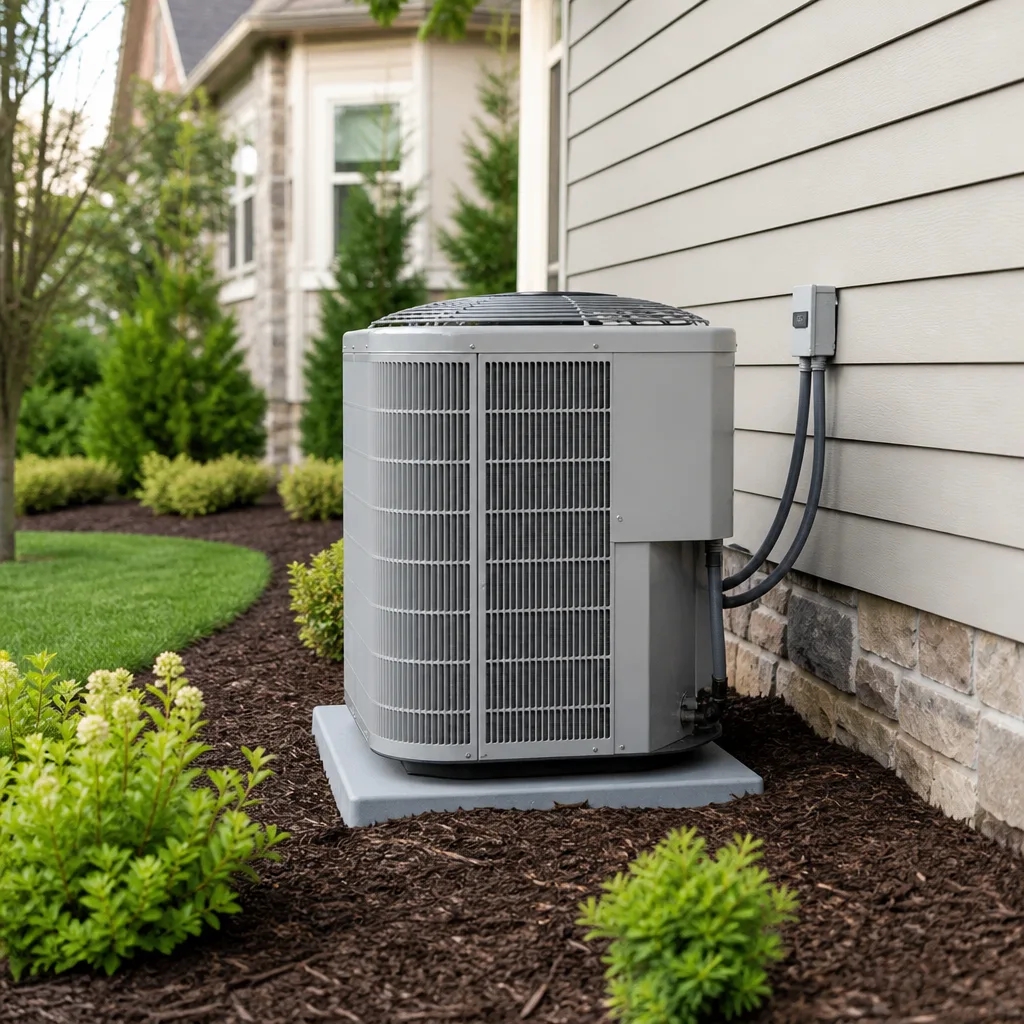 Carrier
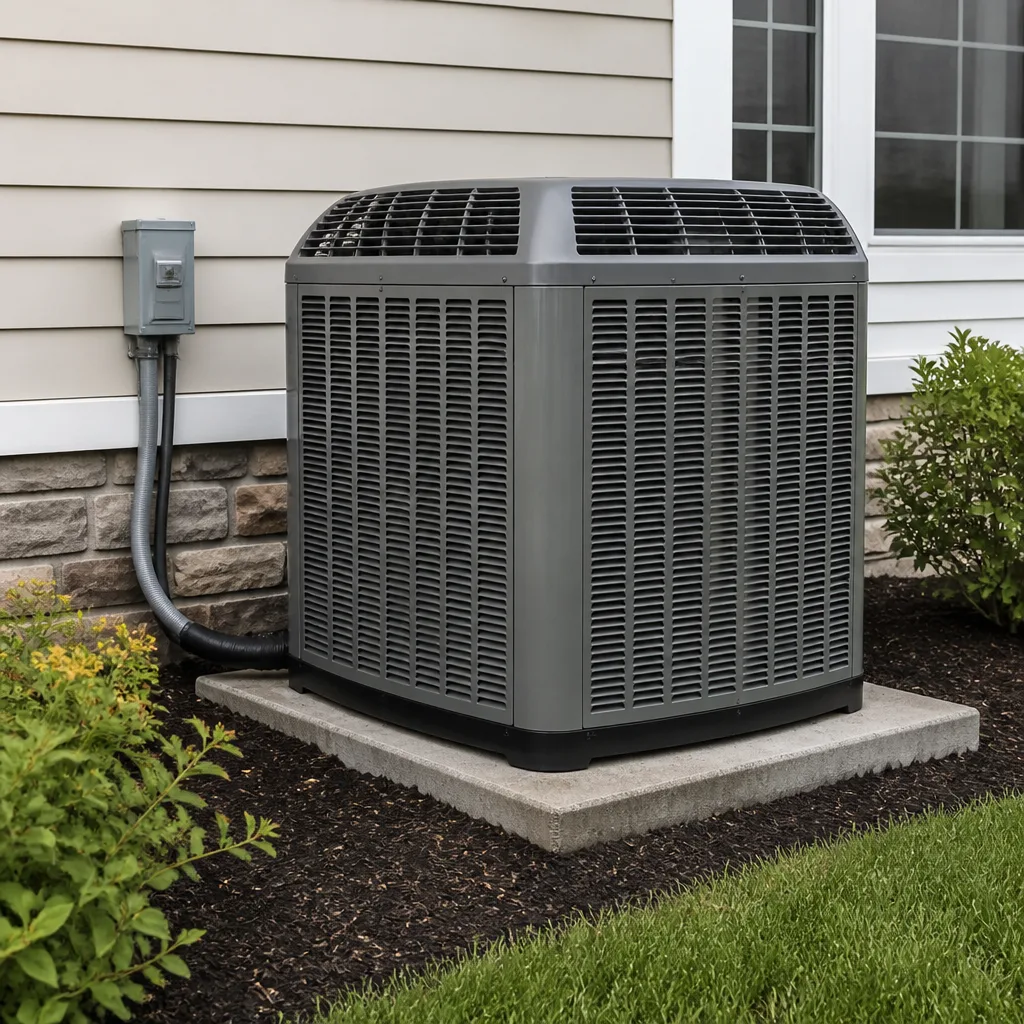 Trane
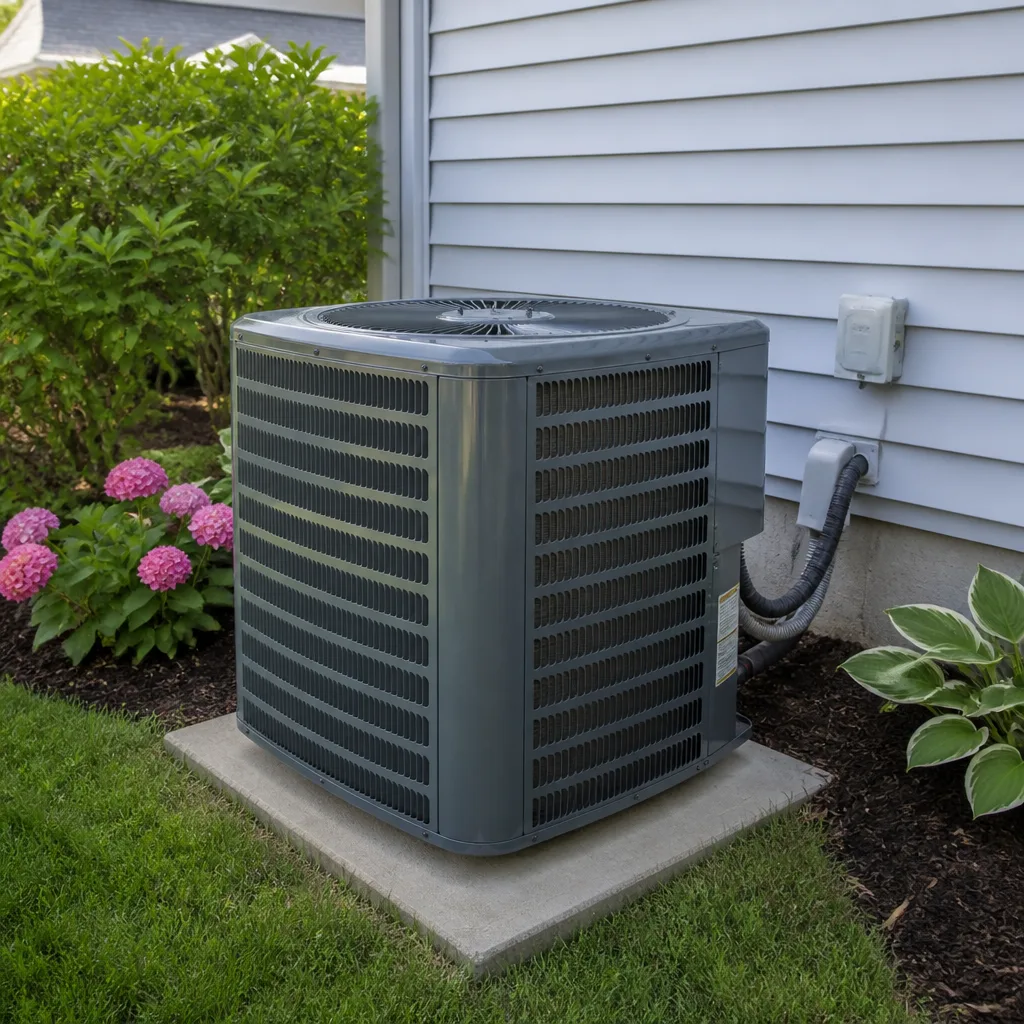 Goodman
Seasonal tune-up and full diagnostic on your Carrier, Trane, or Goodman system - readings shown to you before any repair is proposed
Diagnosis first, numbers second - you approve the repair price before a single part goes in.
Get your free estimateChoosing the Right HVAC Brand: A Buyer’s Guide for Lakeland
Most Lakeland homeowners pick an HVAC brand the same way they pick a restaurant: whoever the contractor recommends first. That’s not a knock on contractors. It’s just how the decision usually happens. The recommendation comes in, the homeowner hears a familiar name, and the system gets installed. What rarely gets checked is the part that matters over the next decade: does the installing company service that brand long-term, is parts availability strong in Polk County, and do the warranty terms hold up in a place where the AC runs more months than it rests? This guide walks through the criteria that actually decide whether a brand works in Lakeland, and how to judge a recommendation instead of just accepting it.
Quick Answer
There is no single “best” HVAC brand in Lakeland. The right brand is the one whose strengths in humidity handling, SEER2 efficiency, warranty terms, and local parts availability match your home’s construction and how hard your system runs. A brand that performs well in a newer subdivision with tight ductwork can underperform in an older block home with oversized duct runs. The contractor’s willingness to service that brand long-term matters as much as the label on the condenser. Judge the recommendation, not just the nameplate.
Styles & brands we work with
- AC repair
- Furnace & heating
- Heat pumps
- Ductless mini splits
- Carrier
- Trane
- Goodman
Table of Contents
- The Five Criteria That Actually Matter for Lakeland Conditions
- Why Brand Loyalty from a Single-Line Dealer Benefits the Contractor
- How to Read a Brand Warranty in Florida’s High-Runtime Environment
- The 2026 Equipment Tier Reality: SEER2 and What It Means Over 10 Years
- Matching Brand to Home Type: New Build vs. Older Lakeland Homes
- What a Multi-Brand Specialist Actually Offers You
- How to Evaluate a Contractor’s Brand Recommendation
- Common Mistakes to Avoid
The Five Criteria That Actually Matter for Lakeland Conditions
When a contractor recommends a brand, four out of five homeowners ask “is it a good brand?” The useful question is narrower. In Lakeland’s climate the system runs long, humid hours for most of the year, so brand selection gets decided on five points that other buyers can ignore.
1. Humidity tolerance in real conditions
Lakeland summers push indoor humidity through the roof. A system that’s oversized or that cycles too quickly won’t pull moisture out of the air even if it cools the room. Brand matters less than matching capacity to a proper load calculation, but some product lines prioritize dehumidification control and variable-speed operation more than others. That focus helps in Polk County, where sticky air is the complaint more often than heat alone.
2. SEER2 performance in a high-load environment
Efficiency ratings matter most where the system runs thousands of hours a year. A SEER2 difference that saves a few dollars in a mild climate saves meaningfully more in Lakeland. Weigh the rating against installed cost and expected runtime, not against a brochure.
3. Compressor warranty terms
Compressors are the expensive part. A labor warranty and a parts warranty are different animals, and in Florida the terms for the compressor itself are what protect you when a system fails years into service.
4. Parts availability in Polk County
A brand could have an excellent reputation nationally and still leave you waiting days for a replacement part if local distribution is weak. Ask directly: where does the technician source parts, and how quickly?
5. Technician access to the brand
Some brands are sold through tight dealer networks; others are widely serviced. If the company that installs your system can also repair it years down the road, or if another qualified technician in Lakeland can, your downtime stays short. That’s the single most overlooked criterion.
Why Brand Loyalty from a Single-Line Dealer Benefits the Contractor
A single-line dealer sells one manufacturer’s product. Sometimes that’s a legitimate specialization, and the dealer knows the equipment deeply. But when a homeowner asks “which brand is best?” and the answer happens to be the only brand that dealer sells, the recommendation carries less weight. It can’t be objective evidence when there was no real choice to begin with.
Dealer agreements often include volume commitments or incentives. That doesn’t make the dealer dishonest, and it doesn’t make the brand bad. It does mean the recommendation reflects the dealer’s business model alongside your home’s needs. A used-car dealer who only stocks one make will tell you that make is great. A brand-agnostic advisor tells you what your situation calls for and shows you the tradeoffs.
What a multi-brand specialist can offer is a genuine side-by-side. If Bryant and American Standard both make a system that fits your home and budget, a specialist can lay out the differences in warranty terms, parts availability, and service cost rather than steering toward a preferred line. Our position at Ambassador AC Repair is simple: we work on your system, not the one we wish you had. That applies whether you’re replacing a unit or repairing one you already own.
How to Read a Brand Warranty in Florida’s High-Runtime Environment
A “10-year parts warranty” sounds protective until you learn that the parts covered may cost less than the labor to install them. That’s not a reason to skip the warranty. It’s a reason to read it before you sign.
Parts vs. labor
Manufacturer warranties cover the part. The labor to diagnose, remove the failed part, and install the replacement is usually a separate cost, and in most cases the homeowner pays it. That’s why it’s worth asking what labor will cost when a covered part fails, and whether the installing company offers any labor coverage of its own.
Registration deadlines
Many manufacturers require the equipment to be registered within a set window after installation for the full warranty term to apply. Miss the window and coverage can default to a shorter period. The responsibility often falls on the homeowner or the contractor; confirm in writing which one, and keep the registration confirmation with your system paperwork.
Refrigerant type requirements
Newer refrigerants carry handling and regulatory requirements. If your warranty specifies a refrigerant type and your system gets serviced with a different one, or your equipment uses a refrigerant the technician isn’t matched to, that can affect coverage. Ask what refrigerant your system uses and make sure every technician who services it knows.
What “high runtime” means for your term
A system that runs year-round accumulates hours faster than one that runs a few months a year. The warranty term is the same calendar length either way, but the equipment’s total service life within that term is longer. Regular maintenance that keeps the compressor from working harder than necessary is one of the few things you control.
When we discuss a system’s condition, we do it honestly. AC repair begins with diagnosis, and diagnosis should tell you what the system needs, not what a warranty plan wants you to buy.
The 2026 Equipment Tier Reality: SEER2 and What It Means Over 10 Years
Federal minimum efficiency standards moved to SEER2 a couple of years ago, which changed what counts as the entry-level system. In practical terms, the bottom rung of the market got more efficient. That’s genuinely good for homeowners, but it also shifted how “good, better, best” works when a contractor starts presenting options.
What SEER2 changed for entry-level buyers
Where a base-model system used to meet the old SEER standard, the SEER2 threshold now rules out some of the least efficient equipment. The result is that the cheapest available system today is more efficient than the cheapest one a few years ago. The gap between entry and mid-tier narrows as a result, which affects how much extra efficiency you’re actually buying at each step.
What the tiers really mean
- Entry tier: Meets the current SEER2 minimum. Single-stage or basic two-stage operation, standard warranty. Reasonable choice when budget is fixed and run hours are modest.
- Mid tier: Higher SEER2, often variable-speed blower, better humidity control. The sweet spot for many Lakeland homes where the AC runs most of the year.
- Top tier: Highest efficiency, full variable-speed compressor, more sophisticated controls. The energy savings compound with runtime, but the price premium stays meaningful.
The 10-year lens
A higher-efficiency system costs more upfront. Over a 10-year lifespan, the gap in utility spend depends on your actual runtime, electricity rates, and whether the system gets maintained. In Lakeland, where cooling dominates the utility bill, the higher tier often pays back faster than it would in a mild climate. But every homeowner should see the math for their own home rather than take a general claim at face value. Ask for a written estimate that shows the installed cost, the SEER2 rating, and the projected operating costs so you can compare.
Matching Brand to Home Type: New Build vs. Older Lakeland Homes
This is where brand selection gets real. A system that excels in a 2020s subdivision with tight envelopes and properly sized ducts may underperform in a 1980s block home with oversized duct runs and a marginally insulated attic. The brand itself isn’t the problem; the fit is.
Newer homes and subdivisions
Homes built under current Florida energy codes tend to have tighter construction, matched duct design, and less infiltration. A mid-tier or higher-efficiency system with a variable-speed blower performs well here because it can run at low capacity for long stretches, controlling humidity without short cycling. Brands with strong variable-speed options do well in this setting, and the lower load means the efficiency rating is more accurate to reality.
Older homes and block construction
Older Lakeland homes often have duct systems designed for a load that’s changed since. Rooms have been added, windows have been replaced, attic insulation has been upgraded or neglected. Those homes often benefit from a properly sized, more tolerant system rather than a high-efficiency unit forced to compensate for poor duct design. The ductwork evaluation matters more than the brand here. A homeowner who upgrades the condenser but leaves unsafe oversized ducts has a system that can’t deliver what the nameplate promises.
The duct fit question
Whatever brand you choose, ask the contractor to measure static pressure and look at the duct design before selecting equipment. A $12,000 variable-speed system on a duct system sized for a 1980s build is a waste. Brand selection should follow duct assessment, not the other way around.
If you’re weighing a brand decision on a replacement, we walk through it in AC installation so you see the full picture before the equipment is ordered.
What a Multi-Brand Specialist Actually Offers You
The practical benefit of a multi-brand specialist is straightforward: they can diagnose and repair what’s installed instead of just what they sell. That matters most in the middle years of a system’s life, when the brand that was installed is the brand you need serviced.
We are equipped to work on systems from Carrier, Trane, Lennox, Goodman, Rheem, York, Daikin, Bryant, and American Standard. Nine brands, one number to call. That list covers most of what gets installed in Lakeland homes, which means when a homeowner calls, they’re rarely told to “contact the installing dealer.” Our technicians have up to 9 years of experience across that range, and they see common failure patterns repeat across brands as well as the differences worth knowing about.
What that gives you during a replacement decision is a genuine comparison. If your current system is a Bryant and the compressor is failing, we can quote a Bryant replacement, or an American Standard, or a Carrier, and show the tradeoffs on warranty, service access, and installed cost. No dealer agreement pushes the recommendation to a preferred line.
Cooling and heating both fall in that same scope. A failed furnace in a cool Lakeland winter and a failed AC in July get the same diagnostic process, the same brand coverage, and the same honest assessment. You don’t get handed off to a separate heating company in January.
How to Evaluate a Contractor’s Brand Recommendation
When a contractor recommends a brand, a few specific questions separate a genuinely considered recommendation from a habitual one. Ask them before you agree.
- Do you service this brand long-term, including parts sourcing? The installer’s ability to repair the brand years from now is the most overlooked part of the recommendation.
- Why this brand for my home specifically? The answer should reference your duct system, load calc, and construction type, not general brand reputation.
- What are the warranty terms, and who registers it? Confirm the registration window and whether you or the contractor is responsible for submitting it.
- What refrigerant does this system use? Ask whether service across systems will use the same refrigerant type, and confirm the technician has the equipment to handle it.
- Show me the written estimate with the full system details. Brand, model number, SEER2 rating, capacity, and warranty should all be on paper before the deposit is paid.
- What happens if a covered part fails in year six? The brand’s parts coverage matters, but the labor to swap the part sits with the homeowner in most cases. Ask what that looks like.
Our approach is the same on every recommendation: straight answers on what your system actually needs. That’s Lakeland homeowners getting the diagnosis they paid for, not a sales pitch dressed up as one.
Common Mistakes to Avoid
- Choosing the brand because it’s the one the contractor sells. If the dealer only carries one line, the recommendation can’t be neutral. Ask what else they considered and why.
- Skipping the duct assessment. A premium brand on an undersized duct system won’t deliver rated efficiency. Have static pressure measured before equipment selection.
- Assuming “parts warranty” means the repair is free. Labor is often excluded and can exceed the part cost. Ask what the total out-of-pocket is when a covered part fails.
- Missing the registration window. Many manufacturers shorten coverage if the equipment isn’t registered within a set period. Confirm who submits it and keep the confirmation.
- Buying the highest SEER2 rating without considering runtime. The payback depends on your home’s load and electricity rate. Run the math, not just the brochure.
- Ignoring local parts availability. A nationally respected brand can still leave you waiting for parts in Polk County if distribution is thin. Ask where parts come from.
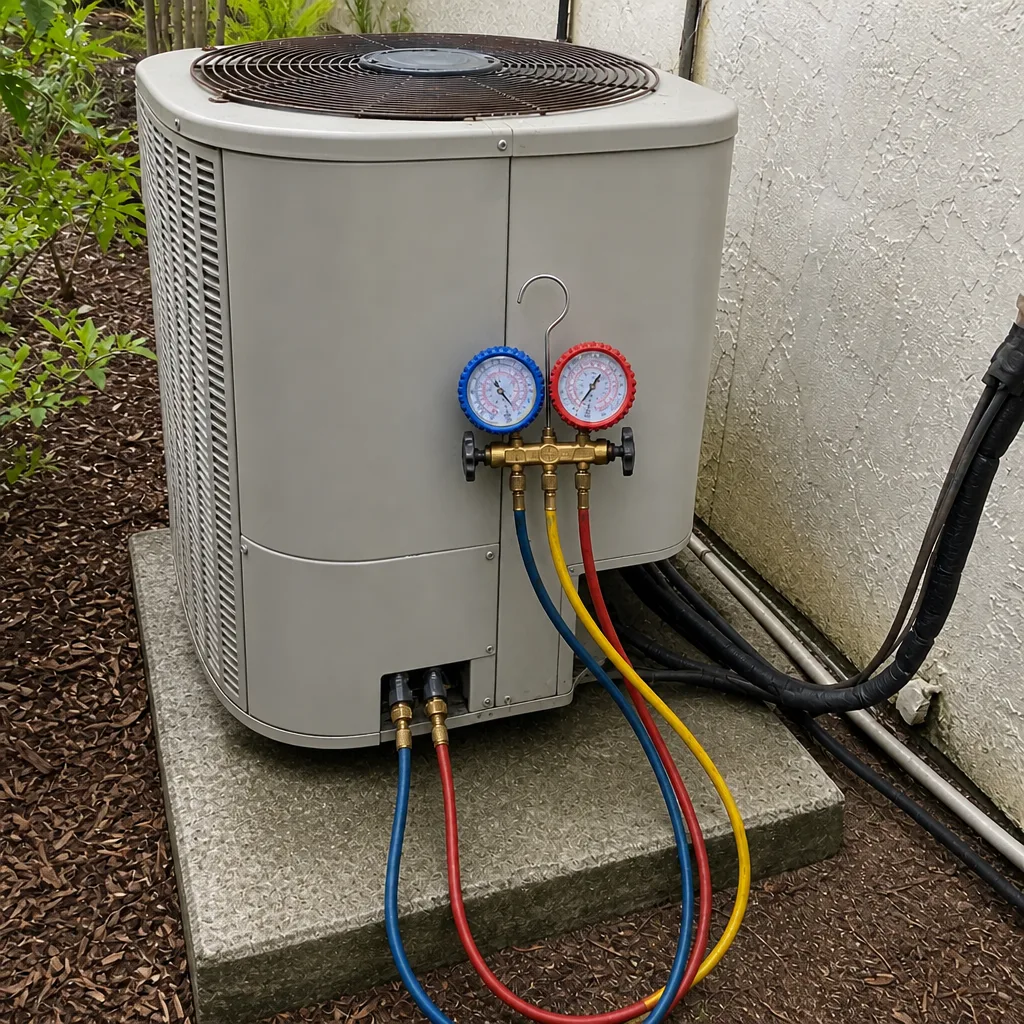
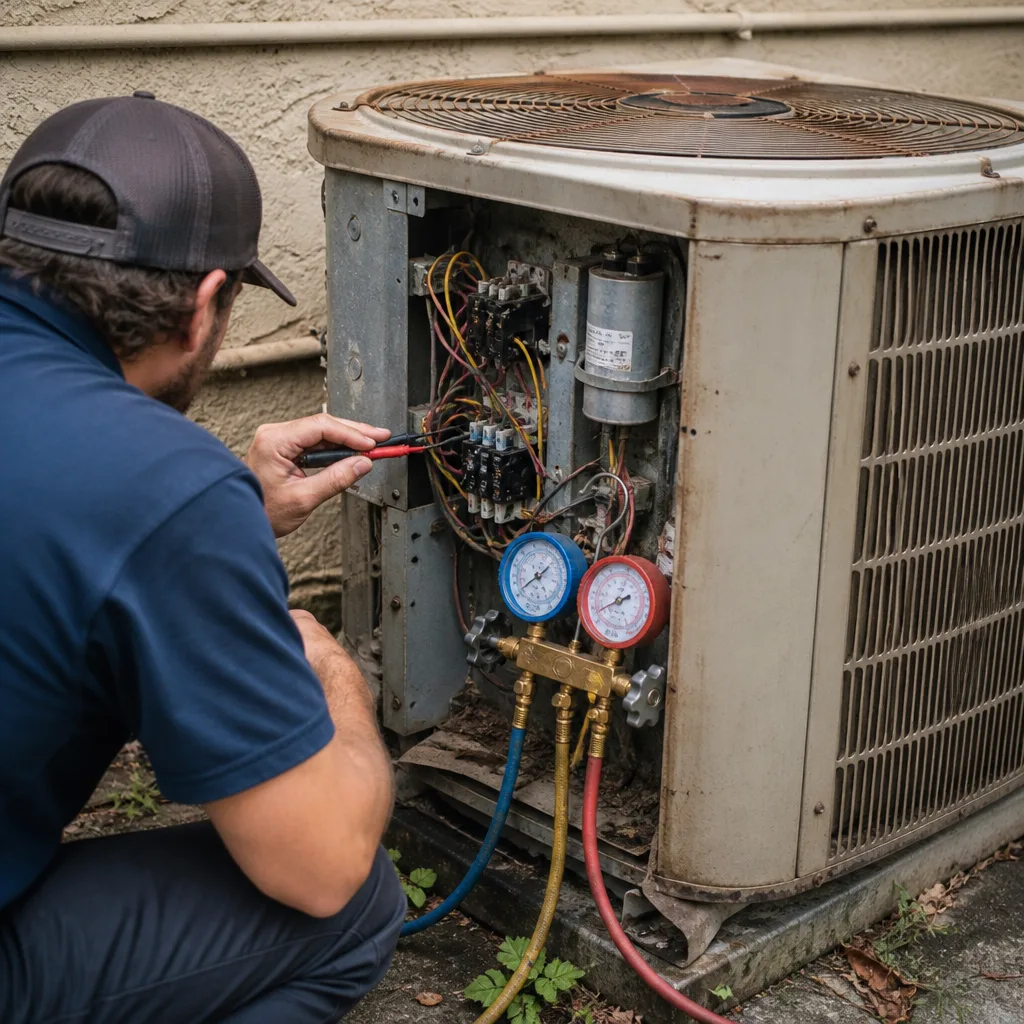
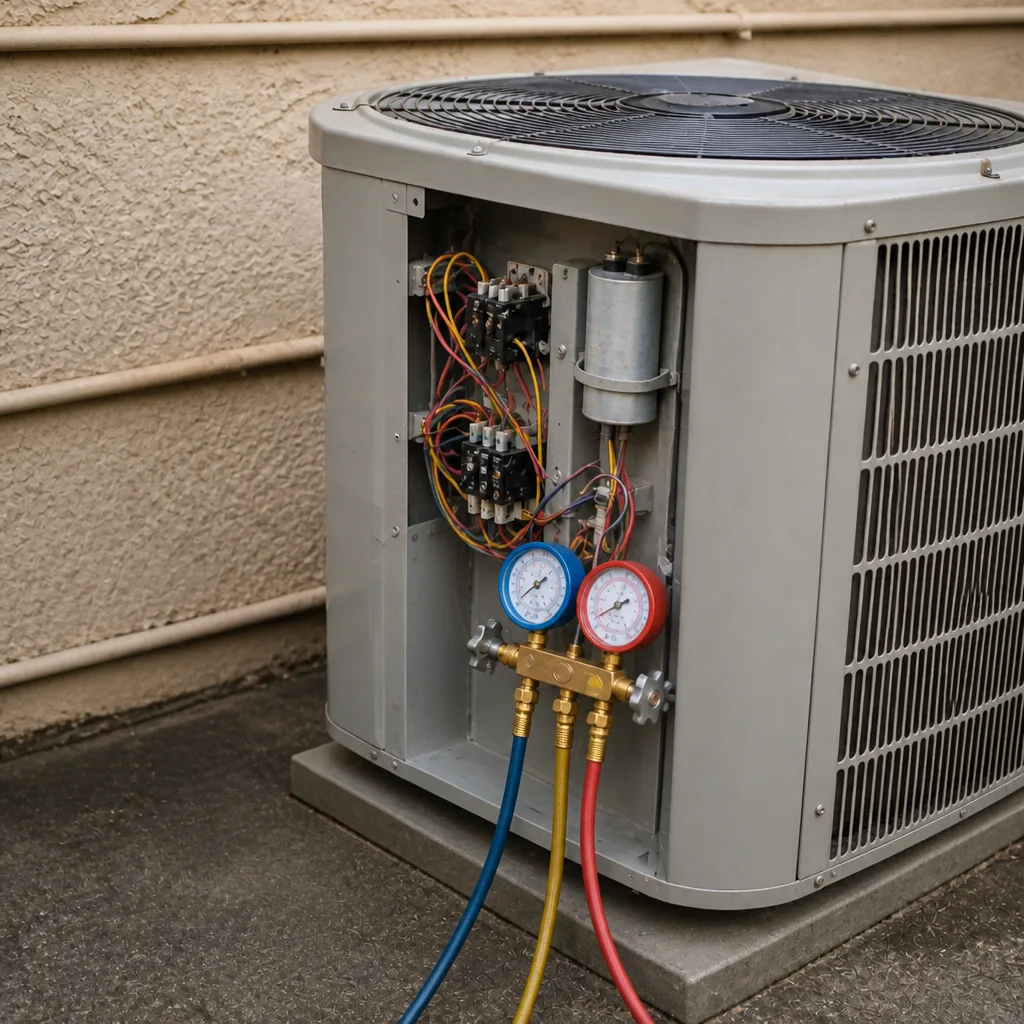
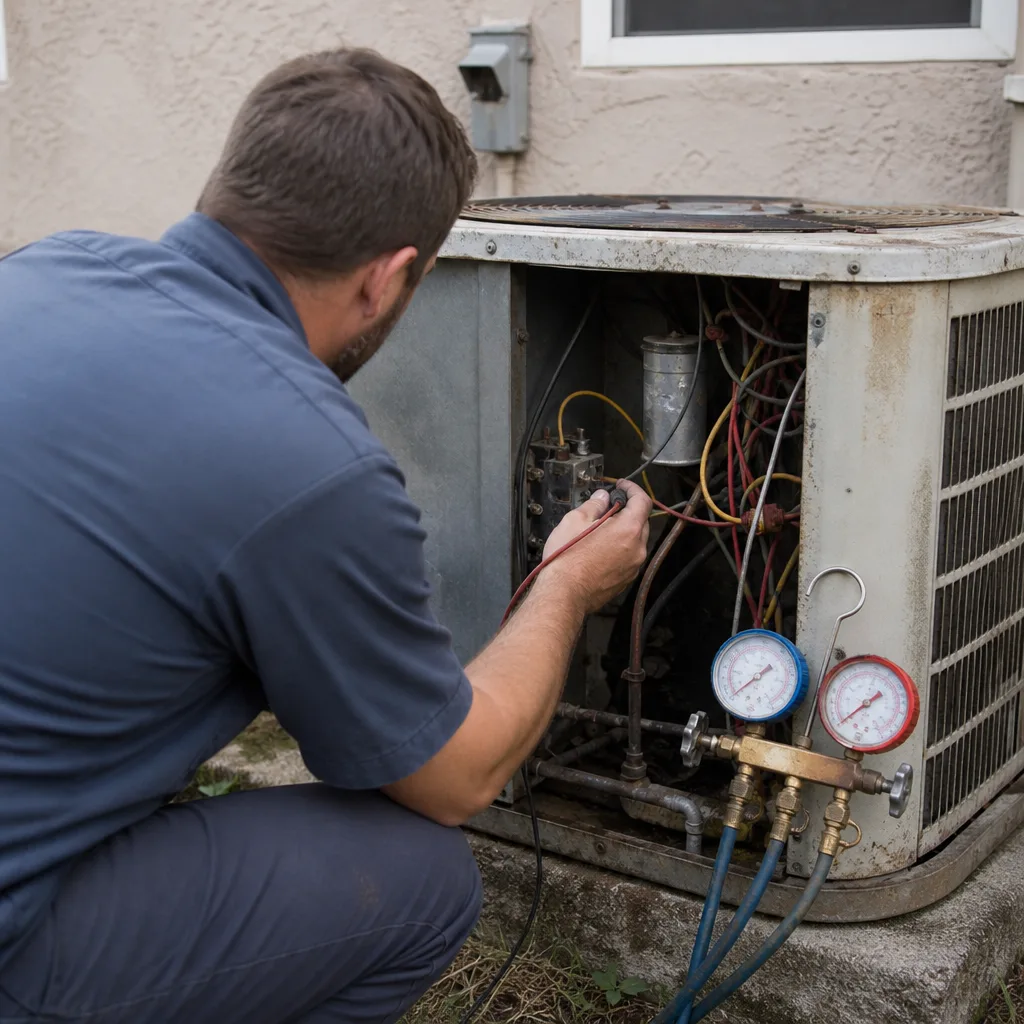
- Replacing equipment when the problem is a repair. A failing capacitor or a stuck contactor can look like a dead system. Diagnosis should come before any replacement conversation.
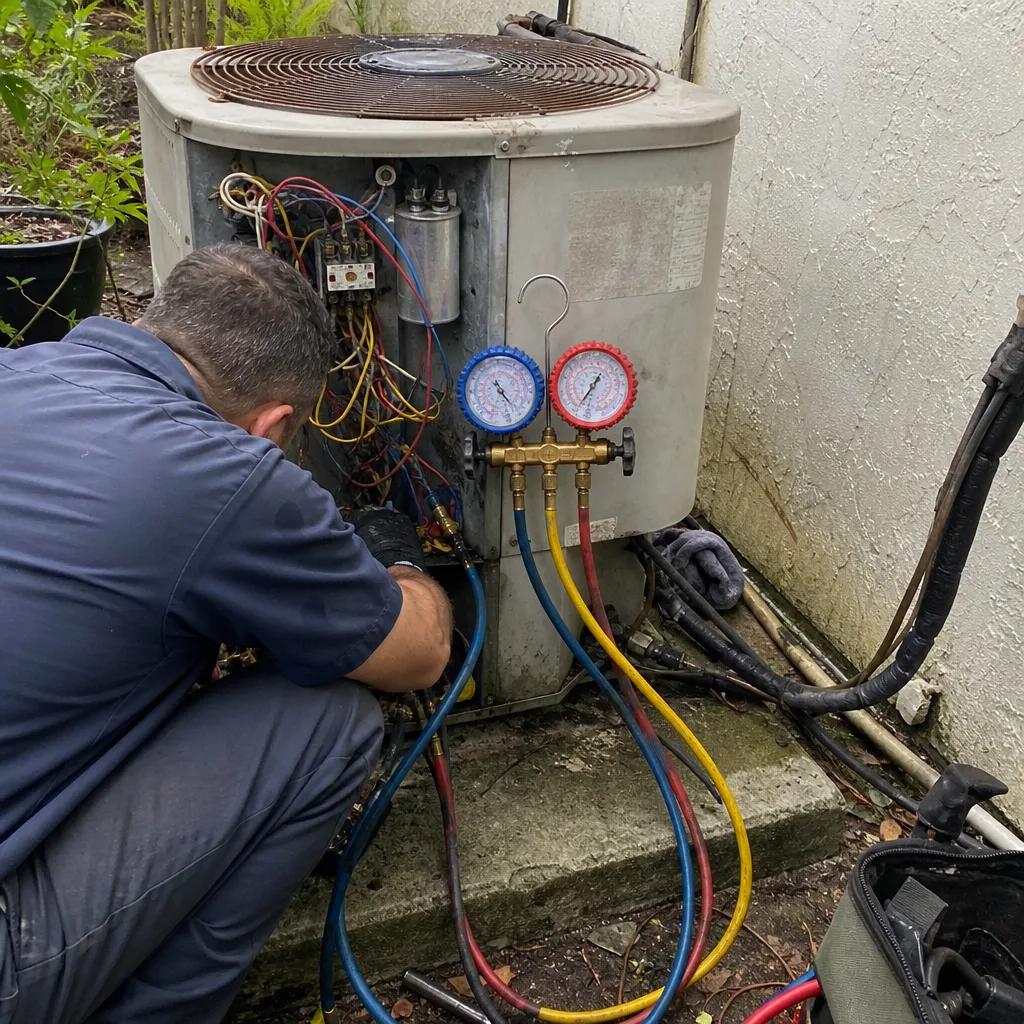
See the difference
 Before
 After
 Before
 After
 Before
 After
When to Call a Professional
Brand choice is a planning question. System failure is a today question. If your AC is blowing warm air, your system is short-cycling, the outside unit is making grinding or buzzing noises, or your energy bill suddenly climbed with no change in habits, those are signs that need a technician rather than a brand comparison.
Similarly, if a tech has quoted a full system replacement without showing you a load calculation, a static pressure reading, or a written estimate with a model number and SEER2 rating, it’s worth a second opinion before you commit. And if an existing system is under warranty and a covered part has failed, the diagnosis needs to be documented before any work proceeds, since the paperwork becomes part of the claim.
Ambassador AC Repair offers free estimates in Lakeland. Call (855) 528-6110. We answer 24/7. Fast dispatch from 7am to 7pm, Sunday through Friday.
Frequently Asked Questions
There isn’t one universal best brand for Lakeland. The right brand depends on your duct design, home construction, runtime, and how easily the technician can source parts locally. Bryant, American Standard, Carrier, and Trane are all commonly installed in Polk County, and each has strengths depending on the home. The recommendation should follow a load calculation and duct assessment, not a dealer’s preferred line. Call (855) 528-6110 for an exact quote. Estimates are free.
Equipment lifespan in Lakeland is shorter than in milder climates because the system runs far more hours per year. The exact life depends on maintenance, how the system was sized, and how hard it works to control humidity. A properly sized, well-maintained system will outlast a poorly matched installation even if the latter uses a more expensive brand. Regular service that keeps the compressor at rated load is the most reliable way to add years.
Most manufacturer warranties cover parts, not labor. The cost of diagnosis and installation of a covered part is usually handled separately. Ask the contractor what labor coverage, if any, they provide on their own, and read the manufacturer’s terms to confirm the registration deadline and refrigerant requirements. Call (855) 528-6110 for an exact quote on a diagnostic visit. Estimates are free.
A multi-brand company can be, mainly because the recommendation carries no built-in incentive to favor one line. A single-brand dealer sometimes offers deeper manufacturer training and access, which can be an advantage. The better way to judge either one is to ask what else they considered and why they chose this brand for your home. A multi-brand specialist can also repair your existing system even if it wasn’t installed by them.
Usually yes, but the amount depends on your runtime, electricity rate, and how well the installation is matched to your ducts. In Lakeland, where cooling drives most of the utility bill, higher efficiency generally pays back faster than in milder climates. Ask for a written estimate showing installed cost and projected operating costs so you can see the difference for your specific home. Call (855) 528-6110. We answer 24/7.
It can happen. National reputation doesn’t guarantee strong local distribution. Before agreeing to a brand, ask the installing company where they source parts and how quickly they typically arrive. A common mid-market brand with broad distribution sometimes beats a premium brand with thin local support on repair turnaround alone. This is worth asking about explicitly.
The Bottom Line
Brand selection in Lakeland comes down to fit, not fame. The five criteria that actually matter – humidity tolerance, SEER2 in a high-load climate, compressor warranty terms, local parts availability, and technician access to the brand – tell you more than any brand’s national reputation. A recommendation from a dealer who only sells one line deserves a second look. A recommendation from a shop that services multiple brands and can show you the tradeoffs is more useful. Match the system to the home, read the warranty before you sign, and let the diagnosis drive the decision, not the nameplate.
If you need a straight answer on a replacement or repair in Lakeland, call (855) 528-6110 for a free estimate. We answer 24/7. Fast dispatch from 7am to 7pm, Sunday through Friday.
Written by the team at Ambassador AC Repair.