
Last updated November 14, 2026
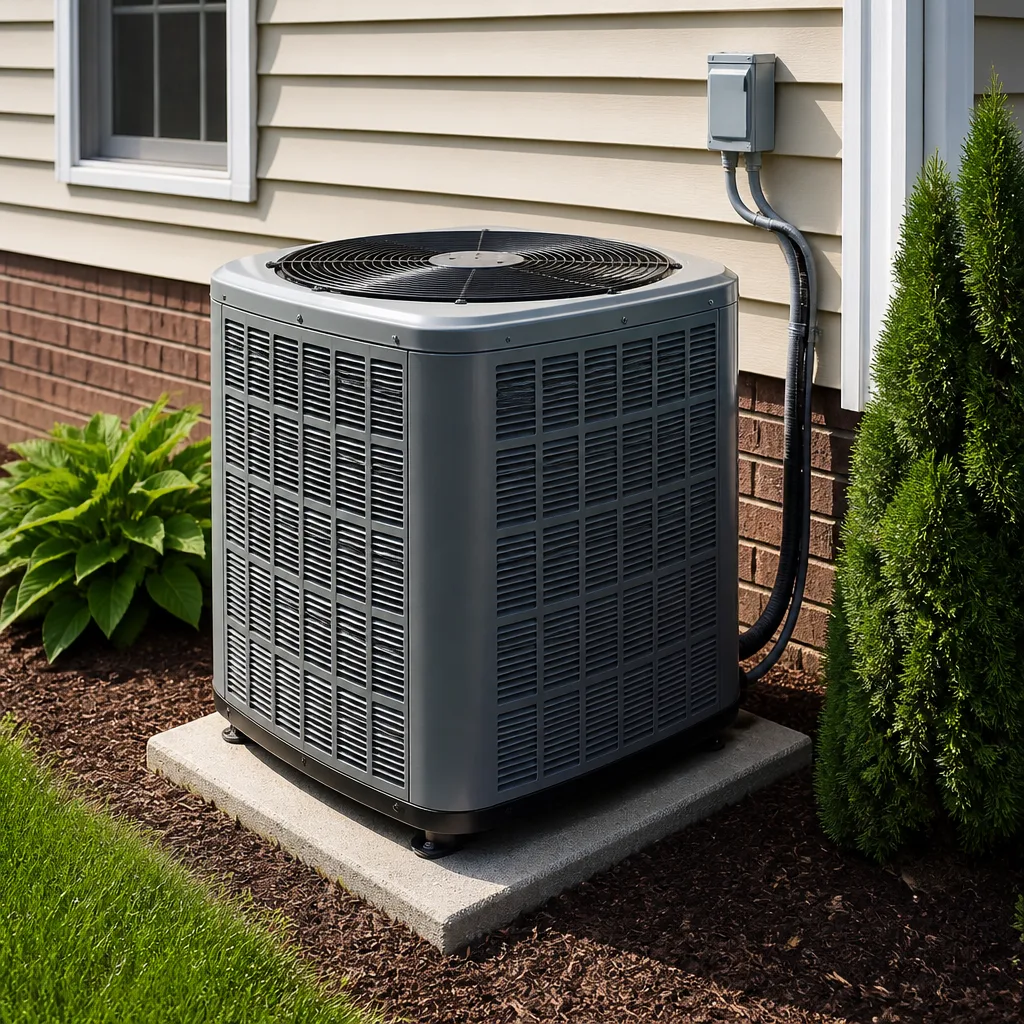 AC repair
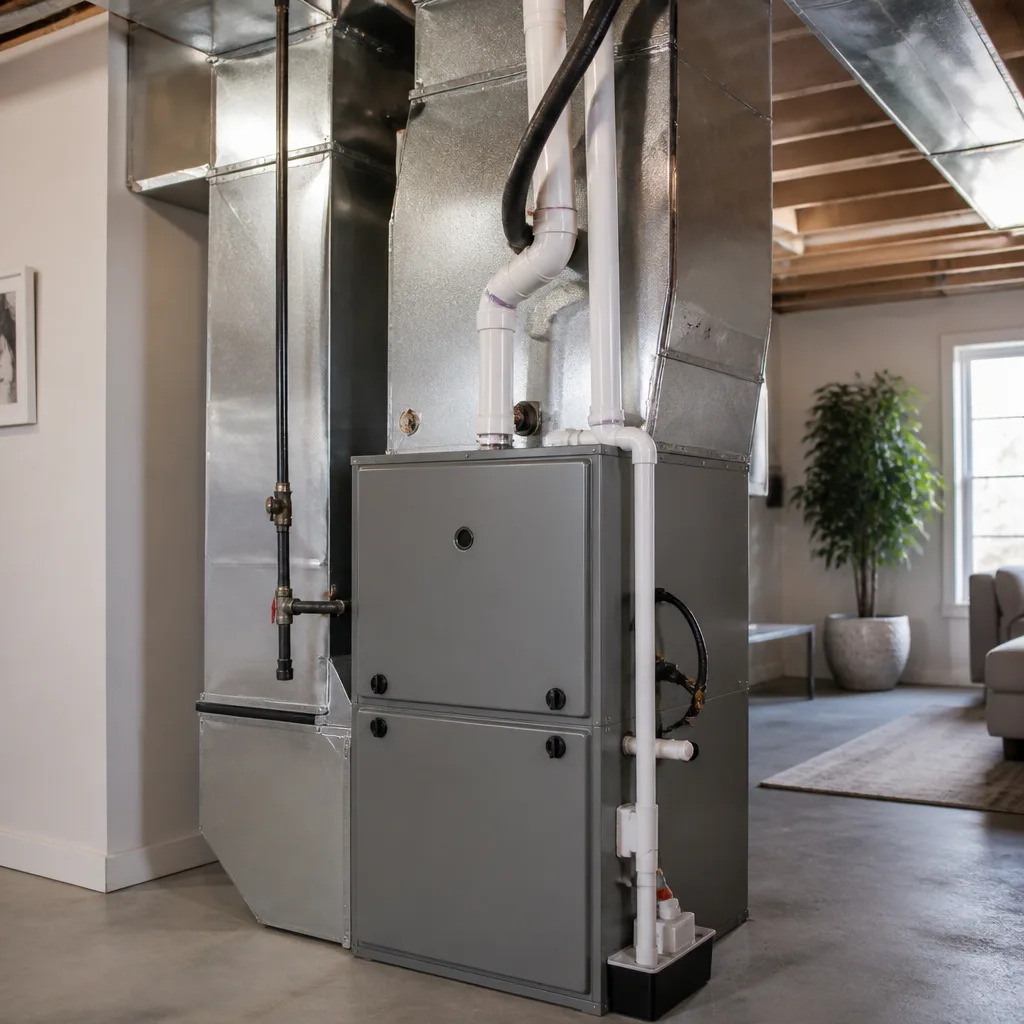 Furnace & heating
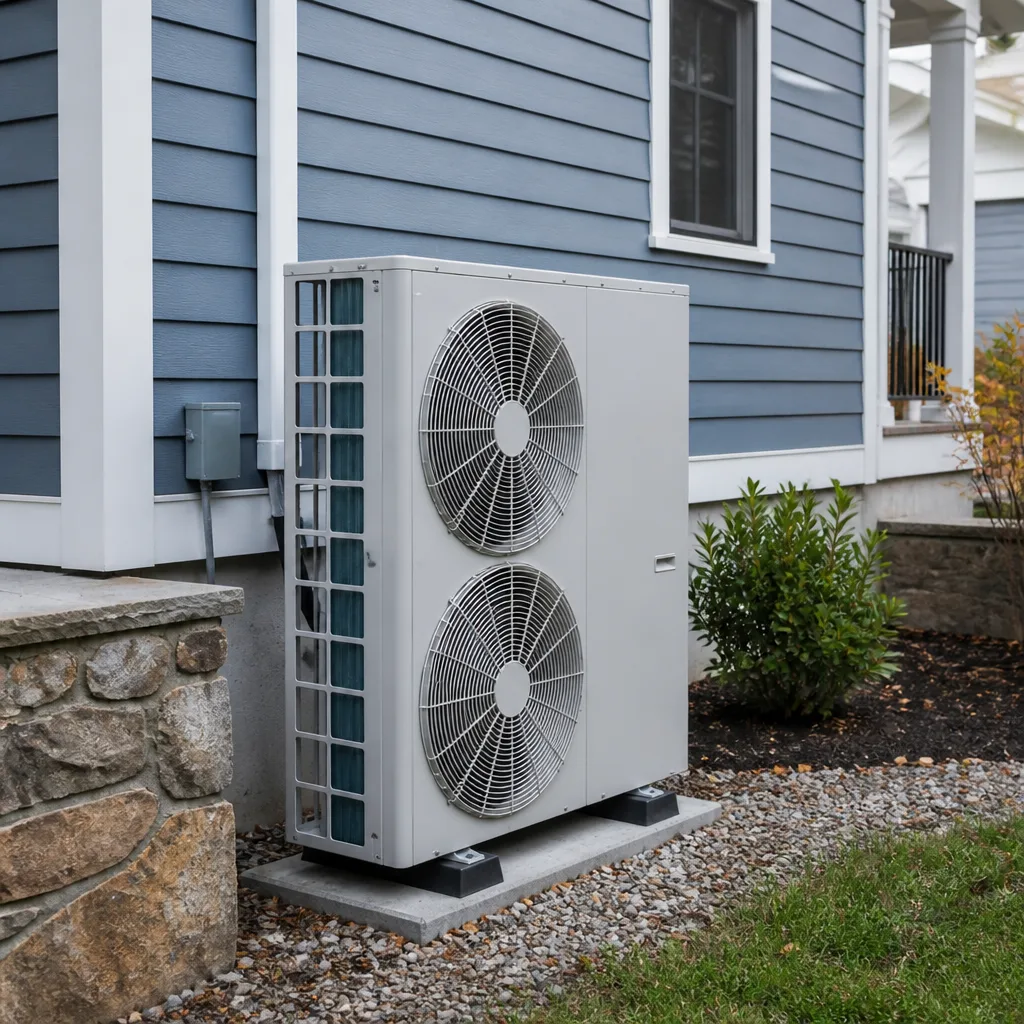 Heat pumps
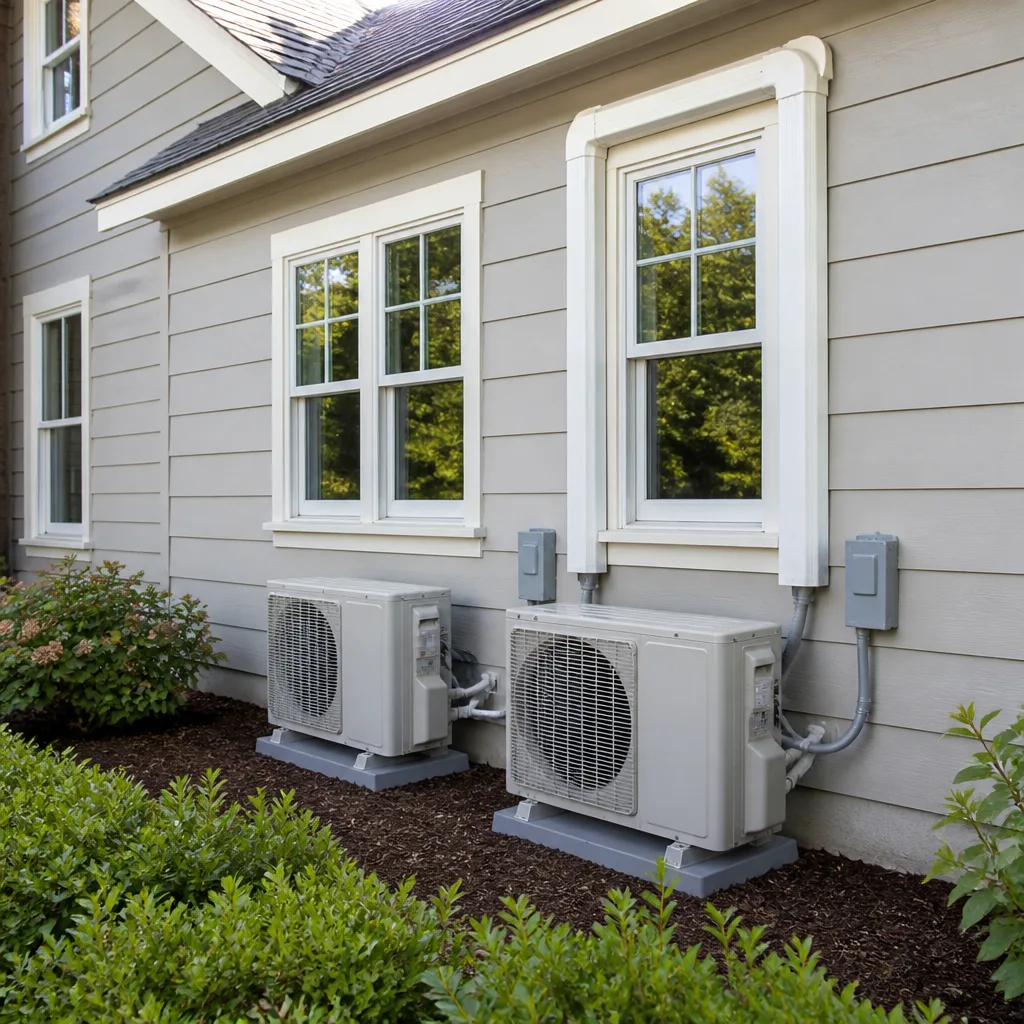 Ductless mini splits
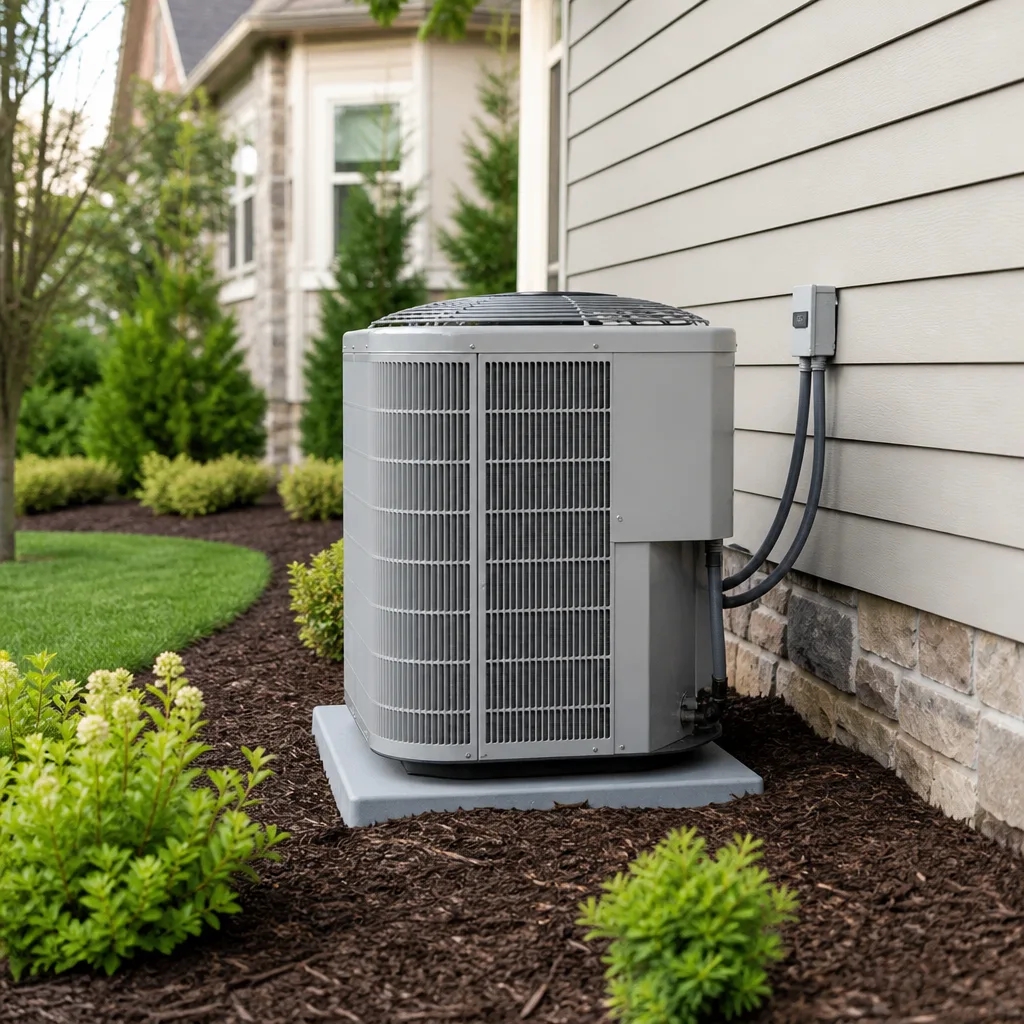 Carrier
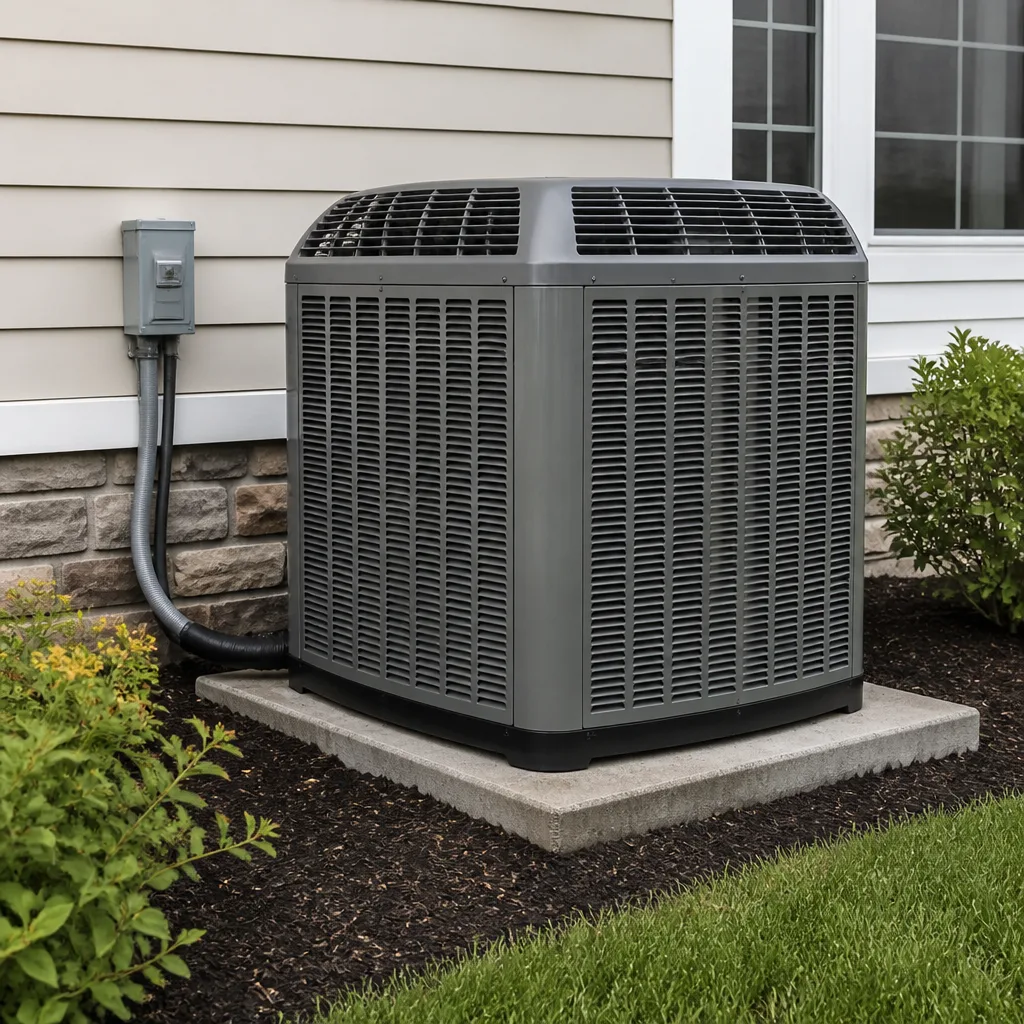 Trane
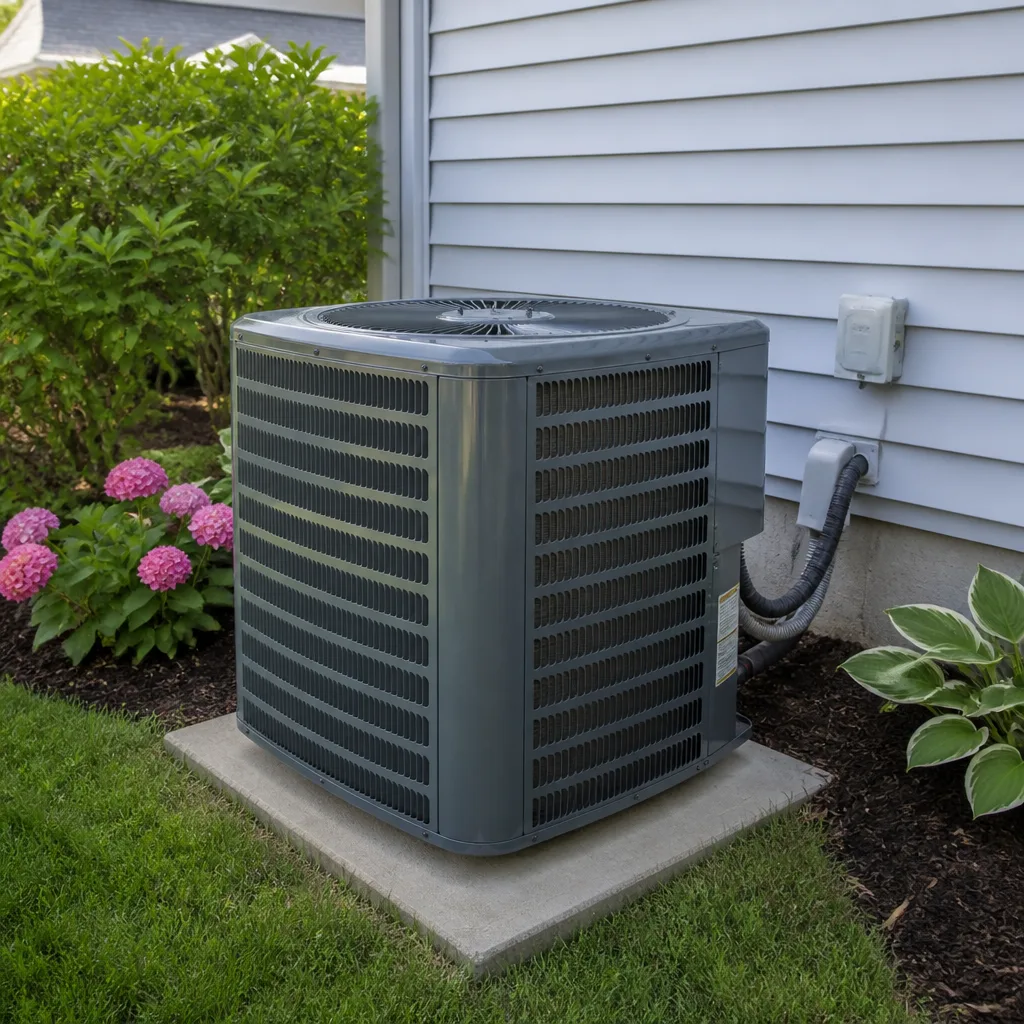 Goodman
Seasonal tune-up and full diagnostic on your Carrier, Trane, or Goodman system - readings shown to you before any repair is proposed
Diagnosis first, numbers second - you approve the repair price before a single part goes in.
Get your free estimateHVAC Warning Signs: A Lakeland Homeowner’s Reference Guide
Most homeowners treat every HVAC oddity the same way: they wait. A system running longer than usual gets shrugged off. A rattle gets ignored until it becomes a grind. The trouble is that in a Lakeland August, that longer-than-usual run isn’t a minor annoyance. It’s often the first measurable sign of refrigerant loss or a fouled coil, and left alone, it can cascade into compressor failure within weeks. This guide gives you a triage system so you can sort the harmless from the urgent, and it’s written from a Lakeland perspective, where heat and humidity stress equipment nine months a year.
Quick Answer
HVAC warning signs in Lakeland fall into three tiers: monitor signs (longer run times, mild condensation, slight noise changes), schedule-within-a-week signs (rising bills, uneven cooling, persistent rattles, weak airflow), and same-day signs (no cool air at all, burning smells, loud banging, water pooling, repeated tripping breakers). The tier, not the annoyance level, tells you how fast to act. Same-day signs deserve a call the moment you notice them.
Styles & brands we work with
- AC repair
- Furnace & heating
- Heat pumps
- Ductless mini splits
- Carrier
- Trane
- Goodman
Table of Contents
- The Three-Tier Triage System
- Humidity Versus Malfunction: Reading Condensation Correctly
- Noise Identification: What Each Sound Tells You
- Using Your Utility Bill as a Diagnostic Tool
- Warning Signs in Aging Systems: Dixieland and Highlands Homes
- Airflow and Temperature Clues Room by Room
- Refrigerant Problems: Why They Escalate Fast
- Cooling and Heating, Handled: Seasonal Warning Signs
The Three-Tier Triage System
Not every symptom needs a same-day technician, and treating them all as emergencies makes it harder to spot the one that actually is. In our experience across Lakeland homes, the most useful habit is sorting what you notice into three tiers. The tier reflects risk to the equipment, not how much the noise bothers you.
Tier 1: Signs to Monitor
These are worth writing down and watching for a few days. They often sit within the normal range for a system working against Lakeland humidity.
- Slightly longer run times during the hottest part of the afternoon
- A faint hum that comes and goes
- Light condensation on interior vents
- Small temperature swings between rooms, within about three degrees
Tier 2: Signs to Schedule Within a Week
These point to something drifting out of spec. They rarely fail suddenly, but ignoring them raises the risk of a bigger repair.
- A bill that climbs while the weather holds steady
- Air that feels cool but clammy, not dry
- A rattle or click that wasn’t there last month
- Weak airflow from one or more vents
- Ice forming on the indoor coil or the outdoor line
Tier 3: Same-Day Signs
These signal active failure or a safety issue. Don’t run the system to “see if it sorts itself out.”
- Warm air blowing from vents while the thermostat calls for cooling
- A burning or electrical smell near the air handler or outdoor unit
- Loud banging, grinding, or metal-on-metal noise
- Water pooling around the indoor unit
- A breaker that trips repeatedly when the system starts
Burning smells and repeated breaker trips involve wiring and electrical components. Stop the system and have a trained professional look at it rather than opening a panel yourself. Call (855) 528-6110 for an exact quote. We answer 24/7. Fast dispatch from 7am to 7pm, Sunday through Friday.
Humidity Versus Malfunction: Reading Condensation Correctly
Lakeland summers carry so much moisture that condensation is normal on some surfaces and a red flag on others. The trick is knowing which is which. A central system pulls humidity out of the air as it cools; the water that comes off the coil has to go somewhere, and that’s what the condensate line handles.
Condensation That’s Usually Fine
- A thin film of sweat on the metal supply plenum just after the system shuts off
- Dampness on the refrigerant line insulation outdoors
- Water dripping steadily from the condensate drain line outside
- Slight fogging on a supply vent on a very humid afternoon
Condensation That Signals a Problem
- Water standing in the drain pan or dripping from the indoor unit
- Frost or ice on the indoor coil or the small copper line outdoors
- Water streaks on drywall or ceiling near the air handler
- Sticky, clammy air indoors while the system runs and the set temperature is met
Ice on the coil is the one homeowners most often get wrong. It usually means restricted airflow or low refrigerant, not “too much cold.” Both conditions strain the compressor, so it belongs in the same-day or within-a-week tier depending on severity. The clammy-air case is often a sizing or airflow issue that a technician can measure on-site.
Noise Identification: What Each Sound Tells You
Noises are the most useful diagnostic signals and the most misread. Some sounds are brand-specific behaviors; others are universal red flags. A Daikin or Bryant system, for instance, may make a distinctive startup sequence or a soft refrigerant gurgle that is entirely normal. The list below separates what a trained ear would call benign from what it would call urgent.
- Rattling: Loose panel fasteners, a vibrating fan blade, or a worn mount. Usually monitor-tier unless it comes with vibration that shakes nearby furniture, which points to an unbalanced blower.
- Clicking at startup: A single click is the contactor engaging, and that’s normal. Repeated clicking without the system turning over suggests a compressor or capacitor problem, and that’s schedule-within-a-week.
- Squealing: Often a blower motor bearing or a belt. Squealing that worsens over days can lead to a full motor failure, so treat it as schedule-soon or same-day depending on severity.
- Banging: The classic sign of a loose or broken compressor mount or failing internal components. Same-day. Don’t run the system.
- Grinding: Metal contacting metal. Same-day. Grinding is one of the noisiest failure signatures an HVAC system produces.
- Gurgling or hissing: Refrigerant flow or a pressure imbalance. A single gurgle is fine; persistent hissing with poor cooling points to a leak.
If a sound changes character over the course of a week, it’s different from one that appeared suddenly. Sudden new sounds climb the triage tier faster than slow evolutions. When in doubt, describe the sound to a technician before you run the system again.
Using Your Utility Bill as a Diagnostic Tool
Your electric bill is one of the best diagnostic instruments you own, and most homeowners never read it that way. A single higher bill tells you nothing. A bill that climbs while the weather holds steady is a signal. To separate equipment decline from a hot month, you need a baseline.
How to Read Your Bill Like a Technician
- Pull the last twelve months of bills. Note the kilowatt-hours, not the dollar amount, since rates can shift.
- Mark the cooling months. In Lakeland, that’s typically April through October, with a peak from June through September.
- Average the shoulder months. March and November are the cleanest baseline: air conditioning running some, but not hard.
- Note each summer month’s usage against the same month a year prior. A 10-15% jump for the same month, with similar weather, is worth investigating.
- Watch for two consecutive months of growth. One month is noise. Two is a trend. Three is a likely equipment problem.
The biggest trap is a mild spring followed by a hot June. The bill jumps, the homeowner assumes the system is failing, and it was just hotter. Comparing kWh to kWh across the same calendar month, not dollar to dollar, is the honest comparison. If you’ve controlled for weather and the bill still climbs, a refrigerant charge check and a coil cleaning assessment should be your next step. Call (855) 528-6110 for an exact quote – estimates are free.
Warning Signs in Aging Systems: Dixieland and Highlands Homes
Older equipment fails differently from new equipment, and homes in established Lakeland neighborhoods like Dixieland and Highlands often hold systems that are 12 or more years old. Those systems were built during a different era of refrigerants and efficiency standards, and their failure patterns can look very unlike the ones a newer unit shows.
Signs That Matter More on an Older System
- Gradual cooling loss. On a new system, that’s usually a charge issue. On an older one, it’s often a slow leak from joints that have expanded and contracted for years.
- Extended run times that “used to be fine”. Aging compressors lose efficiency before they fail outright, which shows up as longer run times, not no-cooling.
- R-22 refrigerant tags. Some older systems still use R-22, which is phased out and increasingly costly. If your unit is tagged R-22, a technician should explain your options honestly.
- Corroded drain pans. Older condensate pans rest on hardware that rusts. A pan failure is a water damage event, not an AC problem, and it’s worth checking proactively.
- Hard-start signatures. Clicking, brief light flickers, or the compressor trying twice to start. Older units are more prone to this than new ones.
On a system past 12 years, a repair that costs a meaningful share of replacement value deserves a straight conversation, not a sales script. We work on your system, not the one we wish you had, so the assessment is about what your equipment actually needs. For the repair side, see AC repair, and for the replacement side, see AC installation.
Airflow and Temperature Clues Room by Room
Airflow patterns tell a story most homeowners can read without any tools. The next time the system runs, walk the house and pay attention to each room. A consistent house has a consistent feel from room to room.
What to Check
- Hold the back of your hand to each supply vent. Roughly even airflow across rooms is normal. One weak vent points to a duct issue or damper position.
- Check room temperatures a few minutes into a cycle. Rooms within a couple of degrees of each other are fine. A single room three or more degrees warmer points to a supply problem, not a system problem.
- Look at the return air grille. A return that feels weak, or that whistles, indicates a restriction. Furniture blocking a return is the most common cause.
- Notice humidity in the bathrooms and kitchen. A bathroom fan that fails to clear steam is a separate issue, but it can mask an HVAC humidity problem.
Uneven cooling is one of the Lakeland complaints we hear most, and it often traces to ductwork rather than the outdoor unit. Attic duct runs in this climate take a beating from the heat inside the attic itself, which can degrade insulation over time. A technician who looks at the whole system, not just the condenser, will usually find the cause.
Refrigerant Problems: Why They Escalate Fast
Refrigerant issues deserve their own section because they cause most of the preventable compressor failures we see. A sealed system shouldn’t lose refrigerant. If it does, the system has a leak, and adding refrigerant without finding the leak is a temporary fix at best.
Signs of a Refrigerant Problem
- Cooling that fades over weeks, not suddenly
- Ice on the indoor coil or the outdoor suction line
- Hissing or bubbling near the outdoor unit
- A system that runs constantly and still can’t reach the set temperature
- A compressor that gets louder or starts short-cycling
Refrigerant is not a consumable. If a technician tells you the system “just needs a top-off” every year, the right question is where the refrigerant is going. A leak search is the honest next step, and it’s the difference between fixing a system and patching it until the compressor burns out. That cascade is why we started this guide with the opening hook about longer run times.
Cooling and Heating, Handled: Seasonal Warning Signs
The warning signs that matter shift with the season, and in Lakeland the cooling season dominates. Still, the furnace or heat pump that runs in January deserves attention too. A system that struggles in one mode often shows a related weakness in the other.
Cooling Season Signs
- Air that’s cool but not dry
- Outdoor unit that runs continuously without reaching set point
- Ice on the indoor coil
- Clammy air and rising humidity indoors
Heating Season Signs
- A burning smell on first heat-up (a faint dust burn-off is normal; persistent smell is not)
- Heat that warms up slowly or unevenly
- Short-cycling (on and off every few minutes)
- Any smell of gas near a gas furnace. Leave the area and call your gas utility first.
Gas furnaces and electrical heating components involve real safety risks. A trained professional should handle combustion checks and electrical heating diagnosis, not a homeowner with a toolkit. For furnace work or to talk through a heating issue, call us directly rather than running the unit to test it.
Common Mistakes to Avoid
- Ignoring a longer run time because the house still gets cool. Comfort is not the same as efficient operation. A system running 20% longer than usual is telling you something. Waiting for the cooling to fail is how small issues become compressor replacements.
- Topping off refrigerant year after year. A sealed system shouldn’t lose refrigerant. Annual “top-offs” without a leak search are a subscription to compressor failure. Ask for a leak search instead.
- Turning the thermostat to 68 during a hot stretch. That’s a stress test, not a cooling strategy. It won’t help the house get cool faster, and it will worsen any existing airflow or capacity issue.
- Confusing Lakeland humidity symptoms with a failing system. Clammy air is worth investigating, but it can often trace to a sizing or airflow issue rather than a failing compressor. Don’t let a technician sell you a new system before they’ve checked the duct side.
- Closing vents in unused rooms. Closing supplies raises static pressure and stresses the blower. The savings are a myth; the wear is real.
- Letting an older system run to “get one more summer”. On a 12-plus-year-old unit with a failing component, one more summer is often the summer that fails during the hottest week. Assess honestly before that week arrives.
- Calling the first ad you see for a same-day emergency. Brand-specific diagnostics matter. If your system is a Daikin, Bryant, Carrier, or American Standard, ask whether the company actually services that brand. Nine brands, one number to call is a real difference on a stressful afternoon.
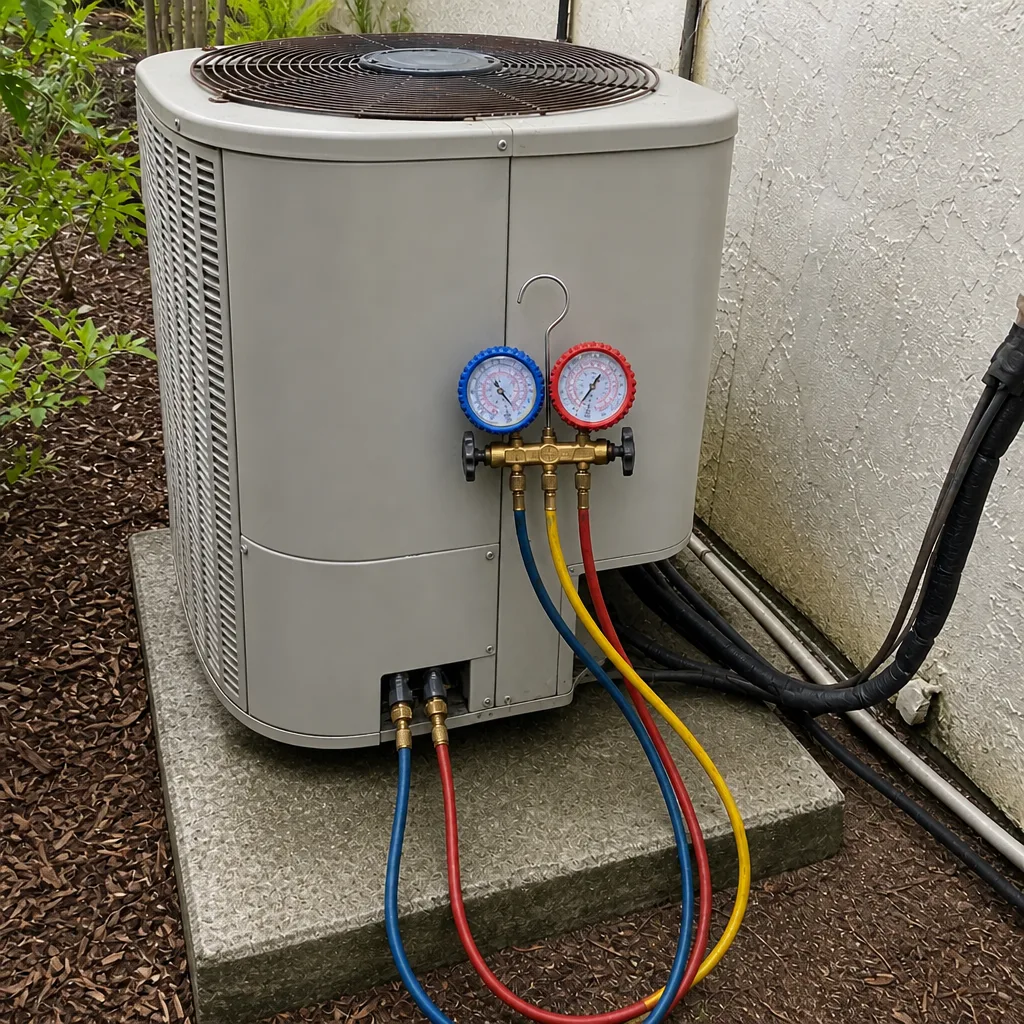
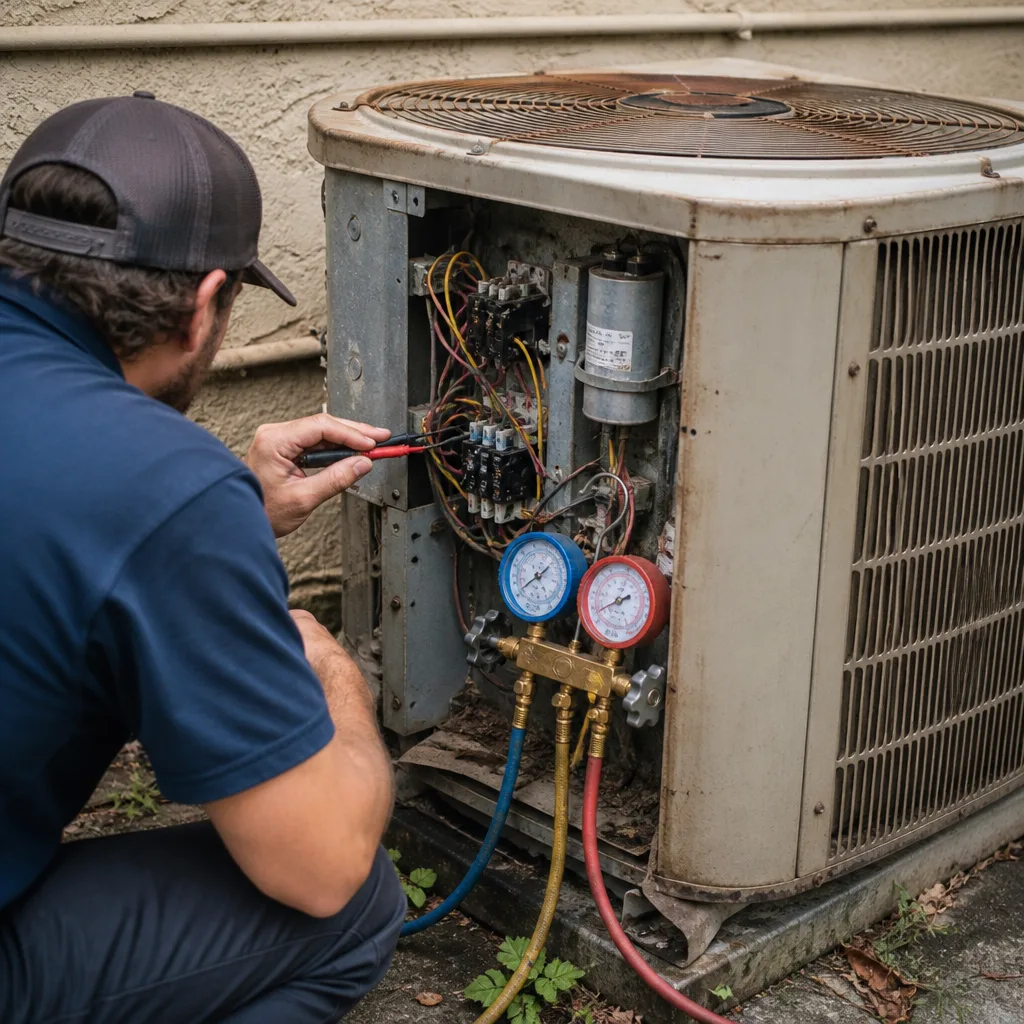
See the difference
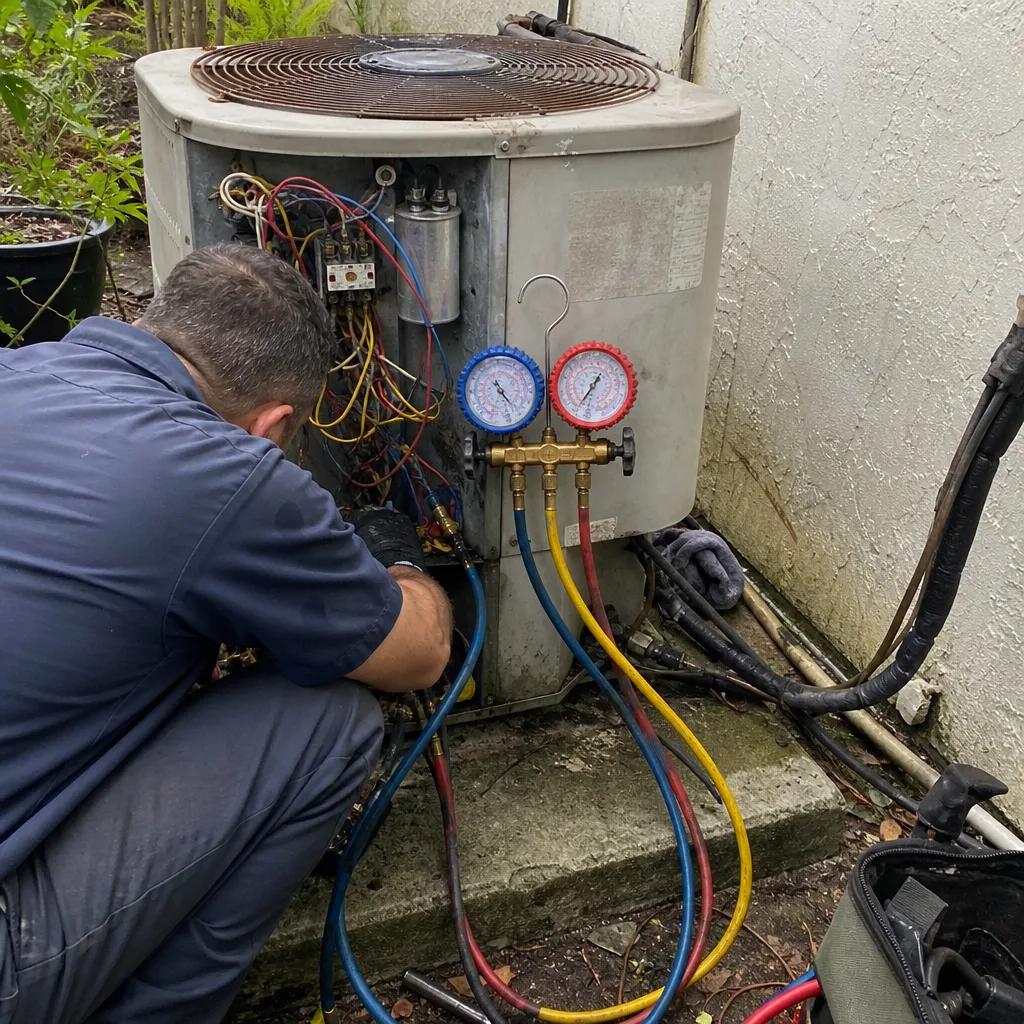 Before
 After
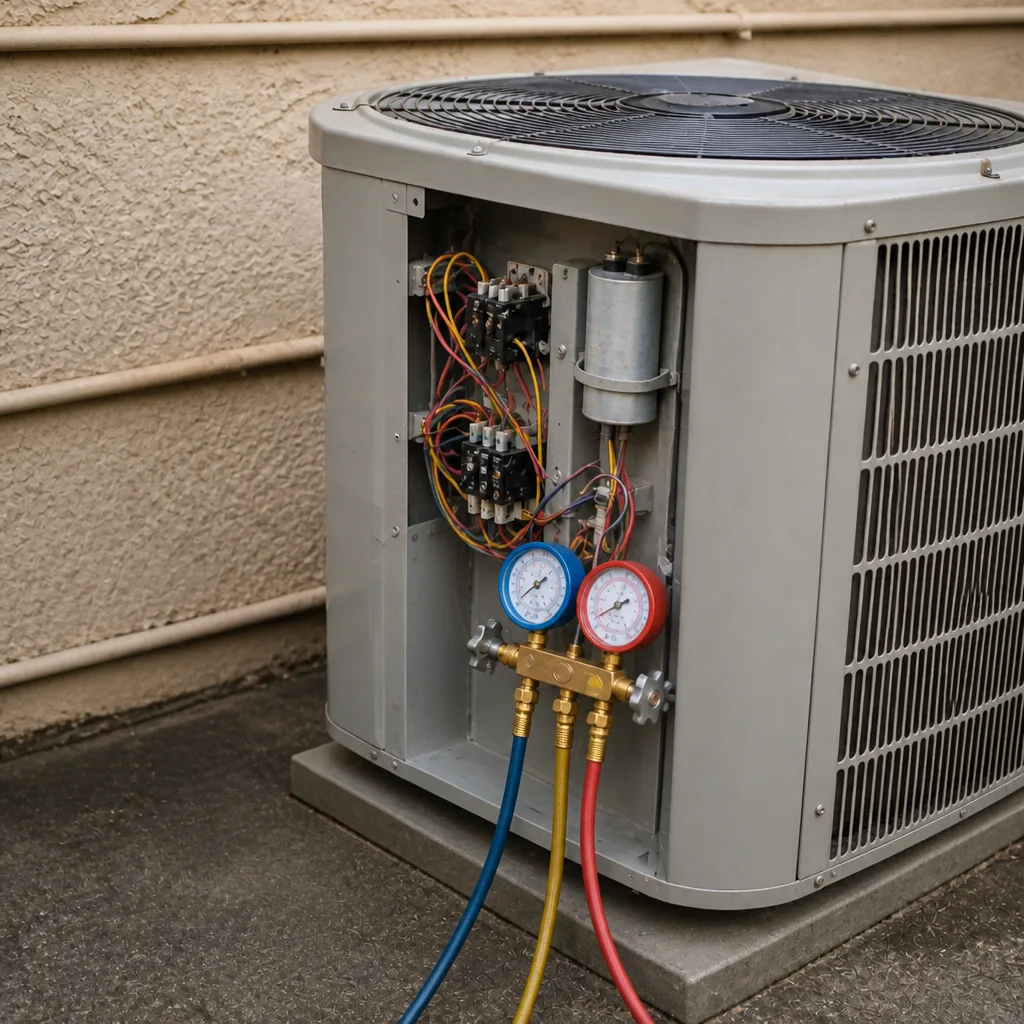
 Before
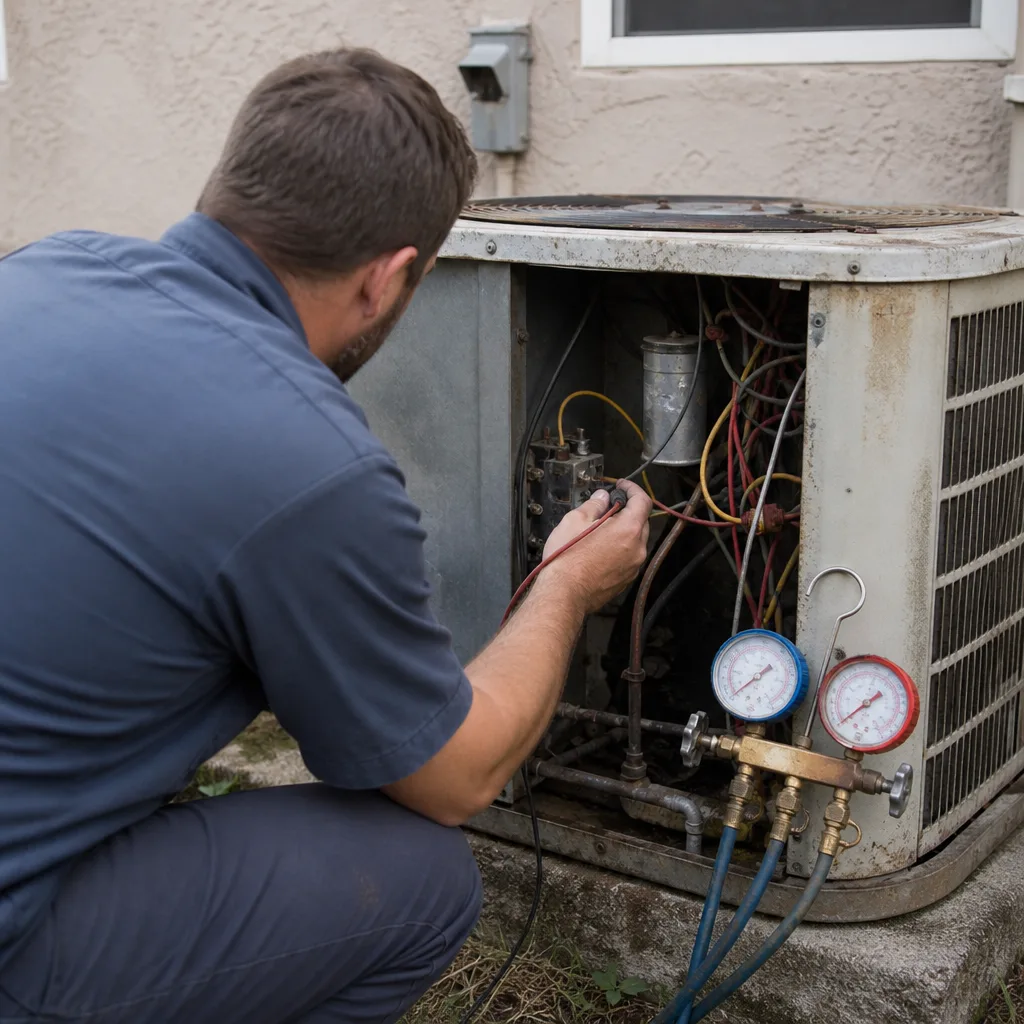
 After
 Before
 After
When to Call a Professional
Call a professional the moment you notice a same-day-tier sign: no cool air, a burning smell, loud banging, water pooling, or repeated breaker trips. Schedule a visit within a week for signs that point to drift: rising bills with steady weather, uneven room temperatures, weak airflow, a new rattle, or ice forming on a line. For systems past 12 years old, an honest assessment before the hottest stretch saves money either way, whether the answer is repair or replacement. If you can’t tell which tier a symptom falls into, describe it on the phone rather than guessing.
Ambassador AC Repair offers free estimates in Lakeland – call (855) 528-6110. We answer 24/7. Fast dispatch from 7am to 7pm, Sunday through Friday. Cooling and heating, handled.
Frequently Asked Questions
The most common warning signs we hear about in Lakeland are longer-than-usual run times, rising electric bills with steady weather, and noise that wasn’t there before. Clammy air and ice on the indoor coil follow closely. All of them point to something a technician can measure, and none of them fix themselves with a thermostat change.
Working hard shows up as longer run times with normal comfort and stable bills. Failing shows up as longer run times plus at least one measurable change: a bill that climbs for the same month, ice on a line, a new noise, or cool-but-clammy air. If you have two or more changes at once, it’s failing, not just working hard. Call (855) 528-6110 for an exact quote – estimates are free.
Yes, and it matters. Systems in established neighborhoods like Dixieland and Highlands are often 12 or more years old, so warning signs skew toward slow coolant leaks, extended run times from tired compressors, and aging condensate pans. On a system that old, an honest repair-or-replace conversation should happen before the failure, not after. Call (855) 528-6110 to walk through it.
A steady hum is the normal sound of the compressor and fan running. A buzz that turns into a click, a rattle, or a grind is not. Persistent clicking at startup or metal-on-metal grinding are the two noises we most often find signal failing components. Call (855) 528-6110 for an exact quote – estimates are free.
Turn the system off at the thermostat and stop running it until a professional looks at it. A faint dust smell on the first heat-up of the season is normal; a persistent burning smell or a smell near the air handler is not. Burning smells point to electrical components, so don’t open panels to inspect. Call (855) 528-6110. We answer 24/7. Fast dispatch from 7am to 7pm, Sunday through Friday.
Repair is the right answer when the system is under about 12 years old and the problem is confined to one component. Replacement is the honest answer when the system is past 12 years, refrigerant leaks are recurring, or the repair cost is a meaningful share of a new system. We work on Carrier, Trane, Lennox, Goodman, Rheem, York, Daikin, Bryant, and American Standard, so the recommendation comes from what your system actually needs. Call (855) 528-6110 for an exact quote – estimates are free.
The Bottom Line
HVAC warning signs aren’t something to keep on a mental list and hope for the best. They’re something to sort into three tiers so you know exactly when to watch, when to schedule, and when to call. In Lakeland, longer run times, rising bills, and new noises are the earliest signals, and the systems that last are the ones where those signals get answered early. Our technicians have up to 9 years of experience across nine major brands, and every assessment starts with your system, not a sales sheet. If something in this guide matches what you’re seeing, call and describe it.
For honest diagnosis, brand-agnostic recommendations, and straight answers on what your system actually needs, call Ambassador AC Repair at (855) 528-6110 for a free estimate. We answer 24/7. Fast dispatch from 7am to 7pm, Sunday through Friday.
Written by the team at Ambassador AC Repair.