
Last updated November 14, 2026
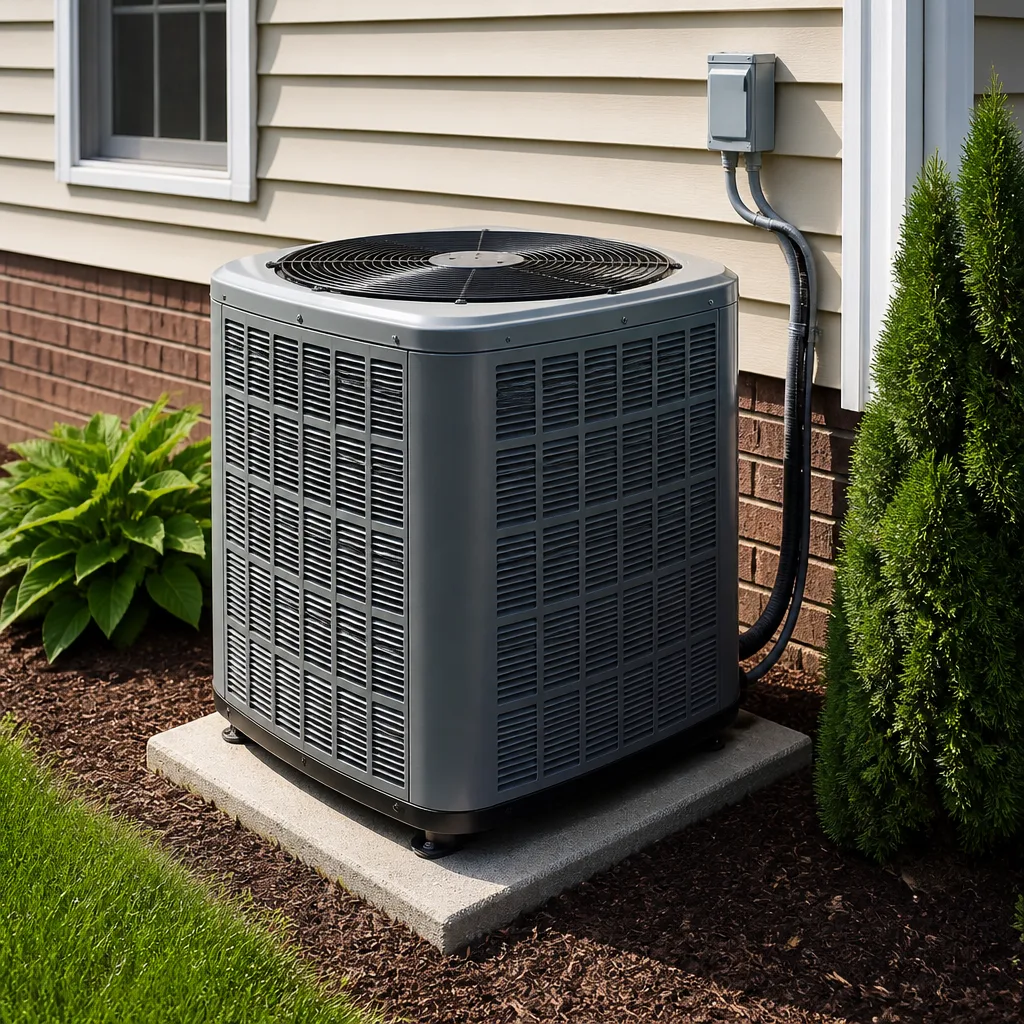 AC repair
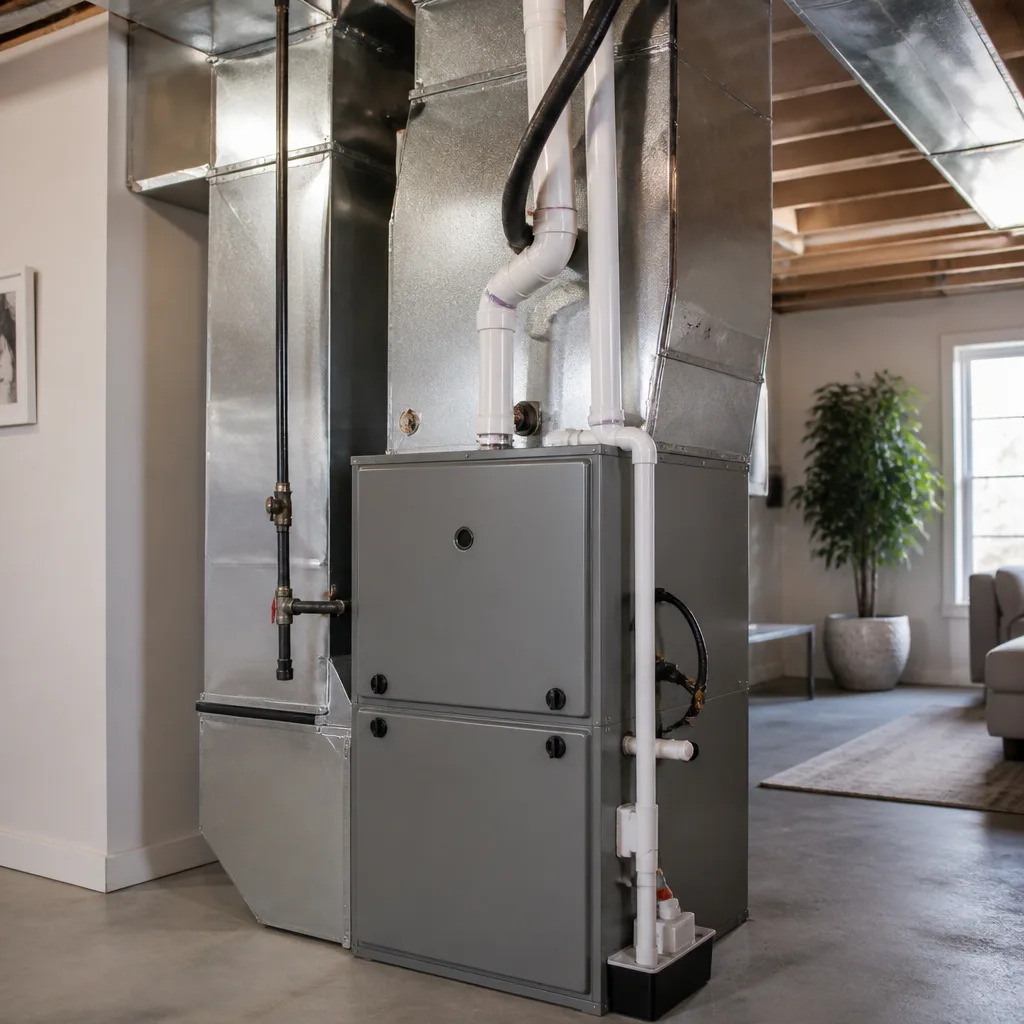 Furnace & heating
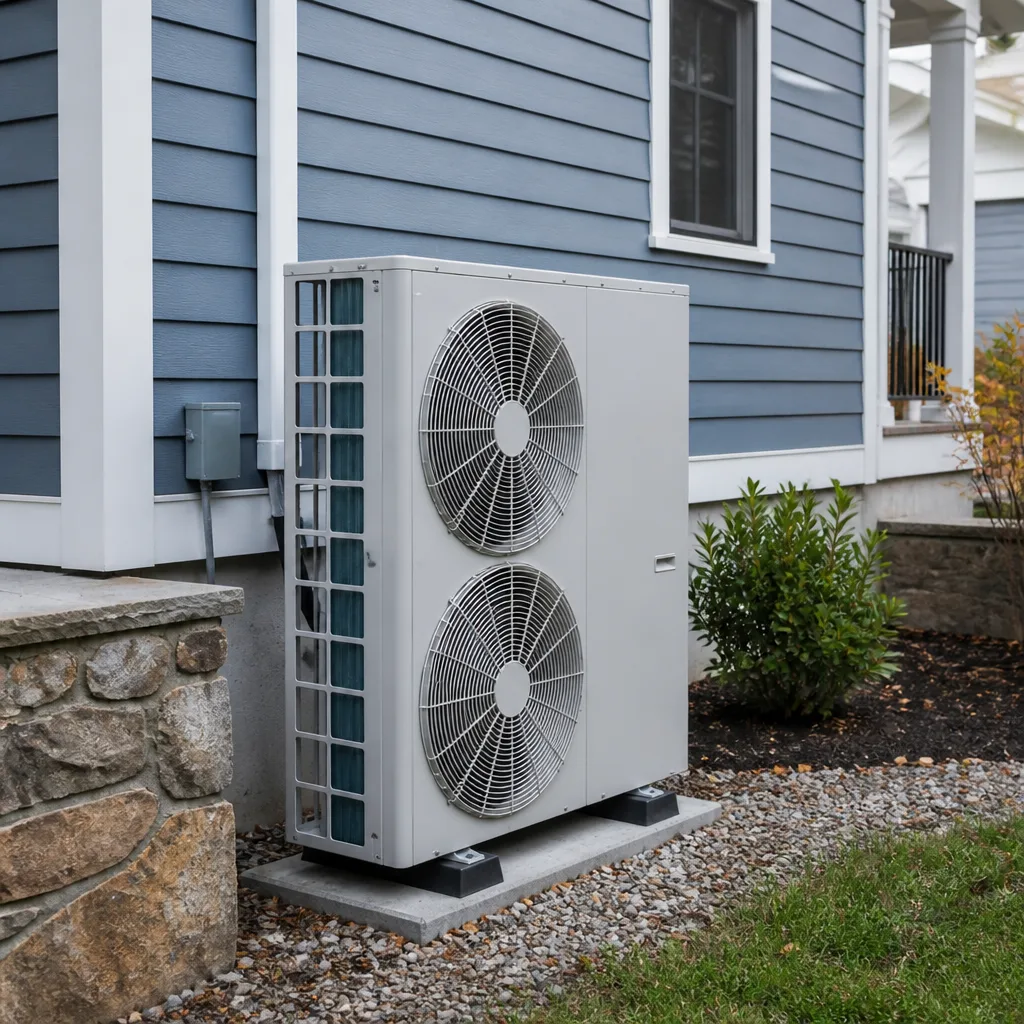 Heat pumps
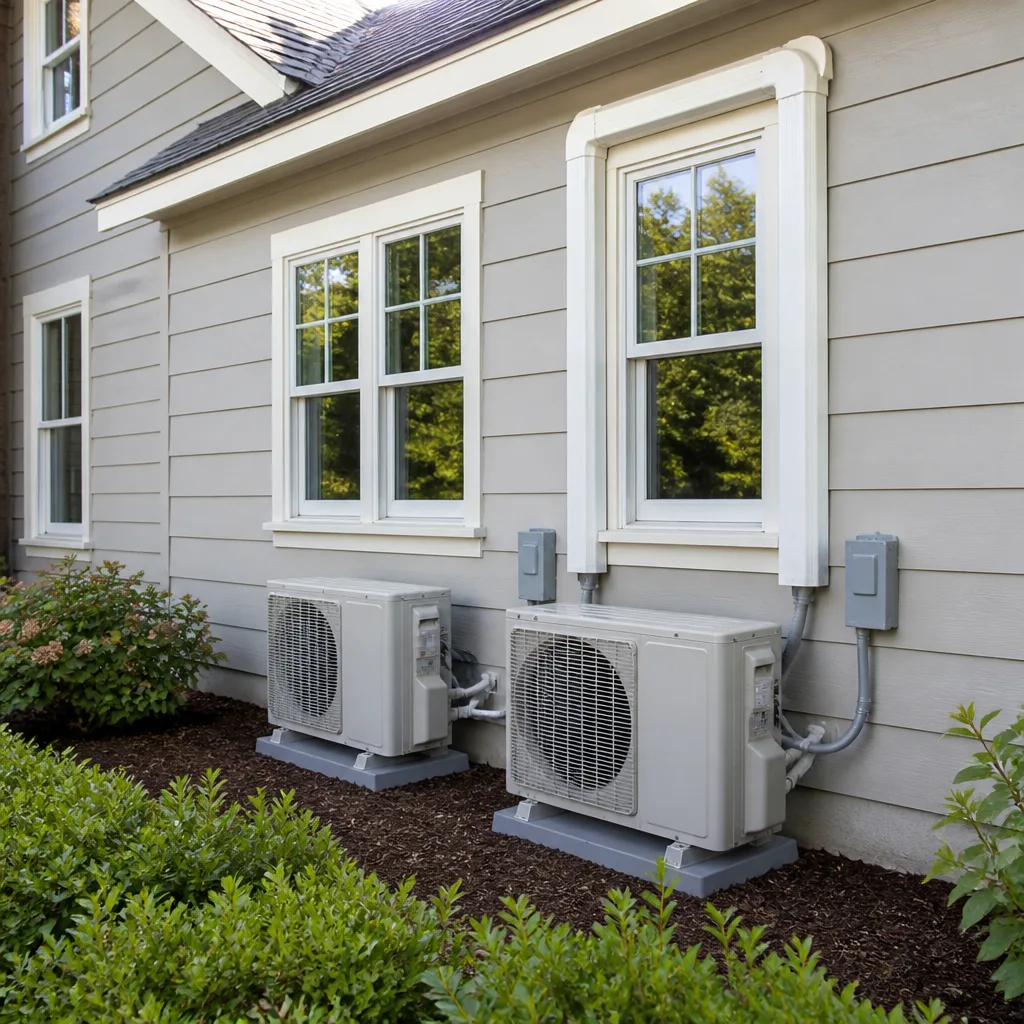 Ductless mini splits
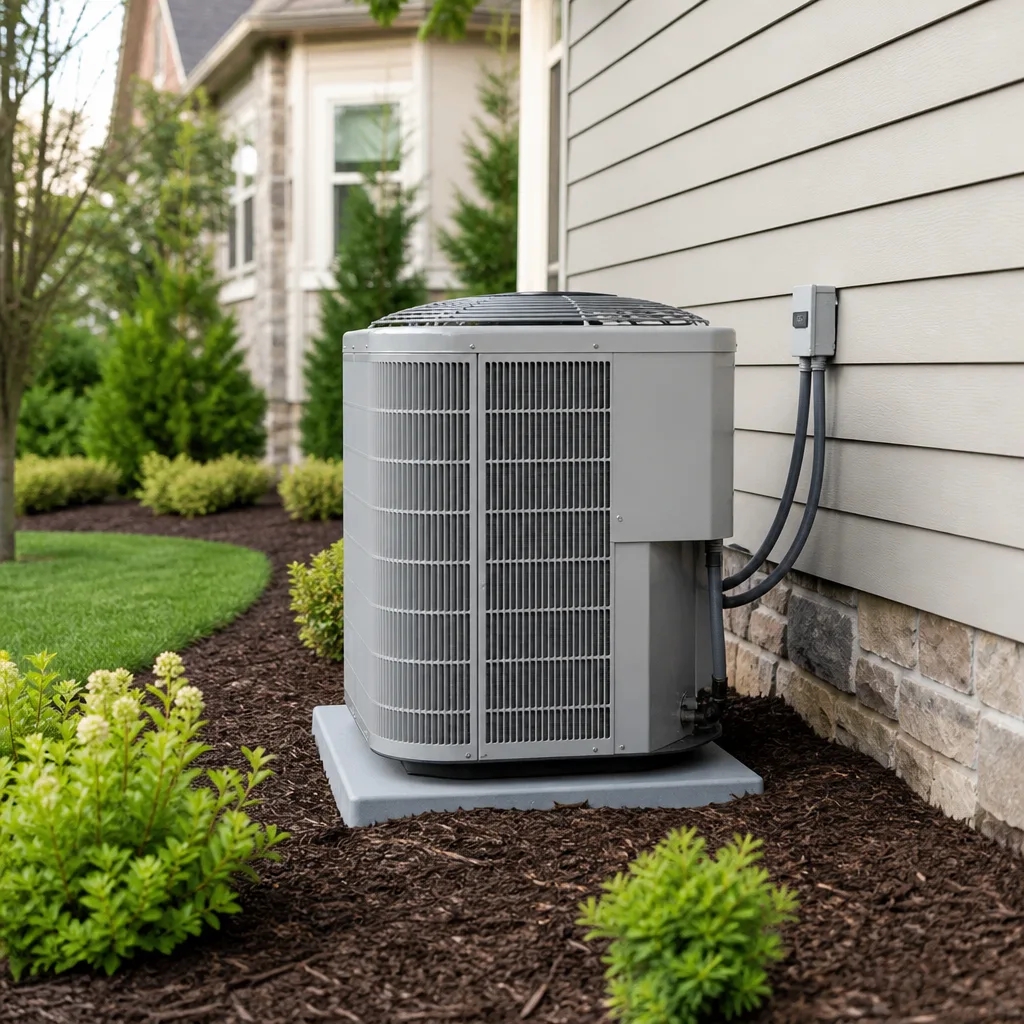 Carrier
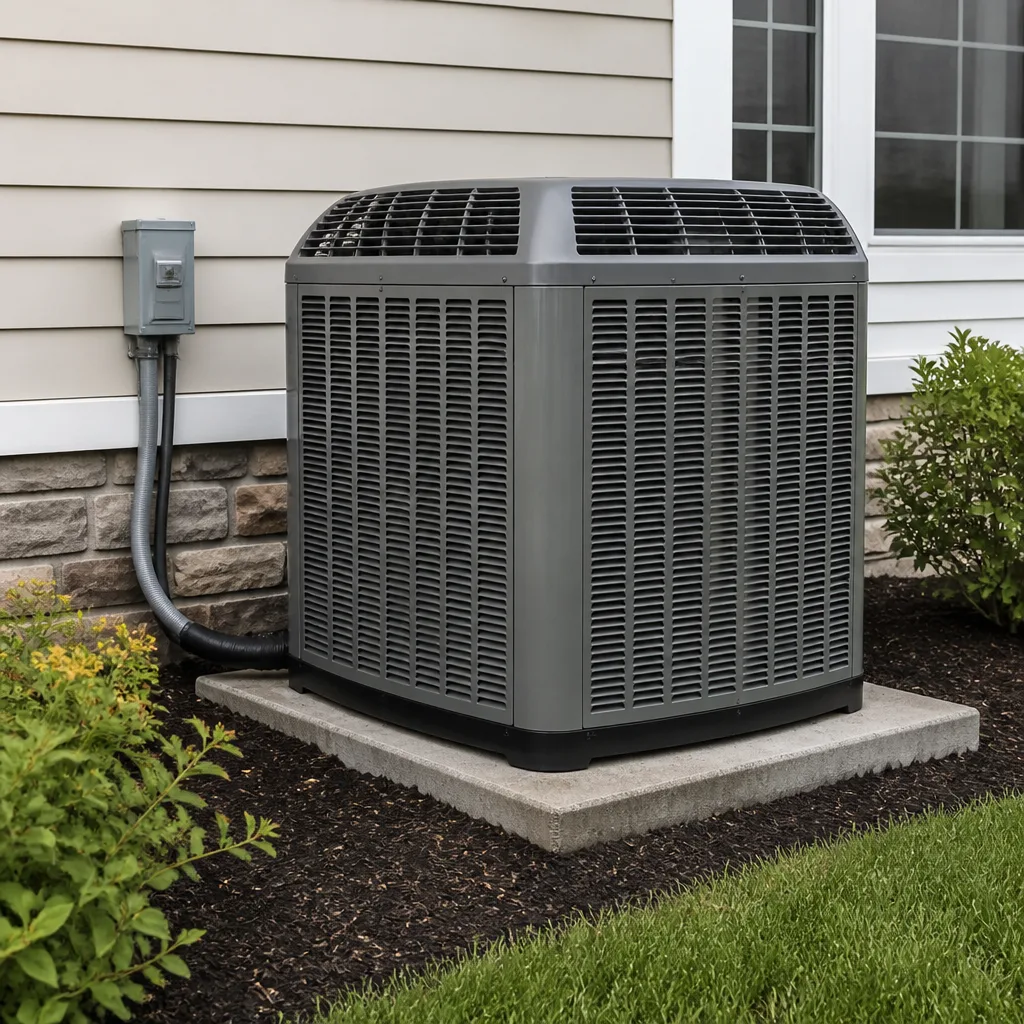 Trane
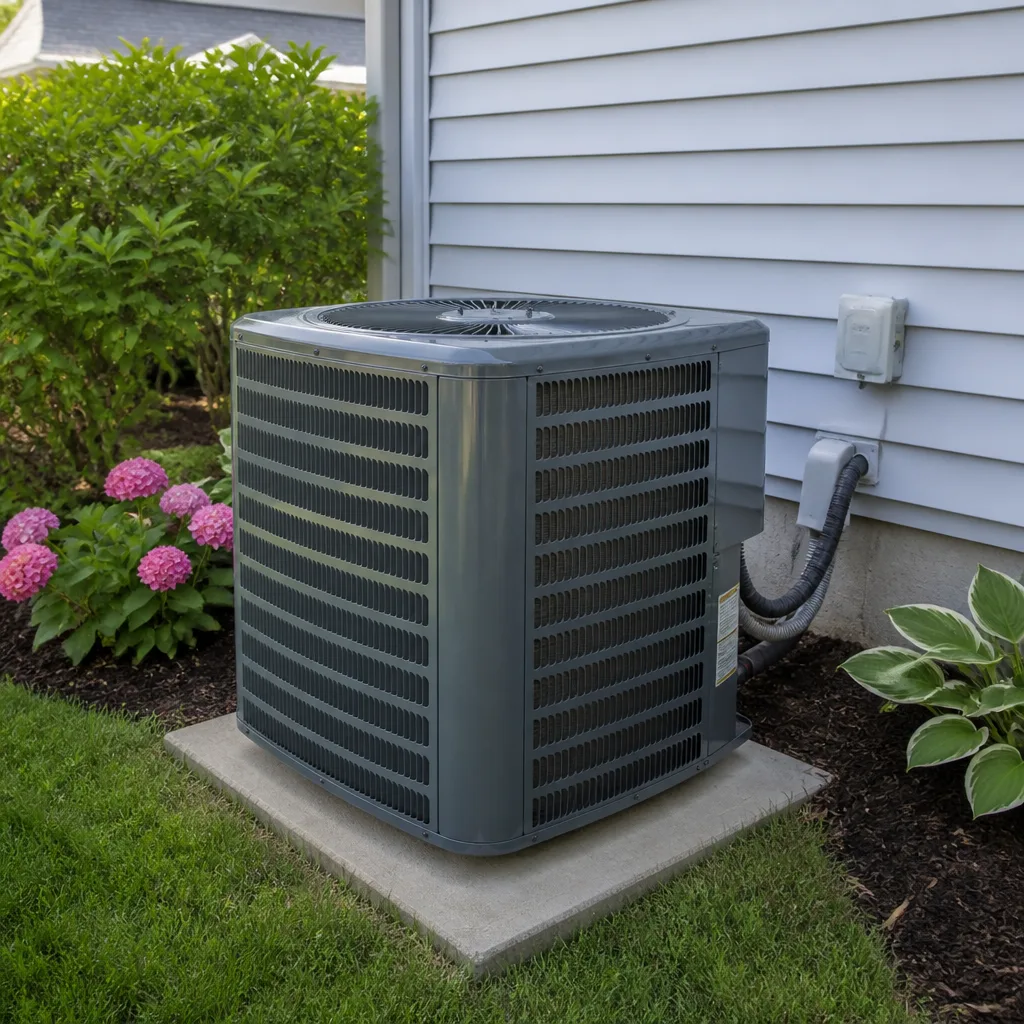 Goodman
Seasonal tune-up and full diagnostic on your Carrier, Trane, or Goodman system - readings shown to you before any repair is proposed
Diagnosis first, numbers second - you approve the repair price before a single part goes in.
Get your free estimateSeasonal HVAC Care for Lakeland: Year-Round Homeowner’s Guide
Most homeowners here follow a maintenance calendar they inherited from somewhere else – spring tune-up, fall tune-up, done. That calendar doesn’t match Lakeland‘s weather. Our “fall” still pushes 85°F deep into October, and our “winter” can swing 40 degrees inside 48 hours. That means the highest-stakes preparation moments aren’t the ones a northern schedule tells you to watch. There are really two seasons that matter intensely – a long cooling season and a shorter but genuinely cold heating season – with two transitional windows between them where the work you do decides how the next season goes. A system that never got tuned for heating mode will struggle the first time temperatures drop below 50, which often lands in the same week you finally shut the AC off. This guide walks through those windows, the rainy-season maintenance that outdoor condensers in Lakeland need, and the thermostat strategy nobody tells you about for the shoulder months. It’s written for homeowners who already own a system and want to keep it running, not be sold a new one.
Quick Answer
Seasonal HVAC care in Lakeland isn’t a four-season calendar – it’s two critical prep windows: late February (before cooling season starts) and late October (before the first real cold fronts arrive). Between them, the biggest maintenance risks are rainy-season debris on outdoor condenser units, heating mode that never gets tested, and thermostats still running a cooling-only schedule when morning lows and afternoon highs both call for action. A system serviced ahead of each window handles both cooling and heating far better than one that only gets attention after something breaks.
Styles & brands we work with
- AC repair
- Furnace & heating
- Heat pumps
- Ductless mini splits
- Carrier
- Trane
- Goodman
Table of Contents
- Why Lakeland Has Two Prep Windows, Not Four Seasons
- The Late February Window: Pre-Cooling Season Prep
- Rainy Season and Your Outdoor Condenser (June-September)
- Heating Mode Neglect: Reversing Valves and Emergency Heat Strips
- Thermostat Strategy for Lakeland’s Shoulder Seasons
- What “Resting” Your System Actually Requires
- The Late October Window: Heating Mode Activation
- Brand Matters Less Than What’s Actually Installed
Why Lakeland Has Two Prep Windows, Not Four Seasons
A traditional maintenance calendar assumes a clean break between cooling season and heating season, with a mild stretch in between where the system gets a break. Lakeland doesn’t work that way. Cooling load dominates most of the year, and there’s no real “off” period – the transitional windows in late February and late October are short, and they’re the only stretches where a technician can get ahead of the next season instead of reacting to it.
Here’s how the year actually breaks down around Lakeland:
- Cooling season (roughly March through October): Long, humid, and hard on compressors and condensers. This is when AC problems surface.
- Rainy season (June through September): Overlaps cooling season entirely. Adds debris, moisture, and drainage problems to outdoor equipment.
- Transitional window one (late February): The last stretch of mild weather before the cooling season starts. Best time to service cooling mode before it’s under real load.
- Transitional window two (late October): The stretch where AC use drops off and heating mode should be tested before cold fronts arrive.
The trap is that homeowners who follow a generic spring/fall schedule often hit the “fall” tune-up in September or early October, when it’s still hot and cooling is still the priority. By the time actual cold fronts arrive in December or January, nobody’s looked at the heating side. Meanwhile the “spring” tune-up often gets scheduled in April or May, after the first 90°F stretch has already punished a system that wasn’t ready.
Treat those two windows – late February and late October – as your anchors. Everything else in the year is monitoring, minor cleaning, and calling when something looks wrong.
The Late February Window: Pre-Cooling Season Prep
The late February window is the one homeowners skip most often, because nothing feels urgent yet. Morning temperatures are still mild, the AC might run once or twice a week, and there’s no obvious problem. That’s exactly why it’s the right time. Pre-season work happens while the system isn’t under strain, and small issues get addressed before they turn into a no-cooling call in the middle of a hot week.
Here’s what a proper late February prep involves:
- Outdoor condenser inspection. After the rainy season and months of dust, condenser coils hold debris. Coils get cleaned, and the fan and motor get checked for free movement and abnormal noise.
- Refrigerant charge verification. Low refrigerant is a symptom, not a root cause – a proper check looks at both the charge and the system pressures to see whether there’s a small leak worth monitoring before summer.
- Condensate drain clearing. The drain line handles a lot of moisture during a Florida cooling season. Clearing it in February prevents the most common mid-summer shutdown: a clogged drain tripping the float switch.
- Electrical check. Capacitors and contactors wear out silently. Testing them in February prevents the “it ran fine yesterday” failure in June.
- Filter replacement. Fresh filters at the start of cooling season are one of the highest-value, lowest-cost maintenance steps. A clogged filter strains the blower motor and coils all season.
- Thermostat check. Verify the thermostat is set to cooling, the programming matches how the household actually lives, and any batteries in a battery-powered unit are fresh.
The reason this window matters more than a September tune-up is that Lakeland’s cooling season runs long. Pre-season work means the system enters the long hot stretch already in good shape, rather than getting caught mid-July with a failing capacitor that would have been caught in February.
If your system hasn’t had a pre-season look in a couple of years, that’s a good time to schedule AC repair on anything you’ve noticed but put off – lingering noises, a room that never cools right, or a unit that runs longer than it used to.
Rainy Season and Your Outdoor Condenser (June-September)
Florida’s rainy season runs roughly June through September, and it isn’t just frequent afternoon storms – it’s sustained humidity and near-daily rainfall. For an outdoor condenser unit, that has three specific consequences that homeowners in Lakeland should watch during these months.
Debris accumulation
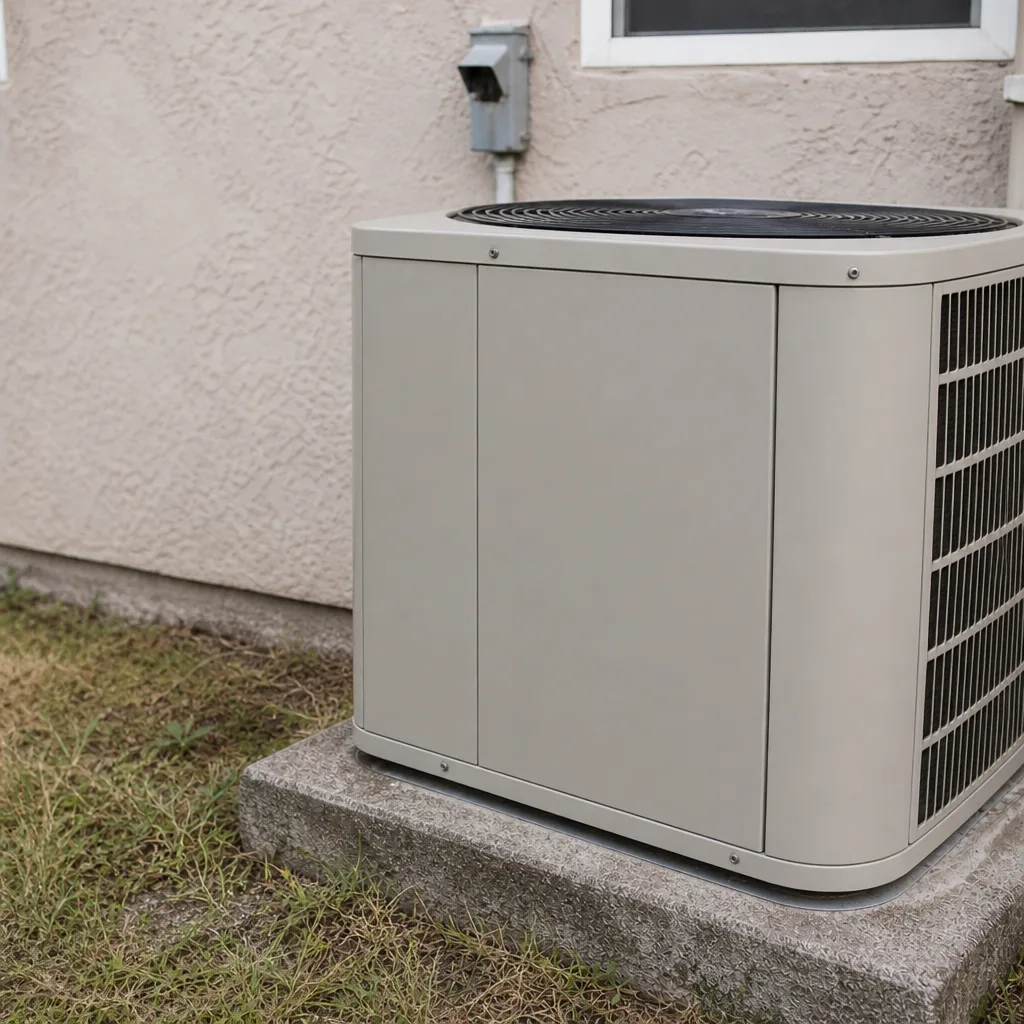
Rain knocks leaves, seed pods, and small palm debris down into the condenser’s top grille and around its base. That debris sits against the coils and blocks airflow, which makes the compressor work harder and runs hotter. A quick visual inspection once a month during the rainy season – lift the top grille if you can do so safely, and clear any debris around the base – does real work keeping the system efficient through the summer. Take care with the unit while it’s running, and don’t open the electrical panel or reach into the fan area.
Coil cleaning timing
Condenser coils in Lakeland collect a mix of dust, pollen, and organic debris during the rainy season, and this grime reduces heat transfer. A proper coil cleaning is best done just before the season starts and again during the season if the unit has visible debris. It’s a task a technician handles with the right cleaner and safe access – it’s not something to spray blindly at home, since condenser coils are easily bent and easily damaged by the wrong product.
Drainage slope checks
Condensers sit on pads that can settle after heavy rain and Florida’s soil movement. If the pad tilts, the unit can vibrate more and the refrigerant lines take added stress. A quick visual check that the pad is level and free of standing water at the base is worth doing each rainy season. If you notice standing water inside or immediately around the pad, that’s a call-a-technician item, not a homeowner fix.
One more rainy-season fact worth knowing: the indoor air handler is working harder in high humidity, and that raises condensate output. If the condensate drain hasn’t been cleared since the previous summer, this is the season it clogs. Clearing it and checking the float switch before the heaviest rains arrive is a straightforward way to avoid the most common summer breakdown.
Heating Mode Neglect: Reversing Valves and Emergency Heat Strips
Here’s the piece that catches homeowners by surprise. In a heat pump – which is what most central systems in Lakeland actually are – heating mode uses the same equipment as cooling mode, just with the reversing valve switching the refrigerant flow. When that valve hasn’t moved in months, the first time it’s asked to switch can be problematic. Add in the emergency heat strips (the auxiliary heat built into most Florida heat pumps), and you have two components that almost never get exercised until the moment you need them most.
This is why a heated winter morning in Lakeland can turn into a “the system is running but no heat is coming out” call. The compressor may be fine, but:
- The reversing valve may not shift cleanly into heating mode, leaving the system stuck in cooling (blowing cold air) or failing to start at all.
- Emergency heat strips – which are powered only when needed – may not be tested for so long that a failed strip goes unnoticed. When the heat pump alone can’t keep up, the strips are what carry the load, and if they’re dead, so is the heat.
- Heating-mode refrigerant pressures differ from cooling-mode pressures, so a system low on refrigerant may cool fine in summer but struggle in heating mode.
The fix is straightforward: test heating mode in October or early November, before the first real cold front. Run the system in heating mode for 15-20 minutes and note whether warm air comes out, whether there’s any unusual noise at the reversing valve, and whether the auxiliary heat kicks in as expected. If something’s off – cool air instead of warm, a grinding or clicking noise at the valve, or the strips not responding – that’s a job for a technician who can check the valve, the strips, and the system pressures together.
Our technicians have up to 9 years of experience with heat pump systems, and testing heating mode before cold fronts is one of the most consistent pieces of advice we give homeowners here. It’s a 20-minute test that prevents a much more uncomfortable surprise in January.
Thermostat Strategy for Lakeland’s Shoulder Seasons
The shoulder seasons – roughly November and February – are where most thermostat programming goes wrong in Lakeland. A morning low of 52°F and an afternoon high of 78°F is a normal day, and a single thermostat schedule set to “cool, 75°F” won’t handle both ends of that swing well. What tends to happen is the system runs cooling in the morning when the house is already cool, then fails to heat in the evening, or vice versa depending on which program the household picked.
What a shoulder-season thermostat strategy should do:
- Set auto-changeover mode. Most modern thermostats have an “auto” or “heat-cool” mode that switches between heating and cooling based on the actual temperature, with a few degrees of deadband between set points. This handles the morning-lows/afternoon-highs problem without you touching the dial.
- Choose set points with a buffer. Instead of heat at 68°F and cool at 72°F, which can cause short-cycling, use a 3-4°F gap – heat at 66°F, cool at 74°F, for example. The gap lets one mode work without fighting the other during a single day.
- Avoid constant manual flipping. Switching the thermostat between heat and cool throughout the day stresses the reversing valve on a heat pump and increases wear. If you’re flipping it more than twice a week, the auto mode is the better setup.
- Keep fan on auto, not on. In shoulder seasons, running the fan continuously pulls warm attic air into the home through duct leaks and circulates humidity. Auto keeps the fan running only when the system is actively heating or cooling.
If you have a heat pump, keep an eye on the auxiliary heat indicator on your thermostat during the shoulder months. Auxiliary heat runs off resistance strips and costs more per hour than the heat pump alone, so if it’s cycling on constantly in mild weather, something’s worth checking – usually the heat pump isn’t keeping up for a reason.
What “Resting” Your System Actually Requires
There’s a common assumption that in Lakeland’s mild months – late November, parts of February, some of March – you can just “rest” the AC and give it a break. That’s half-true at best. A cooling system that sits off for weeks in a Florida home isn’t resting; it’s collecting humidity and letting seals, valves, and gaskets dry out.
What “resting” actually involves, in practice:
- Run the system periodically. Running cooling for 15-20 minutes once a week during mild stretches keeps the compressor lubricated, exercises the reversing valve, and pulls humidity out of the air. A fully dormant system is more likely to have a hard start on its first real day of work.
- Manage indoor humidity, not just temperature. In mild months, indoor humidity can climb into the 60s even without hot weather. If your thermostat has a humidity control option, set it to the mid-50s max. If not, a dehumidifier during the mild weeks prevents the sticky feeling and the microbial growth that comes with sustained indoor humidity.
- Leave the fan on auto. Continuous fan runs the risk of re-evaporating moisture off the evaporator coil after the system cycles off, raising indoor humidity rather than lowering it.
- Check filters monthly regardless of season. Even in a light-use month, filters pull dust. A filter that’s been in for 4-5 months is overdue no matter how little the system ran.
- Do a monthly visual walk-around. Check the outdoor unit for debris, check for water stains near the indoor air handler, and listen for any unusual noise when the system kicks on. These are the early signals that prevent bigger calls later.
The takeaway is that “resting” isn’t shutting down – it’s running the system in short stretches and keeping an eye on humidity. In a humid climate like Lakeland’s, a truly idle HVAC system is a system quietly growing problems.
The Late October Window: Heating Mode Activation
Late October is the mirror image of late February: a short window when the system isn’t under heavy load and a technician can get ahead of the next season. In Lakeland, this is the last realistic chance to prep heating mode before cold fronts arrive, usually in December or January.
A late-October heating-prep visit covers:
- Heating-mode bench test. The system is run in heating mode, and the technician confirms warm air delivery, checks the reversing valve for proper switching, and verifies the emergency heat strips fire when called.
- Refrigerant pressure check in heating mode. Because pressures differ between cooling and heating modes, a system verified in summer can still be low enough in heating mode to underperform. Checking pressures in the mode they’ll be used matters.
- Defrost cycle check. Heat pumps in Florida don’t defrost often, but the defrost board and sensors should still be working. A failed defrost board can cause the unit to ice up during a cold snap, which turns a mild heating problem into a no-heat emergency.
- Heat strip verification. A multimeter check on the auxiliary heat strips confirms they’ll actually produce heat when called – not just trigger the fan but fail to warm.
- Filter replacement and thermostat check. Same as the cooling prep – a fresh filter and a thermostat set to auto with heat and cool both enabled for the shoulder months.
The reason late October beats a November or December visit is simple: schedule availability and warm-weather testing. Come cold-front week, every technician in Lakeland is handling no-heat calls. Testing heating mode in October means any part that needs replacing can be sourced and installed before the cold arrives. If you’re experiencing heating problems now, AC repair visits cover heating mode too, since a heat pump uses the same equipment – but the October window is the better time to prepare for what’s coming.
Brand Matters Less Than What’s Actually Installed
There’s a common assumption that owning a specific brand means only a dealer can service your equipment – and a related assumption that the technician sent out will try to steer you toward what they sell. Both are worth questioning.
In our experience, a technician’s job is to diagnose and repair what’s actually installed. The brand on the unit affects parts availability and some proprietary controls, but it doesn’t change the diagnosis. The components that fail – capacitors, contactors, reversing valves, blower motors, thermostats, drain float switches – are largely common across manufacturers.
What does matter is that the technician knows the specific system. A Lennox unit with a communicating thermostat behaves differently from a basic Goodman system with a standard 24V thermostat. A Rheem heat pump with a specific reversing valve design behaves differently from a York or Trane. In Lakeland, homes are full of a mix of these systems, and the reply “we don’t work on that brand” is a real risk if you call a single-brand dealer.
At Ambassador AC Repair, we work on Carrier, Trane, Lennox, Goodman, Rheem, York, Daikin, Bryant, and American Standard systems. That’s not a marketing point – it means our technicians diagnose and repair what’s actually installed, whether you have a Rheem heat pump or a Lennox split system, and whether the right answer is a repair or a replacement. When a system is genuinely at end of life, we’ll say so and price a replacement, but the assessment comes before any recommendation. If it’s an install decision, we handle AC installation with the same brand-agnostic approach: the recommendation is based on what fits your home and situation, not on which manufacturer carries the best dealer margin.
Common Mistakes to Avoid
- Tuning up in September instead of October. A September “fall tune-up” is still cooling-season work. By the time the technician leaves, heating mode remains untested, and the first real cold front arrives with a system that’s never been checked in the mode it needs.
- Ignoring the outdoor unit during the rainy season. Debris accumulation on condenser coils in June-September is one of the most common causes of summer efficiency loss in Lakeland. A monthly visual check for leaves and palm debris takes two minutes and pays for itself.
- Flipping the thermostat between heat and cool manually all day. In the shoulder months, this stresses the reversing valve and defeats the purpose of a heat pump. Auto changeover with a few degrees of deadband handles the swing without the wear.
- Shutting the system off entirely for weeks in mild weather. A fully dormant system in Florida’s humidity allows moisture to build up on coils and inside ducts, and letting gaskets dry out can cause leaks. Weekly short runs during mild months are better than a full shutdown.
- Skipping the heating-mode test in late October. The most common surprise in Lakeland HVAC is a working AC in October and a no-heat system in January. Testing heat mode before the cold fronts arrive is the single highest-value step of the year.
- Assuming a clogged condensate drain is a summer-only problem. It’s a problem during high-humidity months, and the shoulders of the season when indoor humidity is still high can trigger the float switch just as easily as July.
- Trusting a single-brand dealer’s diagnosis. If a technician only stocks one brand’s parts, that shapes what they recommend. A brand-agnostic technician diagnoses what’s actually happening and prices the repair honestly, regardless of what’s installed.
See the difference
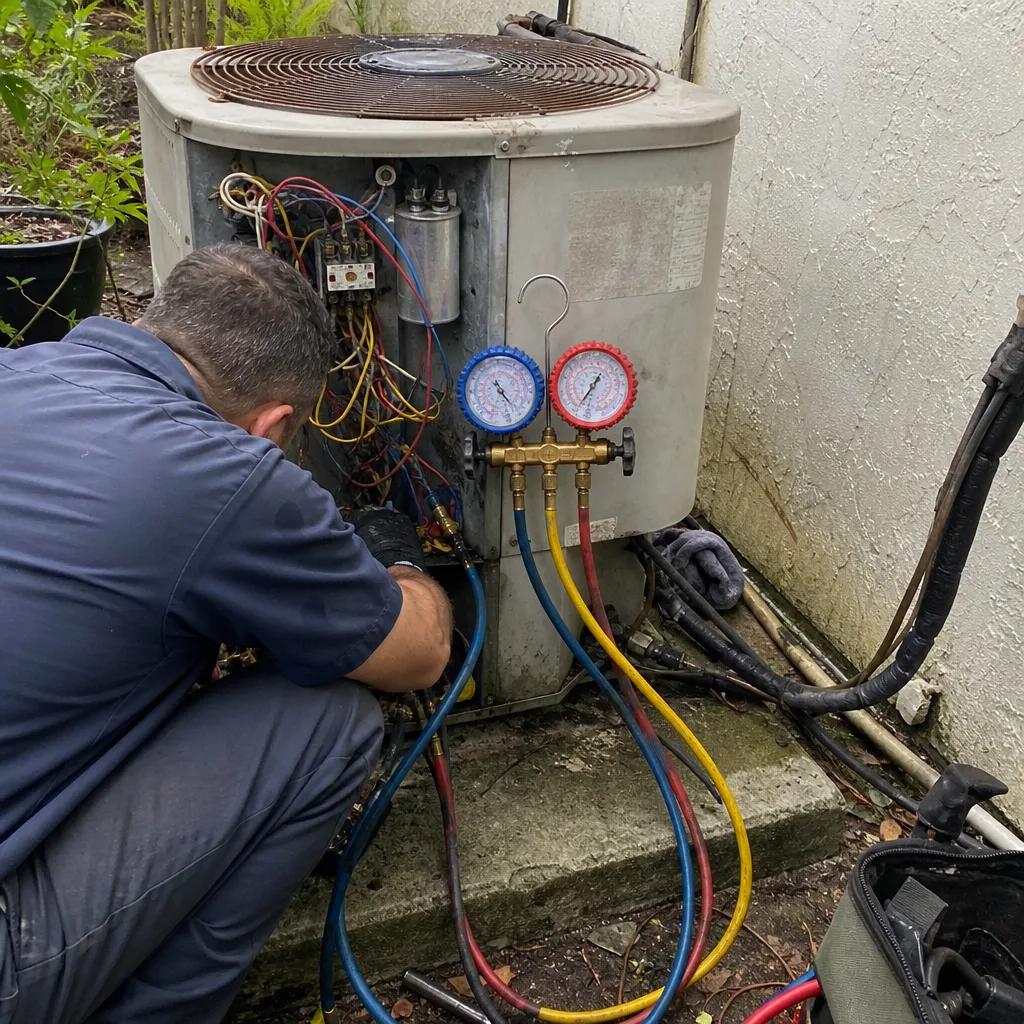 Before
 After
 Before
 After
 Before
 After
When to Call a Professional
Some tasks belong to a homeowner – clearing debris around the outdoor unit, replacing the filter, checking the thermostat sits in the right mode. Others should go to a technician, including any heating-mode symptom (no heat, cool air in heat mode, a reversing valve that won’t shift, heat strips that run but don’t warm), any electrical symptom (tripped breakers, capacitors buzzing, contactors with visible burn marks), and any refrigerant question – opening a refrigerant circuit is not a homeowner task. If your system has a clogged condensate drain, a frozen coil, or an outdoor unit that’s short-cycling or tripping on high pressure, those are call-a-technician items as well. Ambassador AC Repair offers free estimates in Lakeland – call (855) 528-6110. We answer 24/7. Fast dispatch from 7am to 7pm, Sunday through Friday.
Frequently Asked Questions
Twice a year is the practical minimum in Lakeland – once in late February before cooling season and once in late October before heating season. That schedule fits the local climate far better than a generic spring/fall calendar, because it puts the two service visits right before the two moments your system will actually be tested.
Yes, and it’s expected in Lakeland during the shoulder seasons. A morning low in the 50s and an afternoon high near 80°F means the system legitimately needs both modes within 24 hours. This is exactly the scenario a heat pump is designed for, and it’s why an auto-changeover thermostat with a few degrees of deadband works better than manual flipping.
Because cooling and heating modes use the same equipment differently, and heating mode is what never gets tested. The reversing valve that switches the system into heat hasn’t moved since last winter, and the emergency heat strips haven’t been energized. If either has failed, the system cools fine all summer and then produces no heat when you first ask it to in January. Testing heat mode in late October catches this before it becomes an emergency.
Yes – three ways. Debris gets driven onto the coil and around the base, which restricts airflow and reduces efficiency. Coils accumulate grime and pollen, which reduces heat transfer. And heavy rain combined with Florida’s soil movement can shift the condenser pad, causing vibration and putting stress on refrigerant lines. Monthly visual checks and a pre-season coil cleaning handle most of it.
Use auto-changeover mode with a 3-4°F gap – for example, heat at 66°F and cool at 74°F. Leave the fan on auto rather than on, and if your thermostat supports humidity control, set it to the mid-50s. In mild months, the goal isn’t just temperature comfort but keeping indoor humidity in a healthy range, which is a real concern in a humid climate even when the temperature feels fine.
Yes, for a few safe tasks: replacing filters, clearing debris around the outdoor unit, checking that the thermostat programming matches the season, and doing a monthly visual walk-around. Don’t open electrical panels, don’t try to clean coils with a pressure washer, and don’t open the refrigerant circuit – those jobs need a technician with the right tools and the right training. If anything looks or sounds off between visits, call it in rather than waiting for the next scheduled stop.
The Bottom Line
Lakeland doesn’t reward a generic four-season maintenance calendar. The two prep windows that matter are late February (before cooling season) and late October (before cold fronts and heating season). In between, rainy-season condenser care, humidity management during mild months, and an honest thermostat strategy for the shoulder seasons make the biggest difference. Test heating mode before the cold arrives – not after. And if a symptom is electrical, refrigerant-related, or leaves you unsure, get a technician out rather than waiting. Ambassador AC Repair offers free estimates in Lakeland, works on nine major brands, and covers cooling and heating under one company. Call (855) 528-6110. We answer 24/7. Fast dispatch from 7am to 7pm, Sunday through Friday.
Written by the team at Ambassador AC Repair.